Legimus — Sweden's National Digital Library of Talking Books for Readers With Print Disabilities (MTM)
Sweden
Sweden's MTM runs Legimus, a national app and web library of ~140,000 accessible titles; active university borrowers grew from 5,128 …
Finland · Espoo · See the Finland profile · See the Espoo profile
Top 54% 72/100 · Ask Evidence Copilot about this practice
Since late 2018 Aalto University and Qlu measured, repaired and mapped fixed induction loops so hearing-aid users can find good seats; most lecture halls are done, but no outcome data are published.
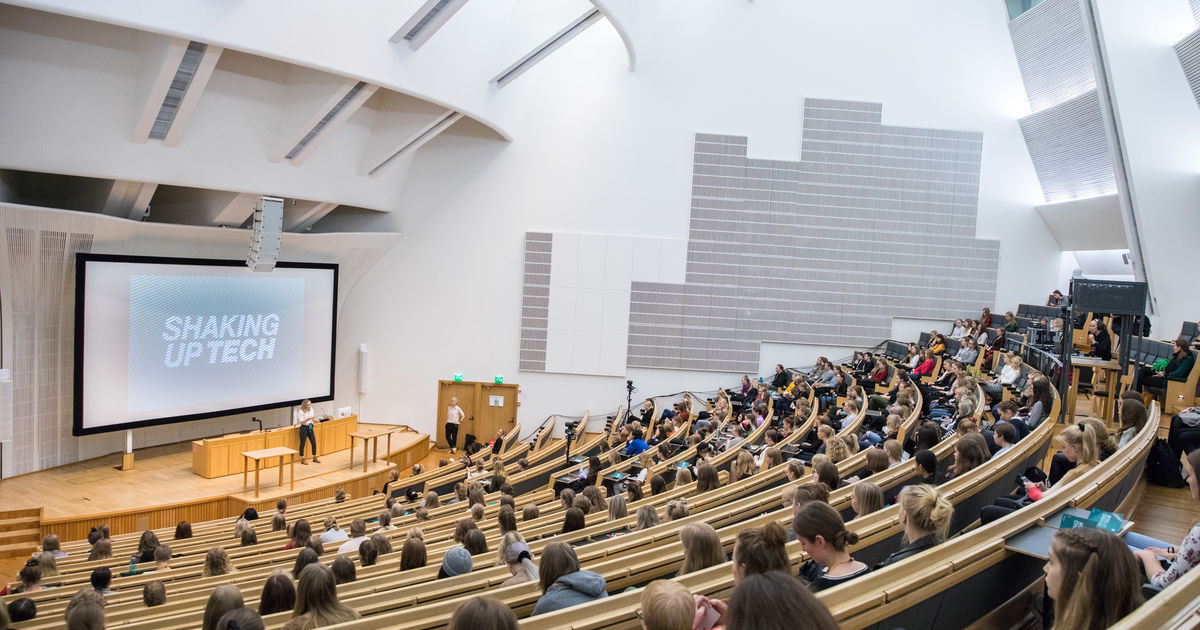
From late 2018 Aalto University worked with the Finnish accessibility firm Qlu Oy to map the quality of fixed induction loops on its premises, then install or repair them. By the university's 2020 account (updated 2021), work had been completed in most lecture halls.
Each looped hall has a coverage map showing where hearing-aid users in telecoil mode get good sound, and loop locations and hearing maps are published on a Qlu-maintained site. Status signs showing whether a loop is working were planned. The university says awareness of how loops work has grown and that it was the first to run a project of this scale.
The context is a Finnish decree requiring induction loops or similar systems in assembly facilities with a sound system; the university notes compliance has been incomplete. Next steps are spaces without loops and service points.
Caveats: the sources are a university press release and a European Commission accessibility-centre profile of Qlu. They give no counts of halls or loops, no costs and no measured outcomes for students, so evidence of impact is weak.
Read the full analysis: https://www.aalto.fi/en/news/aalto-university-mapped-the-quality-of-induction-loops-to-provide-better-services-to-people
Implementation detail (cost, timeline, staffing, conditions for success) is not yet available for this practice.
Do you run this practice? Claim it — verified implementers get a public contact pathway and can propose corrections.
Where this practice's information was retrieved from, and when.
Sweden
Sweden's MTM runs Legimus, a national app and web library of ~140,000 accessible titles; active university borrowers grew from 5,128 …
Czechia
Certified accessibility experts with disabilities audit and train: 250+ audits and 4,000+ people trained since 2022 (self-reported). About €50k/year, half …
Zambia
Viamo's Ask Viamo Anything lets anyone with a basic phone call a free line and ask a question in a …
Canada
Founded in 1994 (rebranded at OCAD University in 2010), the Inclusive Design Research Centre runs open-source inclusive-design R&D with ~20 …
Open full copilot Grounded in cited practices — always check the sources.