Ethiopia's Joint Land Certification Programme for Women's Land Rights
Ethiopia
Ethiopia's land certification programme (1998-2021) put both spouses' names/photos on joint land certificates for millions of households. Women's perceived tenure …
Madagascar · Antananarivo · See the Madagascar profile · See the Antananarivo profile
Evidence: Observational / pre–post Top 42% 74/100 · Ask Evidence Copilot about this practice
Madagascar's $47m CASEF programme (2016–2024) cut the cost of a land certificate from about $600 to $25 and issued over 570,000 certificates, with 28% going to women or joint holders — short of its 40% target, and many communes never received a functioning land office.
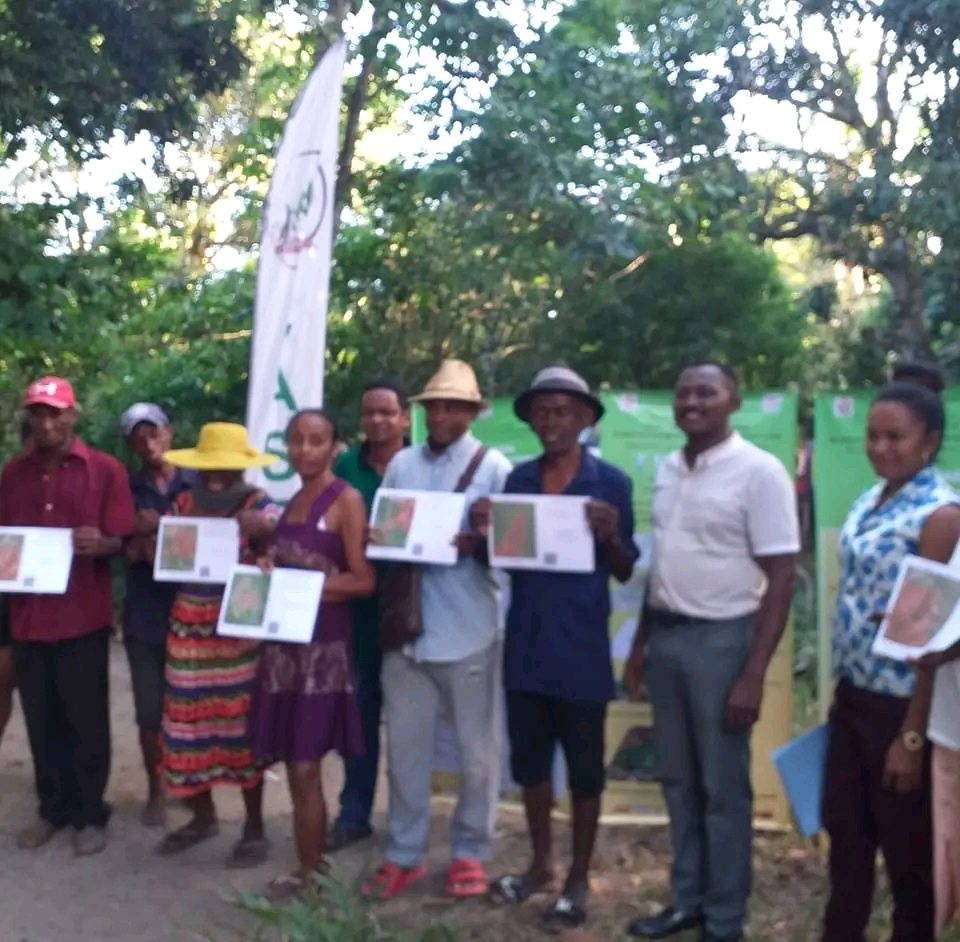
CASEF (Croissance Agricole et Sécurisation Foncière) was a USD 47 million World Bank (IDA)-financed land-certification programme (2016–2024), implemented with Madagascar's Ministry of Agriculture and Livestock and Ministry of Land Management and Land Services across 14 of the country's 23 regions.
The programme aimed to formalise smallholders' land rights by digitising and decentralising certificate delivery through local land offices (guichets fonciers), lowering the cost of obtaining a land document, and set an explicit target that 40% of certificates be issued to women, solely or jointly, to narrow the land-rights gender gap.
Local land offices were decentralised and digitised to issue certificates far more cheaply than before.
By its near-closure in late 2023, the programme had issued over 570,000 land certificates (with roughly 660,000 further applications in process), reaching an estimated 300,000 households; the average cost of a land document fell from about $600 to about $25. 28% of certificates went to women or as joint holdings, missing the 40% target. World Bank beneficiary surveys found 90% of certificate holders felt their rights were now recognised, 80% reported an increase in perceived property value, and 56% said they had invested in longer-term production (e.g. fruit trees) as a result. Independent reporting (Témoignages, Helvetas) corroborated the certificate count but found many communes never received a functioning land office, and that local Fokontany chiefs often favoured men over women even where certification existed.
The project closed in June 2024 with no confirmed follow-up financing identified, illustrating that formal legal gains on paper did not uniformly translate into equitable practical access for women.
Implementation detail (cost, timeline, staffing, conditions for success) is not yet available for this practice.
National / regional programmes
Indicative funding routes for practices of this type — always check each programme's current calls and eligibility rules.
Do you run this practice? Claim it — verified implementers get a public contact pathway and can propose corrections.
Where this practice's information was retrieved from, and when.
Ethiopia
Ethiopia's land certification programme (1998-2021) put both spouses' names/photos on joint land certificates for millions of households. Women's perceived tenure …
Rwanda
Rwanda's 2008-2013 land titling programme used low-cost, imagery-based adjudication to register nearly all land parcels, requiring both spouses' names on …
Lesotho
Lesotho's 2006 law ended husbands' legal 'marital power' over wives, letting women independently own and register property; World Bank registry …
Vietnam
Vietnam's Land Law requires both spouses' names on land-use certificates. Panel studies (2004-2008) link female or joint titling to 10% …
Open full copilot Grounded in cited practices — always check the sources.