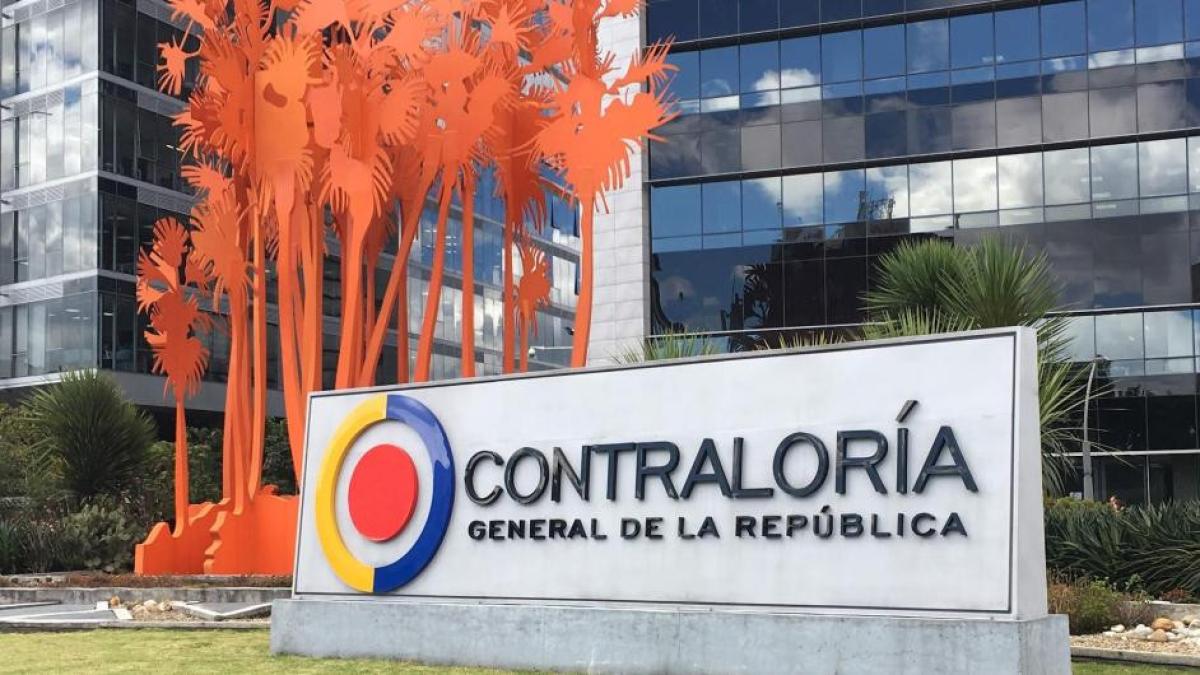
Colombia's audit body applies ML models across 13,000+ linked data sources to flag anomalous public-contracting activity in real time — catching a 9-trillion-peso pre-election spending surge in Nov 2025, though no sanctions/recoveries are confirmed yet.
9.0 trillion COP
Public contracts committed in the flagged pre-election week (1-7 Nov 2025)
68 %
Share of that week's spending concentrated in a single day (Nov 2025)
190 %
Spike vs historical contracting patterns (Nov 2025)
14,414 worth 4.55 trillion COP
Contracts flagged in the 30 days after the presidential run-off (mid-2026)
22.5 %
Year-on-year increase in post-runoff contracting value (mid-2026)
Details
Promoter
Contraloría General de la República de Colombia (DIARI) / Universidad de Antioquia
Period
May 2025 - ongoing
Keywords
public procurement, anti-corruption, predictive analytics, fiscal oversight
Context
On 19 May 2025, Colombia's Contraloría General de la República — the national supreme audit institution — launched a predictive analytics model, built with Universidad de Antioquia, to monitor public contracting for corruption risk, run by the Contraloría's Dirección de Información, Análisis y Reacción Inmediata (DIARI).
Objectives
Flag contractors with patterns such as repeated non-compliance, falsified insurance policies or premature contract settlements, and specifically watch for contracting abuse tied to Colombia's electoral-spending restrictions (Ley de Garantías Electorales).
Activities
The model applies decision-tree and random-forest techniques to more than 13,000 linked data sources, including historical SECOP I/II contracting records from 2014-2025, fiscal and disciplinary sanction registries, and consortium-membership data. A derivative tool, the Modelo Analítico de Seguimiento Preventivo, continuously watches contracting activity during electoral periods.
Results
In its first documented use, the Contraloría reported that in the week of 1-7 November 2025 — immediately before electoral restrictions took effect — 9.0 trillion pesos in public contracts were committed, with 6.1 trillion pesos (68% of that week's total) concentrated on a single day, a 190% spike against historical patterns, prompting a public alert. A follow-up run in mid-2026 flagged 14,414 contracts worth 4.55 trillion pesos signed in the 30 days after the presidential run-off, a 22.5% year-on-year increase, over 11,000 of them awarded without competitive bidding.
Conclusions
The evidence available is preventive and early-stage: no independent source confirms that contracts have been suspended, sanctions imposed, or funds recovered as a direct result of the alerts, and the Contraloría's own methodology and accuracy figures have not been independently audited.
Implementation
Indicative cost
Medium (€50k–€500k)
Time to results
Medium (1–3 years) — Launched 19 May 2025; first documented alert covered the week of 1-7 November 2025; a follow-up run flagged contracts in mid-2026.
Staffing & skills
Contraloría's Dirección de Información, Análisis y Reacción Inmediata (DIARI), Universidad de Antioquia (model-development partner)
Conditions for success
Access to and linkage of 13,000+ historical data sources (SECOP I/II 2014-2025, fiscal/disciplinary sanction registries, consortium-membership data)
A defined escalation path to the Attorney General/Procuraduría for follow-up action
Common failure modes
The Contraloría's own technical documentation was inaccessible for independent verification, limiting external scrutiny of the model's methodology
No sanctions, contract suspensions, or fund recoveries have yet been publicly confirmed as resulting from the model's alerts
Commonly funded by
National / regional programmes
Indicative funding routes for practices of this type — always check each programme's current calls and eligibility rules.
Do you run this practice?
Claim it —
verified implementers get a public contact pathway and can propose corrections.
Data sources
Where this practice's information was retrieved from, and when.
ChileCompra cross-checks officials' asset declarations against suppliers' beneficial owners, flagging conflicts of interest before contracts are awarded. In 2025, flagged …