Bhutan for Life — Project Finance for Permanence (Bhutan)
Bhutan
Asia's first 'Project Finance for Permanence' secures 1.1 M ha of protected Himalayan forest in Bhutan via a USD 118 …
United States of America · Honolulu · See the United States of America profile · See the Honolulu profile
Evidence: Observational / pre–post Top 14% 60/100 · Ask Evidence Copilot about this practice
Ten island watershed partnerships co-manage 2.6M acres of Hawaiian native forest through fencing and invasive/ungulate removal. ~US$2.5M annual state funding; US$12M leveraged since 2006. UHERO ROI: 593 gal groundwater per dollar invested in fencing (Kaua'i, 50-yr analysis).
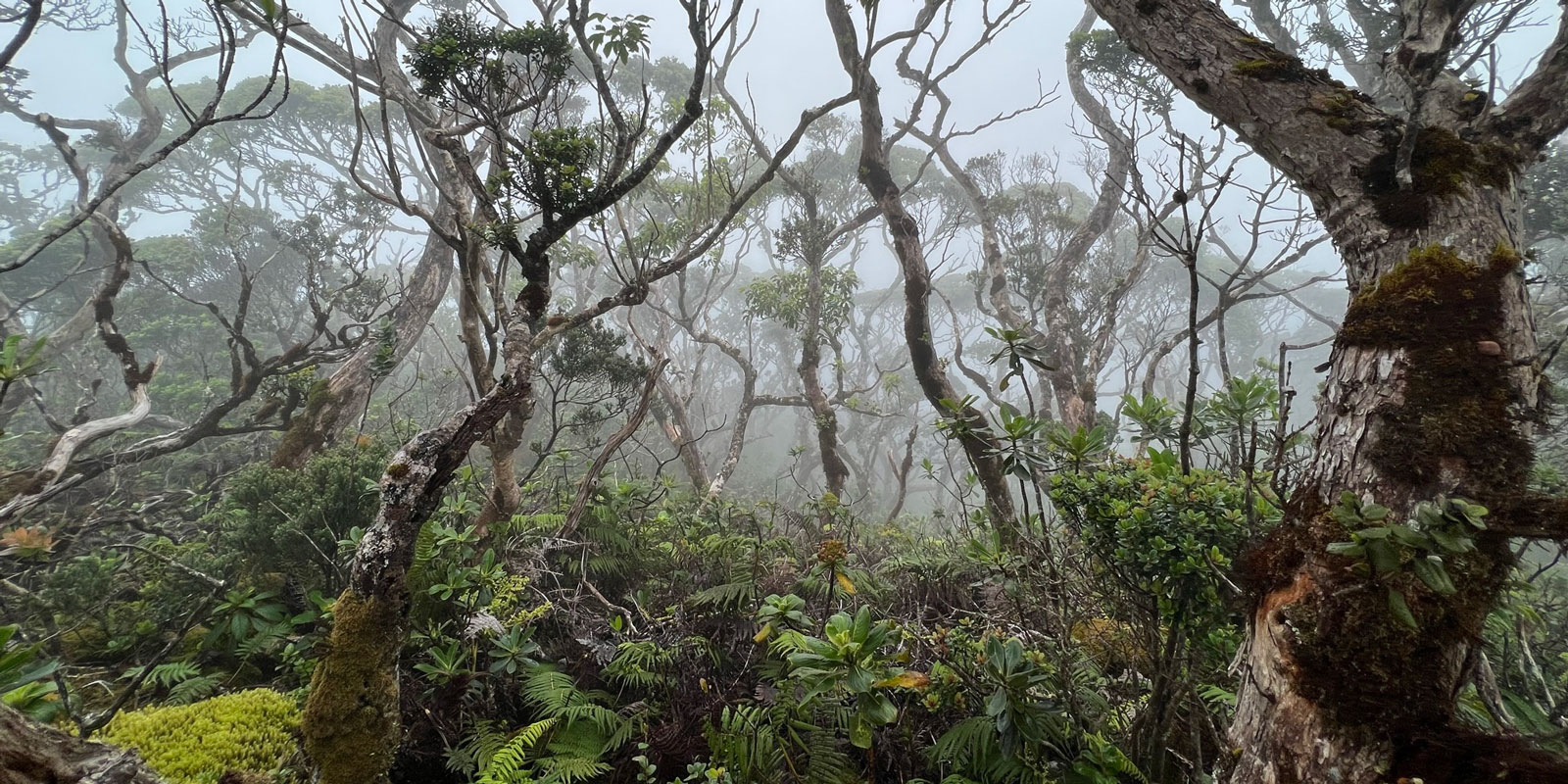
The Hawai'i Association of Watershed Partnerships (HAWP), established in 2003, coordinates ten island-based watershed partnerships across five Hawaiian islands, engaging over 100 public agencies, private landowners and NGOs.
The partnerships aim to protect more than 2.6 million acres of native forested watershed land - Hawai'i's primary freshwater recharge zone - which collapses when invasive plants or feral ungulates remove forest cover.
The principal tools are permanent exclusion fencing against feral pigs, goats and deer, followed by intensive invasive plant removal and native seedling outplanting. The State pays for the public-works dimension: DLNR allocates approximately US$2.5 million annually to partnerships, with total private and federal funds leveraged reaching US$12 million since 2006.
Cumulative results through 2024: 300,000 acres managed for ungulates and invasive species, 40+ miles of protective fencing completed, 100,000 native and endangered plants outplanted, and 7,000 community volunteers engaged. Three Mountain Alliance (Maui) protects 3 critically endangered forest birds and 25 endangered plant species across 230,000 acres. East Moloka'i Watershed Partnership completed 11.4 miles of fencing protecting 104 miles of perennial streams. A UHERO peer-reviewed benefit-cost analysis for the Kaua'i Watershed Alliance found that existing fences save 593 gallons of groundwater recharge per dollar invested over a 50-year horizon - equivalent to protecting 21.4 billion gallons of fresh water - with comparable analyses finding approximately 400 gal/$ on Hawai'i Island and 321 gal/$ on Maui.
The cooperative model relies on voluntary participation by private landowners and public agencies rather than legally binding PES contracts. Carbon and biodiversity co-benefits are not independently certified, and governance depends on sustained state appropriations with no formal mechanism if ownership changes.
National / regional programmes
Indicative funding routes for practices of this type — always check each programme's current calls and eligibility rules.
Do you run this practice? Claim it — verified implementers get a public contact pathway and can propose corrections.
Where this practice's information was retrieved from, and when.
Bhutan
Asia's first 'Project Finance for Permanence' secures 1.1 M ha of protected Himalayan forest in Bhutan via a USD 118 …
New Zealand
National programme paying contractors to eliminate invasive wilding conifers from ~180,000 ha/year; wilding conifers remove up to 40% of catchment …
Portugal
Portugal's national PES pilot (Resolução 121/2019): Fundo Ambiental pays 14 landowners €3.7M over 20 years to conserve 27,674 ha — …
Brazil
Brazil's first ecological fiscal transfer (1991) redistributes ~R$500 million/year of state VAT revenue to municipalities hosting protected areas or water …
Open full copilot Grounded in cited practices — always check the sources.