Delta Blue Carbon — Indus Delta Mangrove Restoration (Pakistan)
Pakistan
World's largest mangrove restoration: 350,000 ha of Indus Delta, protecting 102,000 ha and restoring 225,000 ha. VCS + CCB certified; …
Kuwait · Jahra · See the Kuwait profile
Evidence: Descriptive / self-reported Top 89% 27/100 · Ask Evidence Copilot about this practice
Kuwait's EPA has replanted mangroves at Jahra Reserve and Sulaibikhat Bay since the 1990s, after 1960s–70s attempts failed; post-1990 plantings reached ~2.5m after seven years, with new seedling drives continuing through 2025–2026.
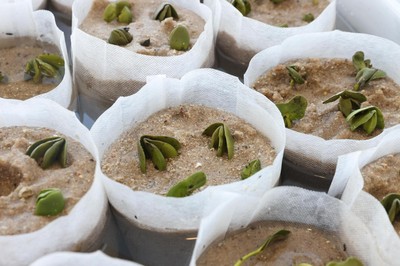
Kuwait's Environment Public Authority (EPA) has worked since the 1990s to re-establish Avicennia marina mangroves at Sulaibikhat Bay and, more recently, Jahra Nature Reserve. Earlier afforestation attempts in the 1960s-70s failed outright; post-1990 plantings in protected embayments survived, with trees reaching roughly 2.5 metres in height after seven years.
Recent activity has been incremental rather than large-scale: in September 2025 the volunteer group 'We Plant and Protect', working with the EPA and Saudi Arabian partners, donated close to 5,000 mangrove seedlings and seeds grown in EPA laboratories for staged transplanting; a further planting event at Jahra Nature Reserve in 2026 involved roughly 4,000 seedlings, with EPA aiming to restore the reserve's mangrove ecosystem by 2035 in cooperation with the UAE embassy, Kuwait Oil Company and local volunteers.
The evidence base has real limits: a 2025 peer-reviewed review of Middle Eastern mangroves states plainly that 'Kuwait and Iraq still have no self-sustaining native mangrove populations,' meaning survival depends on continued human intervention rather than natural regeneration. Sulaibikhat Bay itself is a contaminated coastline (hydrocarbons, heavy metals, suspended particles), which complicates long-term establishment, and no site-specific carbon-sequestration or biodiversity-survey figures were found in the literature reviewed.
National / regional programmes Philanthropic / foundation funding
Indicative funding routes for practices of this type — always check each programme's current calls and eligibility rules.
Do you run this practice? Claim it — verified implementers get a public contact pathway and can propose corrections.
Where this practice's information was retrieved from, and when.
Pakistan
World's largest mangrove restoration: 350,000 ha of Indus Delta, protecting 102,000 ha and restoring 225,000 ha. VCS + CCB certified; …
Vietnam
Since 1978, Ho Chi Minh City has replanted roughly 20,000 ha of mangroves defoliated by US wartime herbicide spraying, earning …
Senegal
Community-led mangrove restoration in Casamance and Sine-Saloum: 10,000 ha, 80 million trees planted by 2012, Verra-certified; 600,000 tCO2e over 20 …
Georgia
A World Bank/GEF-backed coastal wetland park in Georgia protects Ramsar-listed wetlands hosting 194 bird species, was inscribed as a 2021 …
Open full copilot Grounded in cited practices — always check the sources.