Ca Mau Mangrove-Shrimp Payments for Ecosystem Services & Organic Certification
Vietnam
In Vietnam's Ca Mau province, shrimp farmers who keep at least 50% mangrove cover on their ponds get Naturland organic …
Maldives · Malé · See the Maldives profile · See the Malé profile
Evidence: Observational / pre–post Top 58% 40/100 · Ask Evidence Copilot about this practice
Since 2015, the Maldives has levied a nightly "Green Tax" on tourists, channelled into a statutory Green Fund. Collections reached MVR 2.25bn in 2025, but only ~12% (MVR 275.2m) was spent, leaving MVR 3.59bn unspent.
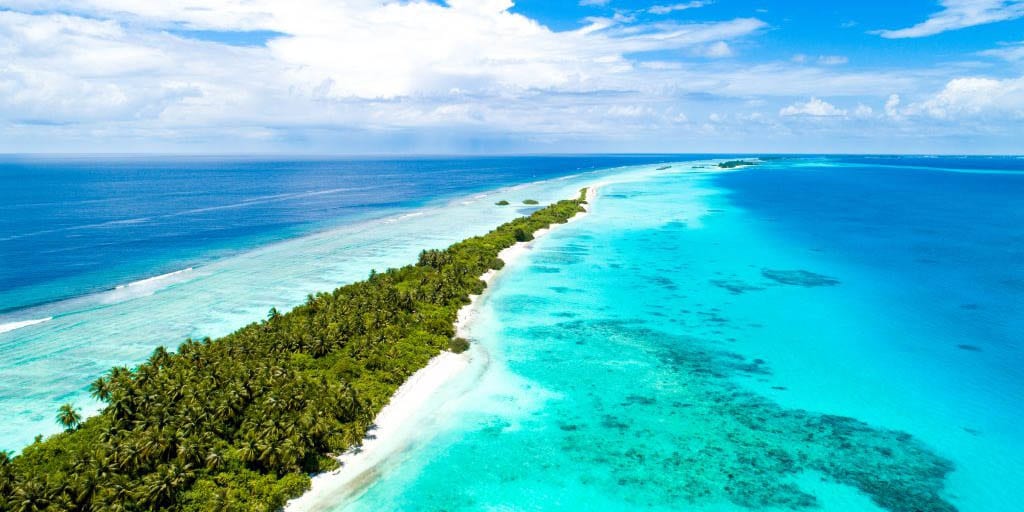
The Maldives introduced a per-tourist-night 'Green Tax' under the Tourism Act, phased in from 2015, applied to every foreign visitor staying at a resort, hotel, guesthouse or safari vessel. In 2019 the Maldives Green Fund (MGF) was formally established as a trust fund under the Public Finance Act, administered by the Ministry of Finance together with the Ministry of Climate Change, Environment and Energy, to receive and disburse this revenue on environmental protection, waste management, water and sewerage infrastructure and coastal protection.
Since January 2025 the tax stands at USD 12 per tourist per night at resorts, hotels and safari vessels and USD 6 per night at guesthouses (Maldivian nationals and resident-permit holders are exempt). Disbursed funds have gone toward water and sewerage systems, sanitation infrastructure, regional waste-management facilities and coastal-erosion protection works on inhabited islands.
Revenue has scaled with tourism: roughly USD 29.75 million was collected in the first half of 2019 alone, and by 2025 annual collections reached about MVR 2.25 billion (roughly USD 146 million). Disbursement has consistently lagged collection: in 2025 only about MVR 275.2 million (roughly 12%) of the MVR 2.25 billion collected was spent, leaving a year-end balance of MVR 3.59 billion by December 2025 (up from MVR 1.61 billion at the end of 2024); in the first seven months of 2023 the fund had collected USD 40.06 million against USD 23.1 million spent. Independent commentators attribute the gap to bottlenecks in project planning, procurement and implementation capacity rather than a lack of environmental need.
National / regional programmes
Indicative funding routes for practices of this type — always check each programme's current calls and eligibility rules.
Do you run this practice? Claim it — verified implementers get a public contact pathway and can propose corrections.
Where this practice's information was retrieved from, and when.
Vietnam
In Vietnam's Ca Mau province, shrimp farmers who keep at least 50% mangrove cover on their ponds get Naturland organic …
Palau
Palau's statutory $100 Pristine Paradise Environmental Fee, paid by every visitor since 2018, has raised over $13m (2012-2019) and about …
Bhutan
Asia's first 'Project Finance for Permanence' secures 1.1 M ha of protected Himalayan forest in Bhutan via a USD 118 …
Tanzania
Africa's first FSC community forest (2009): MCDI supports 40+ communities managing 410,000+ ha of Tanzanian miombo woodland, with 150,000 ha …
Open full copilot Grounded in cited practices — always check the sources.