EthioTrees Dryland Restoration Project (Tigray, Ethiopia)
Ethiopia
Plan Vivo- and Gold Standard-certified dryland restoration in Tigray, Ethiopia: landless and smallholder farmers have restored 30,000+ ha since 2016, …
Nauru · Yaren · See the Nauru profile · See the Yaren profile
Evidence: Descriptive / self-reported Top 89% 27/100 · Ask Evidence Copilot about this practice
Phosphate mining left roughly 80% of Nauru's 21 km² landmass a jagged limestone moonscape; the state-run Nauru Rehabilitation Corporation aims to restore a quarter of the mined Topside plateau in 20 years, but 25 years on only one pit has seen substantial rehabilitation.
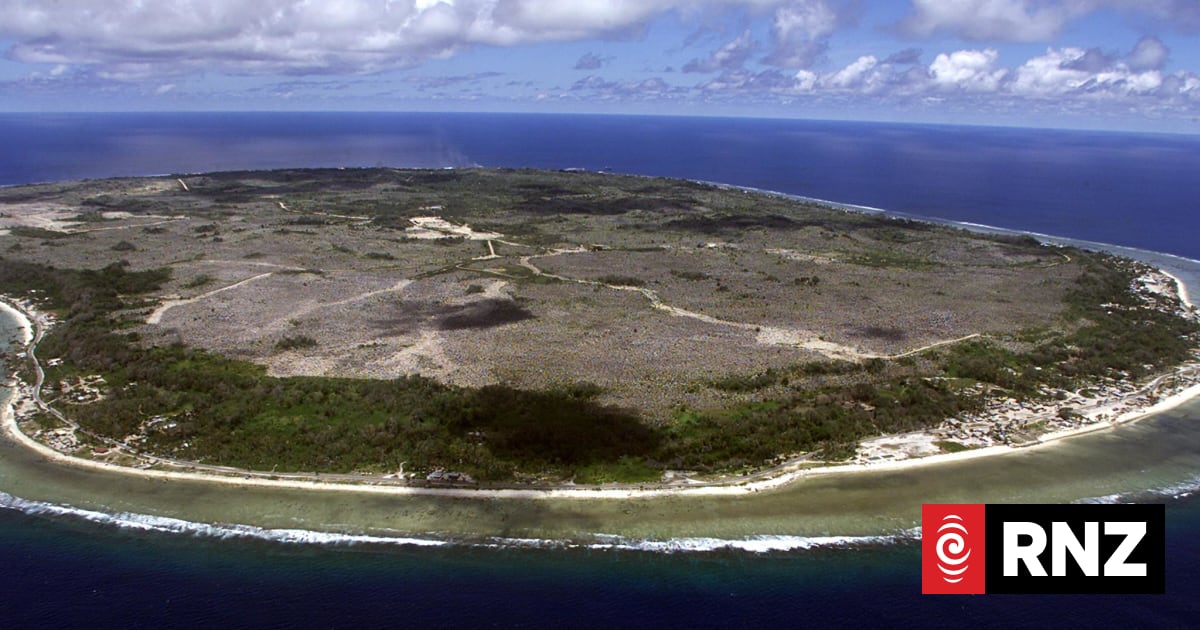
Phosphate mining stripped the topsoil from "Topside," the elevated central plateau covering most of Nauru, a 21 km² Pacific island, leaving a jagged limestone-pinnacle karst "moonscape" that now covers roughly 80% of the island's landmass. Following a 1990s legal claim by Nauru against Australia over historic mining damage and a subsequent settlement, Nauru's parliament created the statutory Nauru Rehabilitation Corporation (NRC) by 1997 legislation, operational from 1999, to plan and carry out reclamation of the mined land.
In 2019 NRC head Peter Jacob told Radio New Zealand the corporation aimed to restore about 25% of Topside within 20 years, putting the total restoration cost at US$1.014 billion spread over a projected 100-year horizon, a figure reported without further cost breakdown.
A New Zealand consultancy (Calibre Consulting) reviewed restoration options. To date, independent accounts describe only the Pit 6 area as having seen substantial rehabilitation work, initially proposed for reuse as a correctional facility. A newer master plan, the "Higher Ground Initiative," and an associated 8-hectare pilot "Smart Village" on government land are testing agroforestry, nitrogen-fixing cover crops and rainwater-capture systems on degraded plots, with regional partners including the Pacific Community (SPC) and FAO.
Independent researchers who have studied Nauru's mined-out lands describe rehabilitation as technically difficult because the karst terrain lacks topsoil, and note that attempts to re-establish vegetation and soil have had limited success so far.
The NRC's long-run area and cost targets should be read as an aspirational, multi-generational plan rather than an achieved outcome; this is a genuine, state-run restoration effort, but one whose evidenced progress remains modest relative to its scale.
National / regional programmes
Indicative funding routes for practices of this type — always check each programme's current calls and eligibility rules.
Do you run this practice? Claim it — verified implementers get a public contact pathway and can propose corrections.
Where this practice's information was retrieved from, and when.
Ethiopia
Plan Vivo- and Gold Standard-certified dryland restoration in Tigray, Ethiopia: landless and smallholder farmers have restored 30,000+ ha since 2016, …
Honduras
Plan Vivo-certified community carbon project in La Mosquitia—Honduras's last large primeval forest. Miskito fire brigades protect 1,600+ ha of pine …
Nicaragua
Plan Vivo–certified community reforestation with 4,000+ smallholder families across 17,000+ ha in Estelí highlands. All 2015–2021 credits independently verified; US$3.1M …
Spain
Spain's CAP Strategic Plan (PEPAC 2023-2027) pays farmers in dehesa and agroforestry systems—~3.5 million ha of Extremadura, Andalusia and Castilla …
Open full copilot Grounded in cited practices — always check the sources.