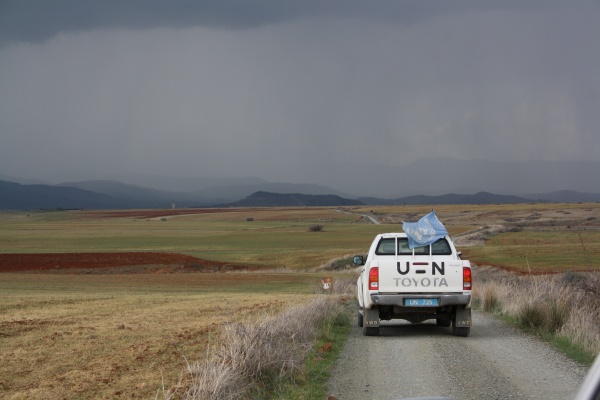
Cyprus's UN-patrolled buffer zone bisecting Nicosia, off-limits to construction since 1974, has become an unplanned wildlife refuge: a 2007 UNDP-backed survey recorded 358 plant, 100+ bird and 18 mammal species, and it now shelters up to 3,000 Cyprus mouflon.
358
Plant species documented (2007 survey)
100+
Bird species documented (2007 survey)
18
Mammal species documented (2007 survey)
2,500-3,000
Cyprus mouflon population
Details
Promoter
UN Development Programme (UNDP) Cyprus
Period
1974–present (biodiversity survey 2007)
Region (NUTS)
CY000
Keywords
biodiversity conservation, urban wildlife corridor, buffer zone ecology, post-conflict rewilding
Context
Since the 1974 division of Cyprus, a UN-patrolled buffer zone up to several hundred metres wide has run through the heart of Nicosia and across the island, closed to construction, farming and most human activity.
Results
In 2007, a joint Greek-Cypriot and Turkish-Cypriot scientific team, supported by UNDP, documented 358 plant species, more than 100 bird species and 18 mammal species in the zone. Separately, the Cyprus Game and Fauna Service's monitoring scheme (running since 1997) has tracked the island's mouflon population recovering to roughly 2,500-3,000 animals, with a significant share sheltering inside the buffer zone.
Conclusions
UNDP environmental officer Nicolas Jarraud has called the strip a de facto wildlife corridor, but the protection is an unplanned by-product of political stalemate, not a designed conservation programme: there is no dedicated management authority, no recurring funding and no certification, and the habitat's future depends entirely on a political situation that could change without warning.
Implementation
Indicative cost
Low (< €50k) — No dedicated conservation budget identified; monitoring carried out via UNDP-backed surveys and a government fauna-monitoring scheme.
Time to results
Long (> 3 years) — Buffer zone in place since 1974; biodiversity survey conducted 2007; mouflon monitoring ongoing since 1997.
Staffing & skills
UN Development Programme (UNDP) Cyprus, joint Greek-Cypriot/Turkish-Cypriot scientific survey team, Cyprus Game and Fauna Service (mouflon monitoring)
Conditions for success
sustained restriction of construction, farming and human activity within the buffer zone
Common failure modes
no dedicated management authority, recurring funding or certification -- protection is contingent on an unresolved political situation that could change without warning
Where it fits
Governance type
UN peacekeeping buffer zone, not a designed conservation authority
Scale
national (Cyprus buffer zone)
Income level
high income (Cyprus/EU)
Commonly funded by
National / regional programmes
Indicative funding routes for practices of this type — always check each programme's current calls and eligibility rules.
Do you run this practice?
Claim it —
verified implementers get a public contact pathway and can propose corrections.
Data sources
Where this practice's information was retrieved from, and when.