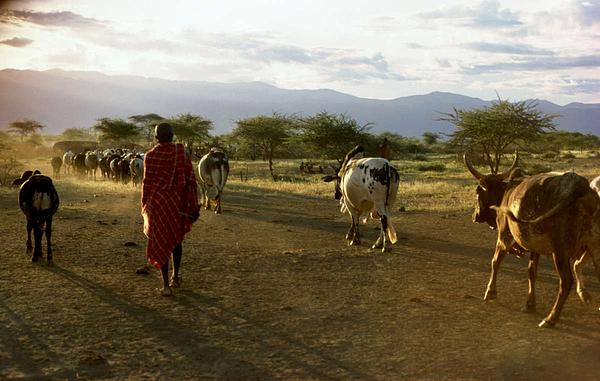
The Northern Kenya Rangelands Carbon Project, run by the Northern Rangelands Trust (NRT) under Verra's Verified Carbon Standard (methodology VM0032, improved grassland management), is one of the largest soil-carbon offset projects in Africa, spanning roughly 4.9 million hectares across 33 community conservancies and more than 100,000 pastoralist residents in northern and coastal Kenya. NRT has used satellite vegetation data — including a collaboration with Digital Earth Africa using NDVI imagery to help track whether land is being grazed according to project rules — alongside ground monitoring, and the project has sold verified credits to buyers including Meta, Netflix, Kering, Beiersdorf and British Airways.
In March 2023, Verra suspended the project after Survival International published a detailed critique arguing that the project's baseline could not reliably distinguish carbon gains attributable to the project's grazing-management changes from year-to-year rainfall variability, and that it was altering long-standing indigenous grazing practices. Verra's subsequent review reinstated the project; Survival International called that review a "shocking whitewash" for not resolving the core measurement concerns. In January 2025, a Kenyan court ruled — in a case brought by 165 community members — that two of the conservancies underpinning the project had been established unconstitutionally, prompting Verra to suspend the project again pending further review.
The case is included here as a cautionary example precisely because it combines a technically sophisticated, satellite-assisted monitoring system with disputed carbon accounting and contested community consent — a reminder that remote-sensing inputs do not by themselves guarantee a credible or defensible PES/carbon outcome, and that third-party certification can fail to catch measurement and governance problems on first review.
Read the full analysis: https://www.survivalinternational.org/news/14211
Where this practice's information was retrieved from, and when.