Abu Dhabi Mangrove Initiative — Blue Carbon Restoration & Monitoring Programme
United Arab Emirates
Abu Dhabi's environment agency has planted tens of millions of mangroves since 2015, expanding cover to roughly 17,600 ha; EAD …
Oman · Muscat · See the Oman profile
Oman's Environment Authority has restored mangroves from a remnant to ~1,000 ha since 2001, planting 3.5m+ seeds in two years, and signed a deal to plant 100m mangrove trees on 20,000 ha, projected to cut 14m tonnes CO2 and yield ~$150m in blue-carbon credits.
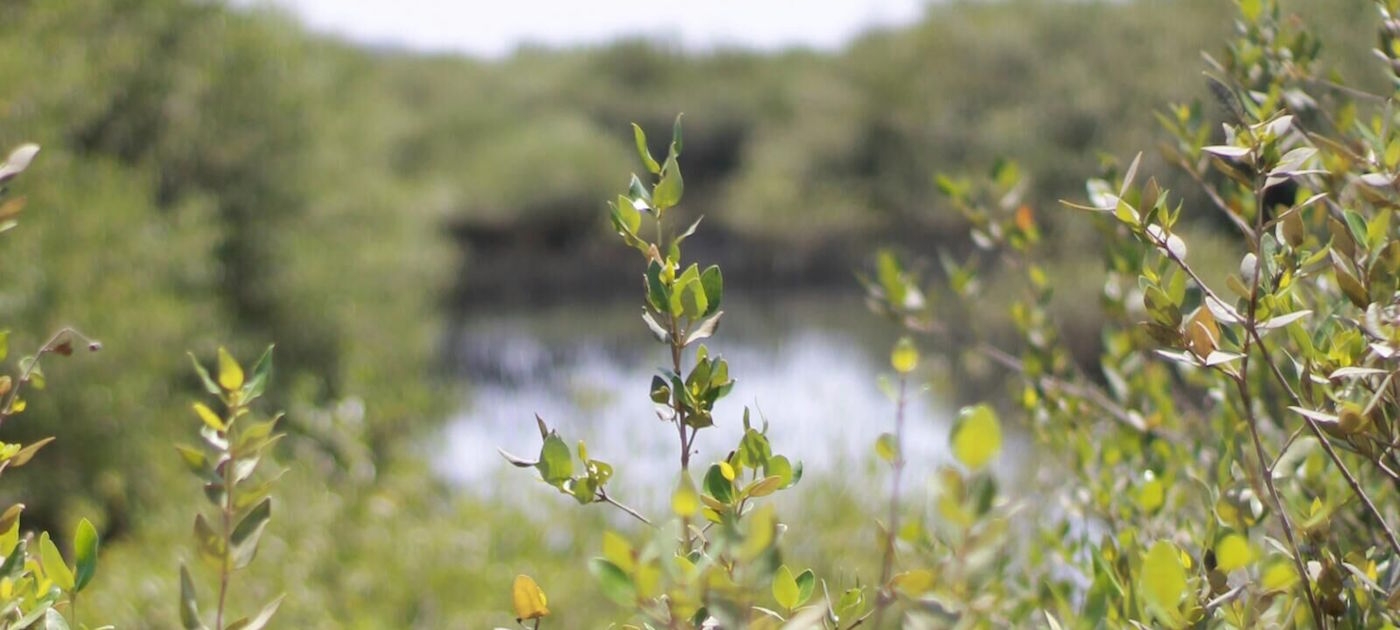
Oman's Environment Authority (EA) has run a mangrove (Avicennia marina) restoration programme along the Sultanate's coastline since 2001, targeting degraded intertidal flats and historic mangrove sites such as Al Qurm in Muscat as part of the country's climate and coastal-protection strategy.
National mangrove cover, reduced by development and grazing to a small remnant, has been restored to roughly 1,000 hectares across Oman's coast. Over the past two years the EA has planted more than 3.5 million mangrove seeds directly into targeted sites, including a record 2 million in a single year. In 2023 the EA signed a contract with Oman's MSA Green Projects Company to plant 100 million mangrove trees over four years, converting an estimated 20,000 hectares of coastal land to mangrove habitat.
Oman's protected Al Qurm forest (about 80 hectares) is estimated by the EA to sequester up to 80 tonnes of CO2 per hectare in above-ground biomass. UNEP and Omani officials project that the wider restoration programme could avoid or sequester on the order of 14 million tonnes of CO2 and generate roughly $150 million in blue-carbon credit value once certified, positioning Oman's mangroves as an emerging nature-based carbon asset.
As a caveat, the carbon and credit-value figures are programme and press estimates rather than a currently registered, third-party-verified carbon standard such as Verra; as of the sources reviewed, Oman's mangrove carbon had not yet been issued as certified credits, so the figures should be read as credible potential rather than realised carbon revenue.
Read the full analysis: https://www.unep.org/news-and-stories/story/mangrove-restoration-paying-dividends-oman
Implementation detail (cost, timeline, staffing, conditions for success) is not yet available for this practice.
Where this practice's information was retrieved from, and when.
United Arab Emirates
Abu Dhabi's environment agency has planted tens of millions of mangroves since 2015, expanding cover to roughly 17,600 ha; EAD …
Bahrain
Bahrain's Supreme Council for Environment protects Tubli Bay's Ramsar-listed mangroves (~48 ha in 2020) and, with UN-Habitat and HSBC, is …
Pakistan
World's largest mangrove restoration: 350,000 ha of Indus Delta, protecting 102,000 ha and restoring 225,000 ha. VCS + CCB certified; …
Senegal
Community-led mangrove restoration in Casamance and Sine-Saloum: 10,000 ha, 80 million trees planted by 2012, Verra-certified; 600,000 tCO2e over 20 …
Open full copilot Grounded in cited practices — always check the sources.