M-Pesa – Mobile Money as Financial and Digital Inclusion Infrastructure
Kenya
Safaricom's M-Pesa turned basic phones into bank accounts across Kenya. A landmark Science study found it lifted 194,000 households out …
Côte d'Ivoire · Abidjan · See the Côte d'Ivoire profile · See the Abidjan profile
Evidence: Descriptive / self-reported Top 63% 60/100 · Ask Evidence Copilot about this practice
Ivorian firm Cerco built its 'Kone' voice OS, covering 17 national languages plus dozens more, into an 'OpenG' smartphone so people who cannot read or write — about 40% of Côte d'Ivoire's population — can bank or reach government services by voice alone.
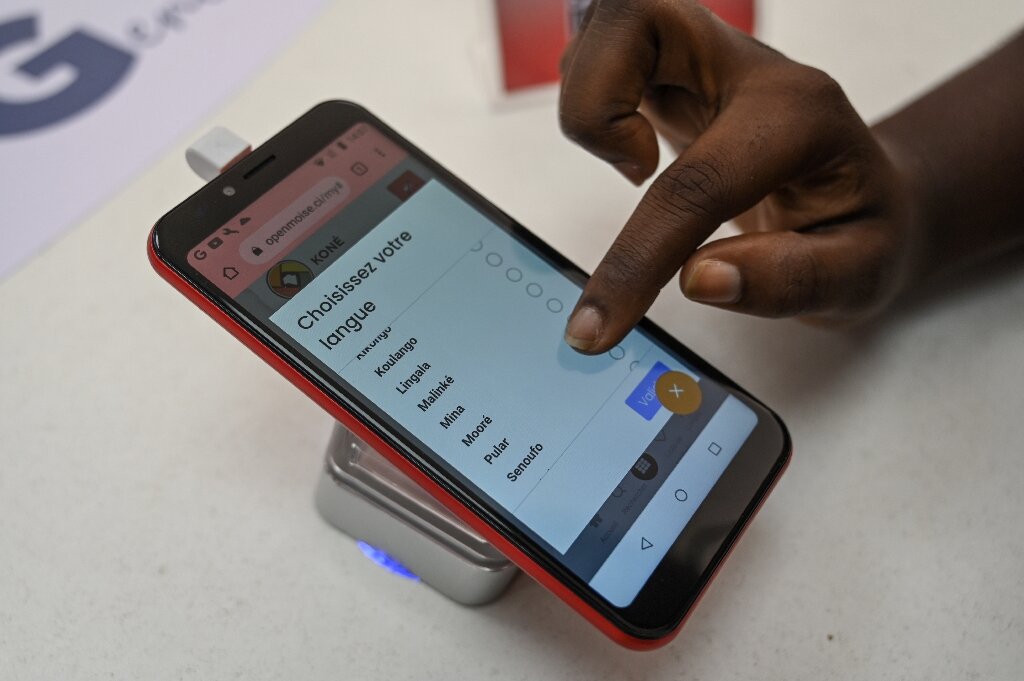
Cerco, an Ivorian technology and education group founded by Alain Capo-Chichi, built the 'Kone' voice-driven operating system to let people who cannot read or write — about 40% of Côte d'Ivoire's population — use a smartphone by voice alone.
The goal was to let illiterate and semi-literate users complete everyday and government-facing tasks, such as checking a bank balance or having an official document read aloud, using spoken commands in their own language rather than text-based menus.
Kone responds to spoken commands in Baoulé, Bété, Dioula and 14 other languages spoken in Côte d'Ivoire plus around 50 further African languages, and is built into the commercially launched 'OpenG' or 'Superphone' handset, manufactured at the ICT and Biotechnology Village in Grand-Bassam under a government partnership in which Cerco pays no import taxes or customs duties in exchange for training roughly 1,200 young people a year and remitting a share of income to the state; the phone is distributed nationally through 200 Orange telecom shops.
Multiple independent outlets (Africanews, VOA, News24 and TechXplore) reported that Cerco had received 200,000 phone orders as of September 2022, shortly after the product's July 2022 commercial launch.
These are pre-order and sales figures rather than a measured usability or outcomes evaluation, and no independent study of how illiterate users actually use the device day-to-day, or of task-completion and error rates, was found — a gap worth flagging given the strength of the underlying design concept.
Own resources / municipal budget
Indicative funding routes for practices of this type — always check each programme's current calls and eligibility rules.
Do you run this practice? Claim it — verified implementers get a public contact pathway and can propose corrections.
Where this practice's information was retrieved from, and when.
Kenya
Safaricom's M-Pesa turned basic phones into bank accounts across Kenya. A landmark Science study found it lifted 194,000 households out …
India
Karya channels AI firms' data-annotation demand to rural Indian workers via a smartphone app, paying well above minimum wage. A …
Bolivia
BancoSol's AppSol added GanaSol, a gamified points-and-prizes layer, to nudge low-literacy microfinance clients into digital banking. Three years after its …
Rwanda
IremboGov pairs 7,000+ nationwide field agents with a feature-phone USSD interface so citizens without smartphones or digital skills can still …
Open full copilot Grounded in cited practices — always check the sources.