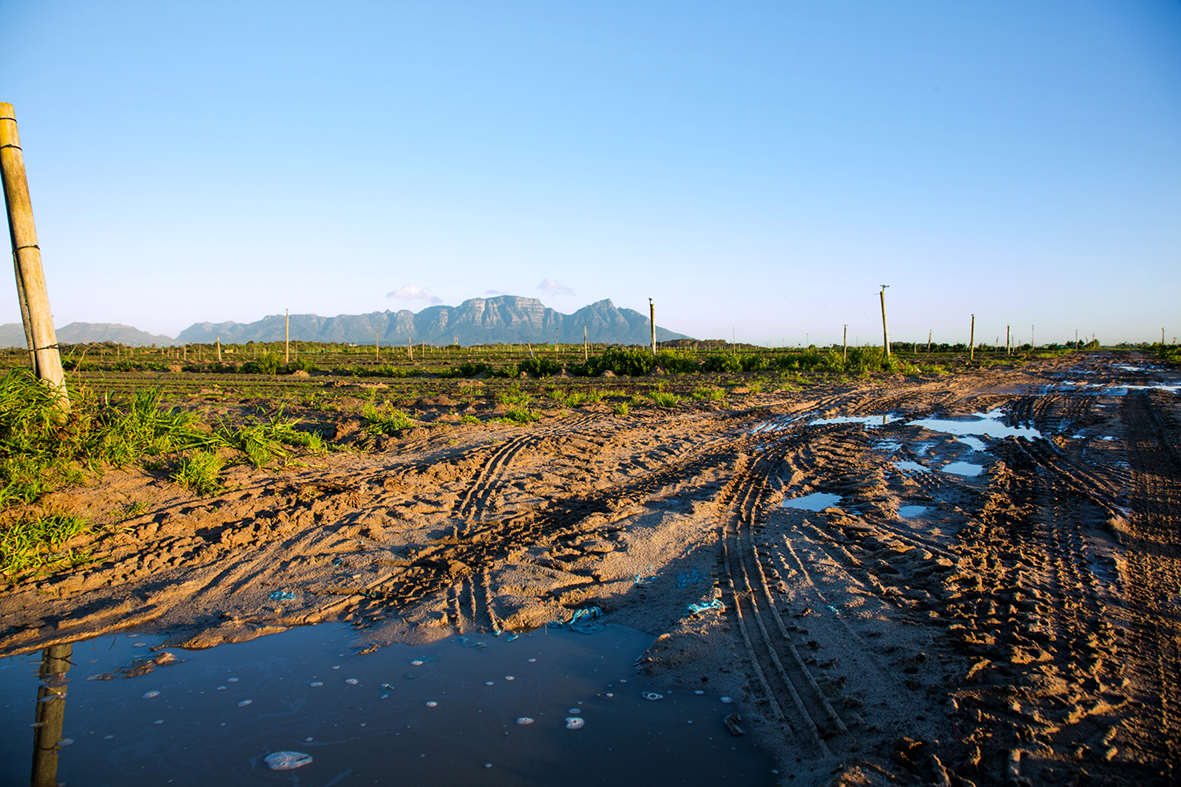
Cape Town's Philippi Horticultural Area sits over the Cape Flats Aquifer's key recharge zone. A 2018 impact study urged its protection; in 2020 the High Court set aside Oakland City's approvals (15,000 homes) for ignoring aquifer impacts. Zoning remains contested.
Details
Promoter
PHA Food and Farming Campaign; City of Cape Town; Western Cape Government
Period
2018–present
Keywords
land use planning, aquifer recharge, peri-urban agriculture, litigation
Description
The Philippi Horticultural Area (PHA) is a peri-urban farming belt inside the City of Cape Town that overlies the portion of the Cape Flats Aquifer with the greatest groundwater potential and an important natural recharge area. Farmland here is a de facto nature-based solution: open, permeable cultivated land recharges the aquifer that supports both irrigation and potential domestic supply. A nine-month impact study by Indego Consulting, presented to the Western Cape Provincial Legislature committee on 18 April 2018, recommended protecting the PHA. It reported that 89% of the farmland is cultivated and 83% has water available, with annual turnover of R484 million direct and R938 million indirect, and that the area had lost about 753 ha on its southern border to proposed developments (Daily Maverick, 19 April 2018). These are advocacy-commissioned study figures and are not independently audited. In February 2020 the Western Cape High Court (Judge Kate Savage), in a case brought by the PHA Food and Farming Campaign, set aside the City's planning-appeal approval of the Oakland City development (housing for about 15,000 families on roughly 171 ha) and sent the matter back to the MEC for reconsideration of aquifer evidence; the court declined to substitute its own decision (GroundUp, 19 February 2020). Caveats: the outcome is a procedural win, not a permanent designation. Reporting in late 2024 describes the zoning fight as far from over, and no measured recharge or water-quality gains attributable to the protection have been published. The practice is therefore scored on governance and land-protection merit rather than on demonstrated ecological outcomes.
Read the full analysis: https://groundup.news/article/court-blocks-development-cape-flats-aquifer/
Implementation
Implementation detail (cost, timeline, staffing, conditions for success) is not yet available for this practice.
Do you run this practice?
Claim it —
verified implementers get a public contact pathway and can propose corrections.
Data sources
Where this practice's information was retrieved from, and when.
Since 1981, New Jersey's Pinelands Development Credit programme lets landowners in the 1.1M-acre Pinelands Reserve sell development rights to builders …
In 1980 Montgomery County, Maryland downzoned 93,000 acres to create its Agricultural Reserve, letting farmers sell Transferable Development Rights to …