Pristine Paradise Environmental Fee — Palau's Statutory Tourism Levy for Protected Areas
Palau
Palau's statutory $100 Pristine Paradise Environmental Fee, paid by every visitor since 2018, has raised over $13m (2012-2019) and about …
Kiribati · Kanton · See the Kiribati profile
Kiribati closed 408,250 km² of ocean to fishing in 2015, financed by a PIPA Trust endowment meant to offset lost licence revenue. The fund raised only ~US$7M against a $13.5M target, and in 2021 Kiribati reopened PIPA after citing tens of millions in foregone revenue.
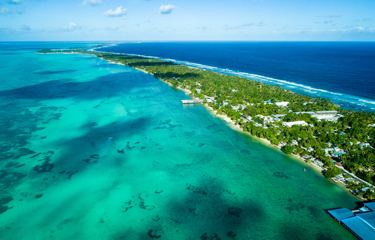
The Phoenix Islands Protected Area (PIPA) was formally established by Kiribati in 2008 (building on 2006 regulations), enlarged to cover 408,250 km² of ocean, and inscribed as a UNESCO World Heritage Site in 2010. To finance it without simply forgoing revenue, Kiribati, Conservation International and the New England Aquarium designed a "reverse fishing licence" mechanism: a PIPA Conservation Trust endowment whose interest income would compensate the government for the foreign tuna-fleet licence fees it gave up as more of the area was closed to commercial fishing under a Conservation Contract.
In 2015, Kiribati went further and declared PIPA a full no-take zone, at the time one of the largest fully protected marine areas on Earth. But the financing mechanism never caught up with that ambition: by its 2014 second-phase target the Trust aimed to raise $13.5 million, and core management costs alone ran to roughly $550,000 a year, leaving little of the endowment's interest available as actual compensation.
By 2021 the endowment had raised only about US$7 million. An independent panel found that demand for Kiribati's fishing licences had fallen 8% since the 2015 closure, translating into an estimated $60-140 million in lost purse-seine revenue and $5.9 million in lost long-line revenue through 2021 — for a country where fishing licences supply more than 70% of government revenue. Citing this shortfall and the Trust's inability to deliver the promised compensation, the Government of Kiribati lifted PIPA's no-take closure in November 2021, shifting to a Marine Spatial Planning approach that again permits some commercial fishing.
PIPA is best read as an honest cautionary case for ecosystem-service finance: a legally and institutionally sophisticated reverse-payment mechanism, endorsed by major conservation NGOs and a UNESCO listing, that nonetheless could not raise enough capital to match the real economic value it asked a small island state to forgo.
Read the full analysis: https://www.seafoodsource.com/news/environment-sustainability/kiribati-government-says-mpa-implementation-cost-country-millions-in-revenue
Implementation detail (cost, timeline, staffing, conditions for success) is not yet available for this practice.
Where this practice's information was retrieved from, and when.
Palau
Palau's statutory $100 Pristine Paradise Environmental Fee, paid by every visitor since 2018, has raised over $13m (2012-2019) and about …
Saint Lucia
St Lucia's Soufrière Marine Management Area (est. 1994/95) is a self-financing, multi-zoned reserve network. Studies found fish biomass quadrupled in …
Bahamas
In Nov 2024 The Bahamas refinanced $300M of external debt with IDB, Builders Vision and AXA XL guarantees, unlocking $124M …
Belize
In 2021 Belize converted $553M of debt into a $364M "blue loan," cutting debt ~12% of GDP and earmarking ~$180M …
Open full copilot Grounded in cited practices — always check the sources.