CEA-Leti — Grenoble's Lab-to-Fab Technology Transfer Engine for Microelectronics
France
CEA-Leti, Grenoble's applied microelectronics institute, has spun off 70+ startups since 1967 — including STMicroelectronics and Soitec — files ~200 …
Vietnam · Ho Chi Minh City · See the Vietnam profile · See the Ho Chi Minh City profile
Evidence: Descriptive / self-reported Top 27% 76/100 · Ask Evidence Copilot about this practice
Ho Chi Minh City's flagship tech park grew from 26 firms and $2bn invested (2011) to 160+ projects worth $13.7bn (2025); its R&D centre has commercialised ~20 research results and filed 13 patents, per state media.
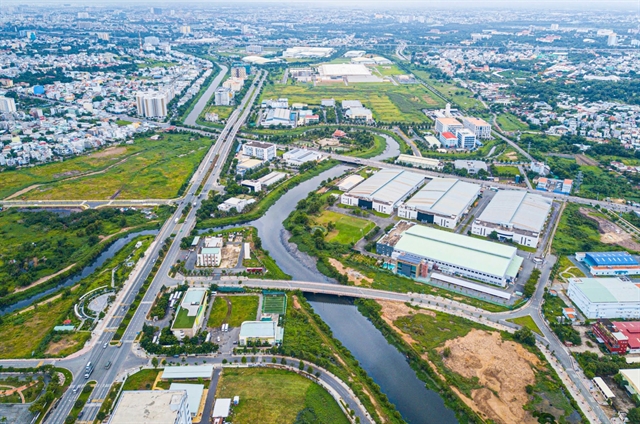
Saigon Hi-Tech Park (SHTP) is a special economic-technology zone established by the Ho Chi Minh City government in Vietnam's Thu Duc City area, created to attract high-tech foreign direct investment and build a domestic technology-transfer and R&D ecosystem.
SHTP's in-house Research and Development Centre, established in 2004, has run 17 national/ministerial/city-level research projects and over 100 grassroots-level projects. Its SHTP Labs unit and park-wide operations report holding nine international patents, close to 60 national patents and 155 industrial-property titles.
By 2011 the park hosted 26 companies with about $2 billion in registered investment. By 2025 it had grown to more than 160 active projects worth over $13.7 billion in registered investment, including Intel's more than $1.5 billion investment employing close to 6,000 people. State media reported 2025 production value of roughly $23 billion, cumulative production value exceeding $176 billion since inception, and cumulative exports surpassing $100 billion by end-2025. The R&D centre has filed 13 patents and commercialised or transferred around 20 research results to industry, including a silicon-carbide pressure-sensor system deployed at 20 locations since 2019.
SHTP shows sustained multi-decade growth in foreign and domestic high-tech investment alongside a modest but growing record of R&D commercialisation, though all performance figures originate from the park authority's own reporting via state-affiliated media rather than independent audit.
National / regional programmes
Indicative funding routes for practices of this type — always check each programme's current calls and eligibility rules.
Do you run this practice? Claim it — verified implementers get a public contact pathway and can propose corrections.
Where this practice's information was retrieved from, and when.
France
CEA-Leti, Grenoble's applied microelectronics institute, has spun off 70+ startups since 1967 — including STMicroelectronics and Soitec — files ~200 …
South Africa
Since 2021, WHO and the Medicines Patent Pool have backed Afrigen Biologics in Cape Town to reverse-engineer and transfer mRNA …
Taiwan
A state-backed applied-research institute that seeded Taiwan's semiconductor industry by spinning off UMC (1980) and TSMC (1987), transferring technology, fabs …
Botswana
Botswana's first government-backed science & technology park pairs a National Technology Transfer Office and start-up incubator with tenant leasing in …
Open full copilot Grounded in cited practices — always check the sources.