Top 26%
in this catalogue (1040 scored practices)
Scores cluster high, so position within the catalogue is often more telling than the number alone.
Transferability / replicability2/3
The edutainment model was extended into a second series (Contracorriente) and has informed similar entertainment-education violence-prevention approaches cited across Latin America, though rigorous cross-country replication data were not found.
Impact on gender equality1/1
A three-year longitudinal panel of 4,500 young people (2003–2005) found improved gender-norm attitudes, greater awareness of Nicaragua's anti-violence law and increased use of services for survivors.
Effectiveness1/1
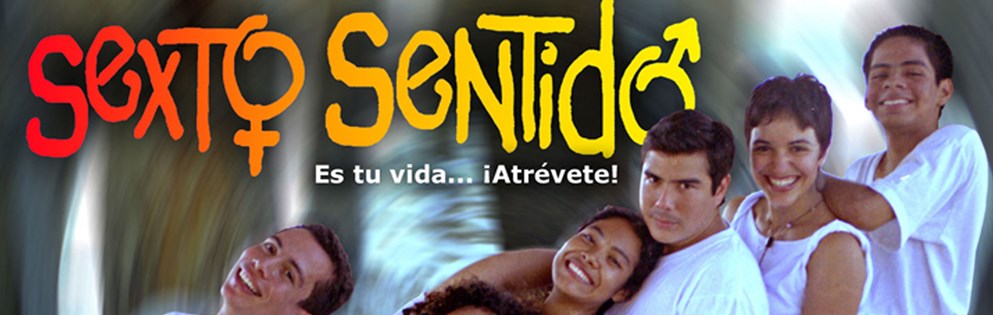
The show reached 70% of young women surveyed and its rights slogan was recalled by 18% of respondents, showing the mass-media-plus-local-mobilisation strategy achieved its intended reach and message uptake.
Efficiency0/1
No cost-effectiveness or cost-per-outcome analysis was identified for the programme.
Evaluated outcomes1/1
A longitudinal three-wave panel survey (2003, 2004, 2005) of the same cohort measured norm and behaviour change over time, though without a randomised control group.
Sustainability1/1
Puntos de Encuentro sustained the strategy across multiple TV series and youth-mobilisation cycles from 2001 well into the 2010s.
Achievement / evidence1/1
Documented gains in legal awareness and self-reported service-seeking are real, but the observational panel design (no control group) makes the achievement evidence weaker than a randomised trial.
Gender-mainstreaming embedding1/1
Storylines and the accompanying youth-network mobilisation explicitly target gender-inequitable norms and violence against women and girls.
Curator validation1/1
The evaluation is summarised in UN Women's EVAW knowledge repository (endvawnow.org) and peer-reviewed in Global Public Health.
Evidoria. Sexto Sentido — Puntos de Encuentro's Youth TV Drama and Community-Mobilisation Strategy Against Violence, Nicaragua. Persistent ID: f503d325-75c1-47f5-b96c-37f633d065a2.