Alberta Wetland Replacement Program — Statutory In-Lieu Fee Offsetting (Canada)
Canada
Under Alberta's 2013 Wetland Policy, developers who cannot avoid draining a wetland can pay an in-lieu fee funding replacement elsewhere; …
Madagascar · Tolagnaro · See the Madagascar profile
Evidence: Descriptive / self-reported Top 99% 13/100 · Ask Evidence Copilot about this practice
Rio Tinto's QMM ilmenite mine near Tolagnaro offsets 1,665 ha of forest loss with ~6,000 ha of protected forest, about 3.5x the footprint, but researchers find the offset habitat ecologically mismatched and patrollers paid below minimum wage.
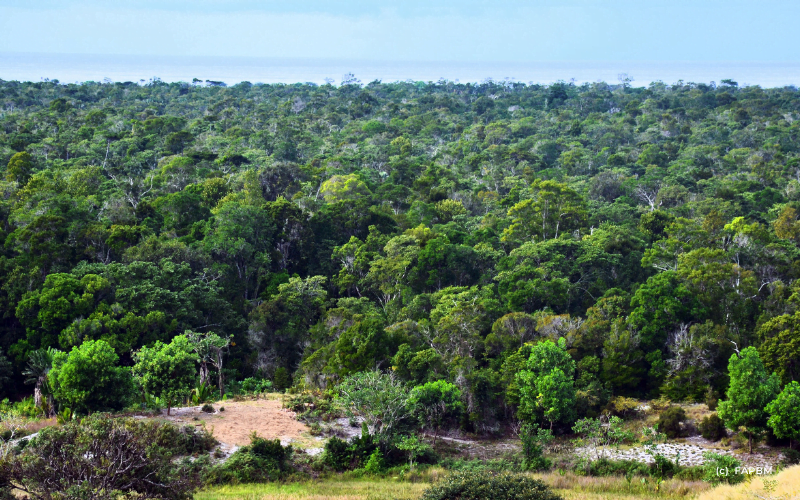
QIT Madagascar Minerals (QMM), a Rio Tinto subsidiary, has mined ilmenite and zircon from littoral forest near Tolagnaro (Fort Dauphin) in southeastern Madagascar since 2008, in a project expected to run more than 40 years, affecting around 1,665 hectares of littoral forest - among the rarest and most threatened forest types on Earth.
Offset the forest loss from mining with protected forest sites intended to exceed the destroyed area.
QMM created three protected forest sites - Bemangidy-Ivohibe (part of the 60,000-hectare Tsitongambarika Protected Area, roughly 4,000 ha), Sainte Luce forest (500 ha) and Agnalahaza forest (1,500 ha) - managed on the ground by the NGO Asity Madagascar with an estimated budget of at least US$350,000 over 2015-2019.
The combined ~6,000 hectares of offset forest is about 3.5 times the 1,665-hectare mine footprint. Unlike Rio Tinto's separately evaluated Ambatovy offset elsewhere in Madagascar - found on track for no net loss of forest in a 2022 Nature Sustainability study - QMM's offset habitat at Bemangidy-Ivohibe is lowland humid forest, ecologically distinct from the littoral forest being destroyed at the mine, a mismatch researchers say undermines the offset's 'like-for-like' premise.
Reporting found forest-patrol workers paid around 25,000 ariary (roughly US$6.80) per month in 2018, well below Madagascar's contemporaneous minimum wage of 170,000 ariary (roughly US$45), while Rio Tinto's global revenue that year (roughly US$40 billion) dwarfed Madagascar's entire GDP (roughly US$12 billion). FAPBM, which joined the offset-linked COMBO+ programme, has itself stated that questions about funding sustainability, effectiveness and greenwashing risk remain openly unresolved.
Own resources / municipal budget
Indicative funding routes for practices of this type — always check each programme's current calls and eligibility rules.
Do you run this practice? Claim it — verified implementers get a public contact pathway and can propose corrections.
Where this practice's information was retrieved from, and when.
Canada
Under Alberta's 2013 Wetland Policy, developers who cannot avoid draining a wetland can pay an in-lieu fee funding replacement elsewhere; …
Ghana
Under a Forestry Commission MoU, Newmont's Akyem gold mine is revegetating three times the 101 ha of forest it impacted …
Madagascar
A rare independent, peer-reviewed evaluation found Ambatovy's nickel mine near Moramanga is on track to offset the 2,064 ha of …
Spain
Since 2011, Catalan NGO Associació Sèlvans has turned donations into 15-25 year logging-rights waivers for forest owners, documenting 42.15 ha …
Open full copilot Grounded in cited practices — always check the sources.