AI-Assisted Legal Review at the Hellenic Cadastre — Cutting a National Backlog by Up to 90%
Greece
Greece's Hellenic Cadastre became the first Greek public authority to use AI in administrative decision support, reading contracts and flagging …
Mali · Bamako · See the Mali profile · See the Bamako profile
Evidence: Observational / pre–post Top 22% 73/100 · Ask Evidence Copilot about this practice
In a 2025 pilot, WFP's AI-powered Enterprise Deduplication Service used photo-matching to flag duplicate beneficiary records in Mali, saving US$431,000 in six months — equivalent to about 6.7 million meals — while keeping humans in charge of final decisions.
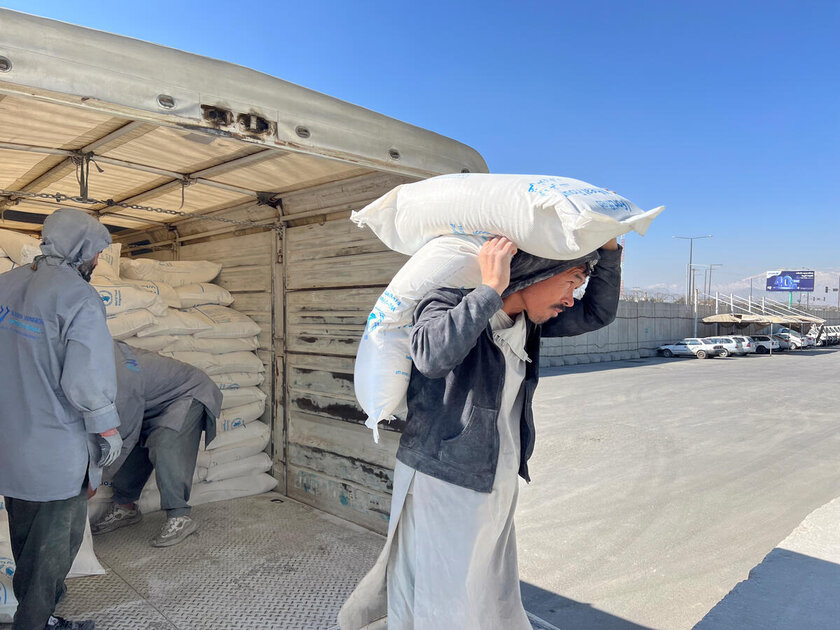
WFP's beneficiary databases, like many large humanitarian responses, risk duplicate registrations — the same person recorded more than once under slightly different personal details — which wastes scarce food-assistance budgets and slows the process of getting help to people who need it.
In 2025 WFP piloted its Enterprise Deduplication Service (EDS) in Mali, an AI tool built on open-source computer-vision models that compares beneficiary photographs, names and other registration details to flag likely duplicate records for human staff to review; humans, not the algorithm, make the final eligibility decision, and the design lets people keep religious or cultural coverings such as veils or turbans on for the photo match. The same tool has also been piloted in Afghanistan, Burkina Faso, Cameroon, Mozambique, Niger, Somalia and Uganda.
Over six months in 2025, EDS helped WFP's Mali operation save more than US$431,000 by identifying duplicated assistance, cutting a task that used to take staff weeks of manual spreadsheet comparison down to a matter of hours. WFP projects the tool could save at least US$4.7 million globally in 2026 as it scales, equivalent to roughly 6.7 million additional meals, and reports matching accuracy of 99.99%.
Because it runs on open-source AI models rather than licensed biometric software, WFP states it costs around 50% less than comparable proprietary deduplication systems. WFP says it runs data-privacy audits and assessments before each country deployment and stresses that AI flags are advisory only, with staff retaining sign-off; independent, published evaluation of false-positive and false-negative rates, and of any downstream effects on beneficiaries incorrectly flagged, has not yet been made public.
Philanthropic / foundation funding
Indicative funding routes for practices of this type — always check each programme's current calls and eligibility rules.
Do you run this practice? Claim it — verified implementers get a public contact pathway and can propose corrections.
Where this practice's information was retrieved from, and when.
Documented replications and adaptations of this practice elsewhere.
| Place | When | Adopter | Outcome |
|---|---|---|---|
| Afghanistan | 2025 | WFP Afghanistan Country Office | Piloted WFP's Enterprise Deduplication Service (EDS) AI photo-matching tool alongside the Mali deployment. |
| Burkina Faso | 2025 | WFP Burkina Faso Country Office | Piloted WFP's Enterprise Deduplication Service (EDS) AI photo-matching tool alongside the Mali deployment. |
| Cameroon | 2025 | WFP Cameroon Country Office | Piloted WFP's Enterprise Deduplication Service (EDS) AI photo-matching tool alongside the Mali deployment. |
| Mozambique | 2025 | WFP Mozambique Country Office | Piloted WFP's Enterprise Deduplication Service (EDS) AI photo-matching tool alongside the Mali deployment. |
| Niger | 2025 | WFP Niger Country Office | Piloted WFP's Enterprise Deduplication Service (EDS) AI photo-matching tool alongside the Mali deployment. |
| Somalia | 2025 | WFP Somalia Country Office | Piloted WFP's Enterprise Deduplication Service (EDS) AI photo-matching tool alongside the Mali deployment. |
| Uganda | 2025 | WFP Uganda Country Office | Piloted WFP's Enterprise Deduplication Service (EDS) AI photo-matching tool alongside the Mali deployment. |
Greece
Greece's Hellenic Cadastre became the first Greek public authority to use AI in administrative decision support, reading contracts and flagging …
Brazil
Brazil's PNLD textbook programme tested a CNN sorting book images as sharp, defocus-blurred or motion-blurred in a two-arm 1:1 randomised …
Libya
WFP used its SCOPE beneficiary platform to target and deduplicate cash transfers across Libya, doubling disbursements from $1.4 million (40,000 …
Zambia
An AI framework combining biometric verification, ID-card OCR, liveness checks and anomaly scoring processed ~71,000 households in Zambia's Sep–Oct 2024 …
Open full copilot Grounded in cited practices — always check the sources.