Jamaica Yallahs-Hope River Watershed Management and PES Programme
Jamaica
GEF/IDB project protecting Blue Mountains forests that supply 42% of Kingston's water. Over 500 ha reforested, 5,000+ farmers trained, 8% …
China · Huangshan · See the China profile
Evidence: Quasi-experimental Top 27% 53/100 · Ask Evidence Copilot about this practice
China's first trans-provincial watershed PES: downstream Zhejiang pays upstream Anhui to protect Xin'an River water quality; CNY 2.2 billion exchanged 2012–2020, reducing COD by 13–21% and total phosphorus by 9–18%.
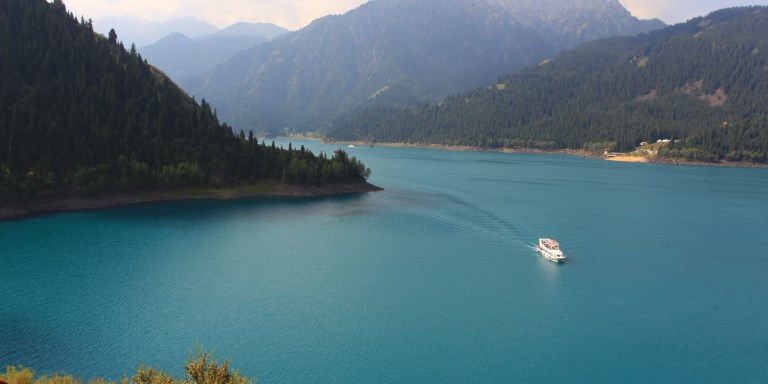
Launched in 2012, the Xin'an River (Xinanjiang) Basin Ecological Compensation Programme is China's first pilot cross-provincial, horizontal water-quality payment scheme. Upstream Huangshan City in Anhui Province is the source of the Xin'an River, which feeds Qiandao Lake (Thousand Island Lake) in Zhejiang Province, a key drinking water supply for tens of millions downstream.
The mechanism is bidirectional: if upstream water quality meets an agreed threshold, downstream Zhejiang pays upstream Anhui; if it falls short, Anhui pays Zhejiang, creating direct accountability between conservation effort and downstream benefit.
Three pilot rounds ran from 2012 to 2020, each three years in length, with an annual compensation fund of approximately CNY 500 million co-financed by both provinces and the central government. Compensation receipts funded relocation of riparian farms, sewage treatment upgrades and enhanced watershed forest conservation.
Huangshan City received CNY 2.2 billion in total over the three rounds. Peer-reviewed SPARROW water-quality modelling and difference-in-difference analysis found that COD (permanganate index) in non-point source runoff decreased by 13-21%, total nitrogen by 17-18%, and total phosphorus by 9-18% between 2012 and 2020, with significant improvements attributable to the compensation policy.
A fourth round launched in 2021. The model has been replicated in more than 100 Chinese river basins and is cited by the World Bank and ADB as a scalable template for inter-jurisdictional watershed governance globally.
National / regional programmes
Indicative funding routes for practices of this type — always check each programme's current calls and eligibility rules.
Do you run this practice? Claim it — verified implementers get a public contact pathway and can propose corrections.
Where this practice's information was retrieved from, and when.
Jamaica
GEF/IDB project protecting Blue Mountains forests that supply 42% of Kingston's water. Over 500 ha reforested, 5,000+ farmers trained, 8% …
Brazil
Brazil's first municipal PES law (Lei 2.100/2005): Extrema, Minas Gerais pays 53+ landowners R$195/ha/yr to restore native forest and adopt …
Brazil
Brazil's first ecological fiscal transfer (1991) redistributes ~R$500 million/year of state VAT revenue to municipalities hosting protected areas or water …
United States of America
Madison's sewerage district meets phosphorus limits by funding farm and nonpoint reductions across the Yahara watershed rather than a $78–124M …
Open full copilot Grounded in cited practices — always check the sources.