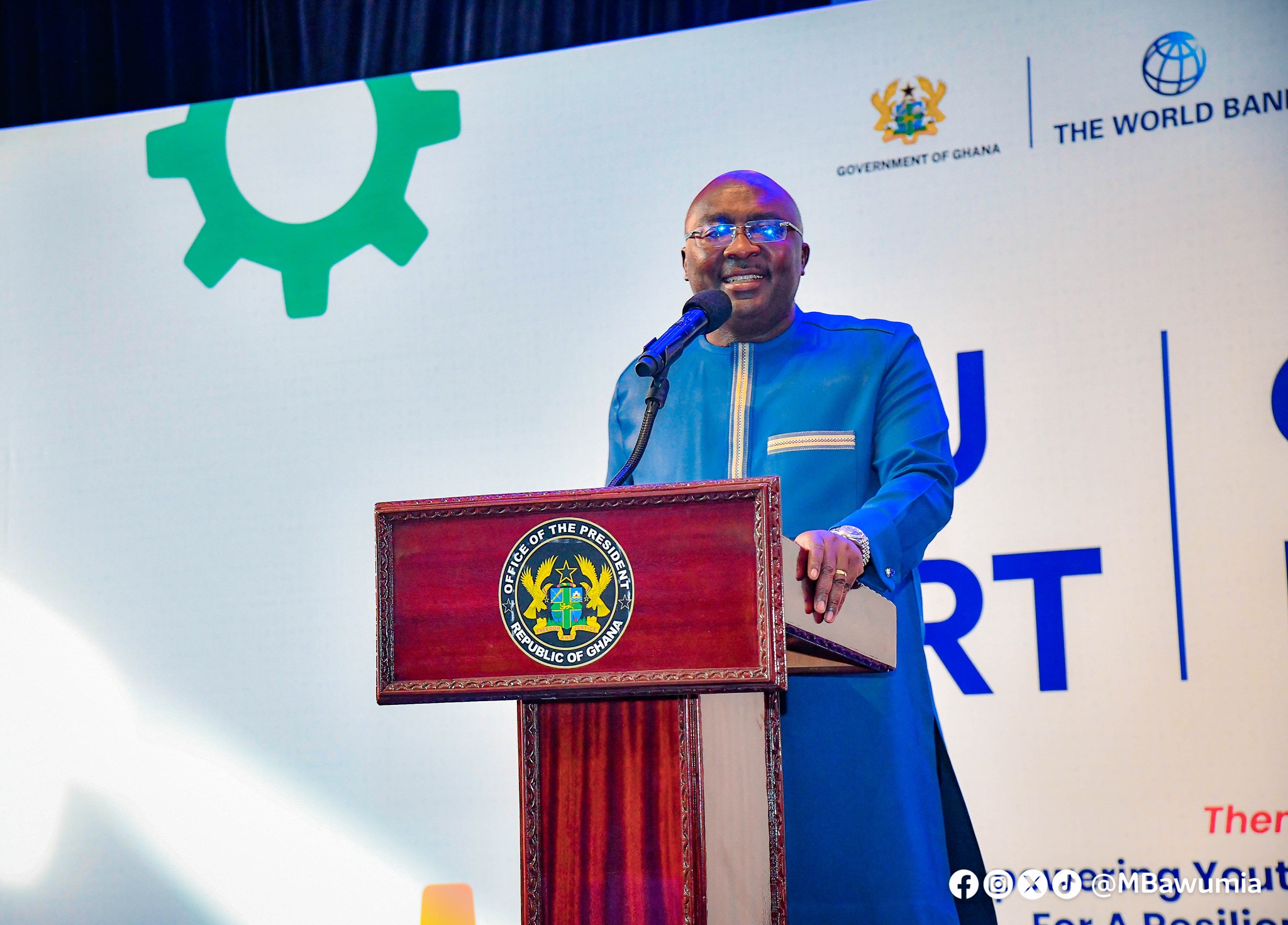
Ghana's national youth-enterprise fund pairs tiered business training with matching grants. By late 2023 it had trained 36,000+ young entrepreneurs and disbursed GH¢165m, but its original GH¢1bn ambition needed a $150m World Bank loan to keep 2024 targets in reach.
23,695
Entrepreneurs completing Basic-level training (by Oct 2023)
~165 GHC million
Total disbursed by late 2023 (vs GHC1bn envisioned at launch)
30,000+
Self-reported people in gainful employment
Details
Maturity
Scaling
Promoter
Ghana Enterprises Agency (GEA) / Ministry of Finance
Period
2021–2024
Keywords
youth entrepreneurship, SME finance, business training, job creation
Context
YouStart is Ghana's state-backed youth-entrepreneurship fund, announced in the 2021 budget and implemented by the Ghana Enterprises Agency (GEA, formerly NBSSI) together with the National Entrepreneurship and Innovation Programme. Young entrepreneurs progress through Basic, Intermediate and Advanced training tiers before becoming eligible for grants, loans or equity finance.
Activities
By October 2023, 23,695 entrepreneurs had completed Basic-level training, with 7,975 reaching Intermediate and 4,514 reaching Advanced level. The GEA disbursed GHC65 million to over 3,000 startups and MSMEs under the World Bank co-financed Ghana Jobs and Skills Project, and signed a further GHC100 million grant tranche in November 2023.
Results
GEA's chief executive has stated that more than 30,000 people are now in gainful employment through the initiative, though this figure is self-reported and has not been independently audited.
Conclusions
The government allocated GHC200 million to YouStart for 2024 and set a target of supporting 50,000 startups and MSMEs that year -- but reaching it required seeking a further $150 million credit line from the World Bank. The gap between the original GHC1 billion fund envisioned at launch and the roughly GHC165 million actually disbursed by late 2023 is a useful caution: headline funding announcements do not always translate into commensurate disbursement.
Implementation
Indicative cost
High (€500k–€5M) — GHC200 million allocated for 2024; roughly GHC165 million actually disbursed by late 2023 against a GHC1 billion original vision.
Time to results
Medium (1–3 years) — Announced 2021; disbursement and training data through 2023-2024.
Staffing & skills
Ghana Enterprises Agency trainers and disbursement staff
Conditions for success
tiered training (Basic/Intermediate/Advanced) gating access to finance
World Bank co-financing supplementing domestic budget
Common failure modes
actual disbursement (~GHC165 million) fell far short of the GHC1 billion fund envisioned at launch
reaching the 2024 target required a further $150 million World Bank credit line
employment figure is self-reported and unaudited
Where it fits
Governance type
national government agency + World Bank co-financing
Scale
national
Income level
lower-middle income
Commonly funded by
National / regional programmes
Indicative funding routes for practices of this type — always check each programme's current calls and eligibility rules.
Do you run this practice?
Claim it —
verified implementers get a public contact pathway and can propose corrections.
Data sources
Where this practice's information was retrieved from, and when.
A six-year, $12.8m EU-funded programme trained 5,350 young Gambians and backed 4,600 with entrepreneurship advice, mini-grants and market access, generating …
A randomised controlled trial of 288 Greater Accra SMEs found that a 2-day working-capital-management training plus WhatsApp follow-up raised treated …