evidoria

← Back to browse

Good practice Imported

Abriendo Oportunidades ('Opening Opportunities') — Mentorship Network for Indigenous Girls in Guatemala

Guatemala · Sololá · See the Guatemala profile

Evidence: Randomised controlled trial Top 29% 82/100 · Ask Evidence Copilot about this practice

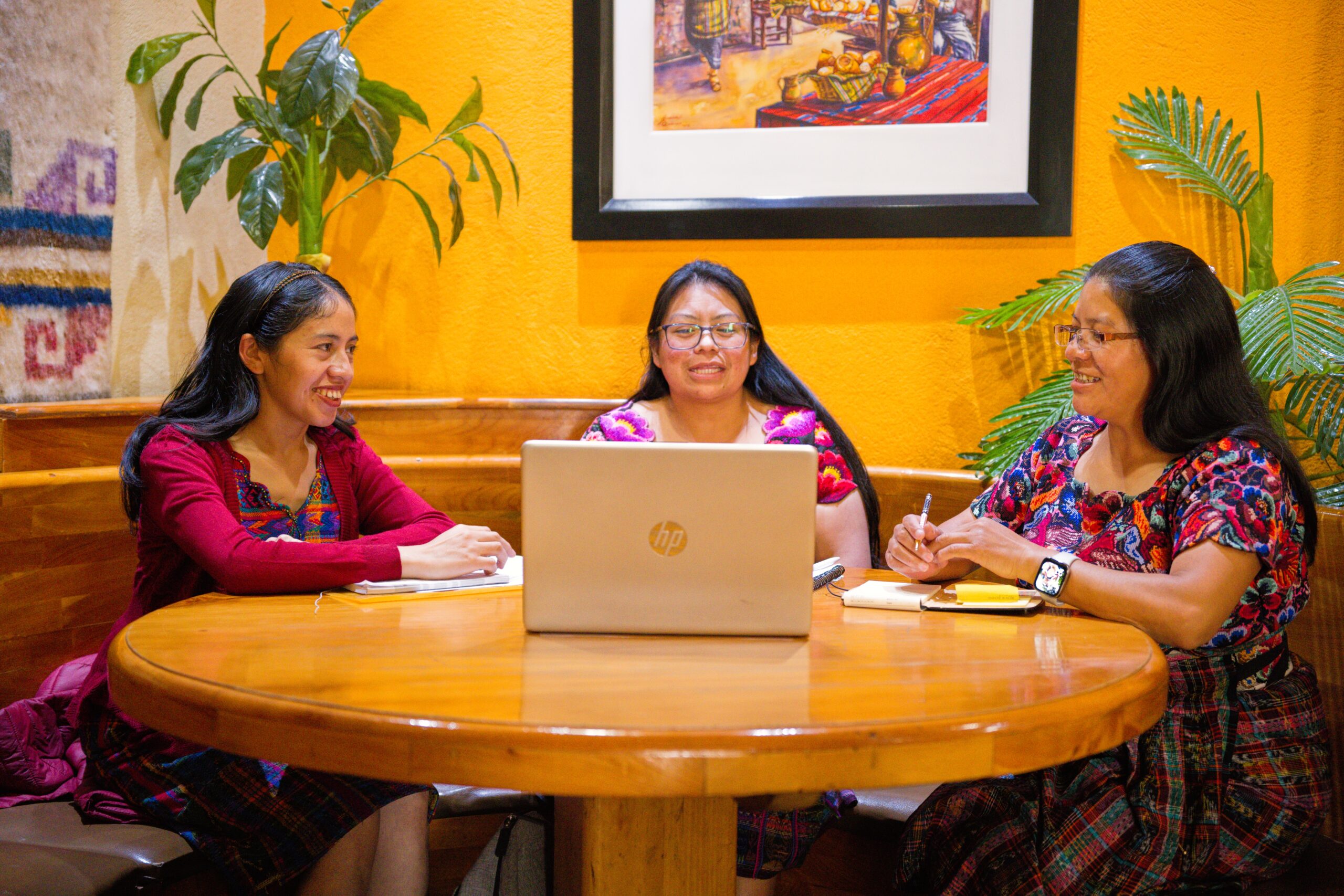
Since 2004, Abriendo Oportunidades has trained young Indigenous women as mentors for girls' clubs in rural Guatemala. By 2011, 72% of participants stayed in school to age 16–17 versus 29% nationally, and a 2017 trial found lower violence exposure.

100 %
Girl leaders completing sixth grade
81.5 %
Girls completing sixth grade nationally (comparison)
72 %
Participants remaining in school at cycle end
29 %
Indigenous girls aged 16-17 remaining in school nationally (comparison)
97 %
Participants remaining unmarried during the cycle
25,000+
Girls reached (2004-2024)
Abriendo Oportunidades ('Opening Opportunities') — Mentorship Network for Indigenous Girls in Guatemala

Details

Maturity
Established
Promoter
Population Council, with REDMI Aq'ab'al and Na'leb'ak (mentor-led civil society organisations)
Period
2004–present (over 25,000 girls reached across more than 500 rural communities)
Keywords
education, girls' empowerment, indigenous rights, gender-based violence prevention

Context

Launched in 2004 by the Population Council in Guatemala, Abriendo Oportunidades recruits and trains young Indigenous women as mentors who run weekly safe-space clubs for Maya girls aged roughly 8-18 in rural communities, covering literacy and numeracy, life skills, sexual and reproductive health, financial literacy and leadership, and prevention of child marriage and gender-based violence.

Results

A 2009-2011 household-level evaluation across 36 programme communities found 100% of girl leaders had completed sixth grade versus 81.5% of girls nationally, 72% of participants remained in school at cycle end versus 29% of Indigenous girls aged 16-17 nationwide, 97% remained unmarried during the cycle, and 88% reported having a bank account. A 2017 external cluster-randomised evaluation found participating girls had significantly lower reported exposure to physical violence and were less likely to be married than comparison-group peers.

Conclusions

Two decades on, the programme has reached more than 25,000 girls and trained roughly 500 mentors across over 500 rural communities, with its model adapted in Belize and Mexico; as with most long-running NGO-led programmes operating alongside other services, isolating its independent causal contribution is harder in the larger-scale recent data than in the smaller, controlled 2017 evaluation.

Implementation

Indicative cost
Medium (€50k–€500k)
Time to results
Long (> 3 years)
Staffing & skills
Population Council, REDMI Aq'ab'al (alumnae-led), Na'leb'ak (alumnae-led)

Conditions for success

  • mentor-led, girl-only safe-space clubs run by trained young Indigenous women
  • weekly sessions combining literacy/numeracy, life skills, SRH, financial literacy and leadership

Common failure modes

  • at larger scale, isolating the programme's independent causal contribution from other concurrent local services becomes harder than in the smaller, controlled 2017 evaluation

Commonly funded by

Philanthropic / foundation funding

Indicative funding routes for practices of this type — always check each programme's current calls and eligibility rules.

Do you run this practice? Claim it — verified implementers get a public contact pathway and can propose corrections.

Data sources

Where this practice's information was retrieved from, and when.

Attachments

Similar practices you may find useful