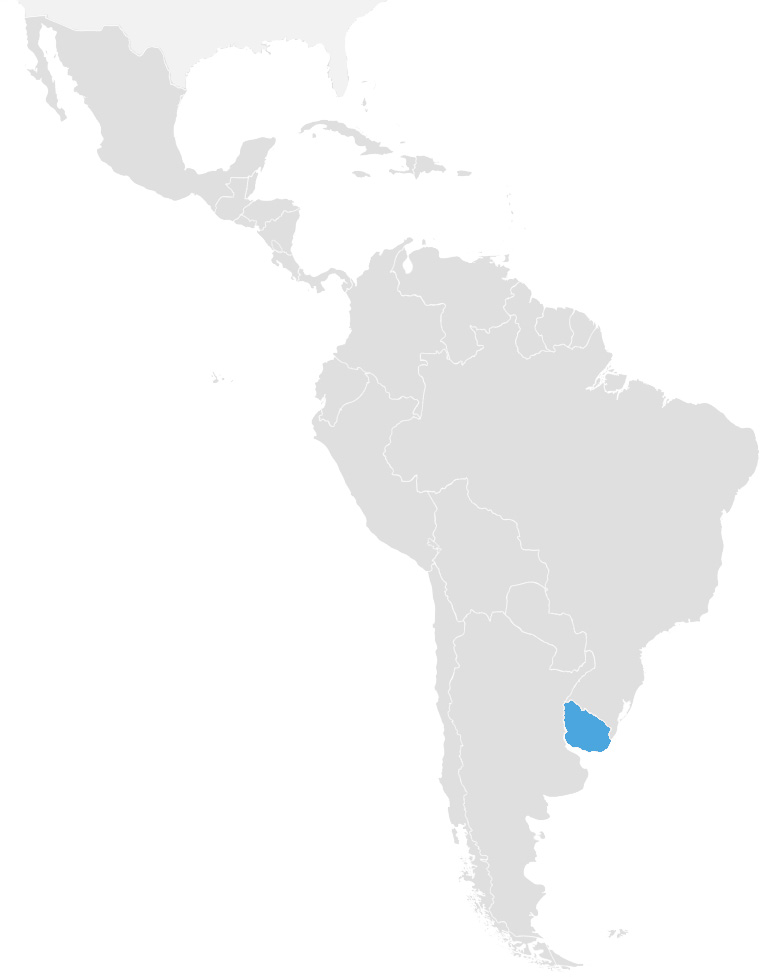
Uruguay's AGESIC and the Open Knowledge Foundation piloted a Model Context Protocol server letting citizens ask natural-language questions of the open-data catalogue with answers traced to source datasets; launched June 2026, no usage data published yet.
Details
Maturity
Pilot
Promoter
AGESIC (Agencia de Gobierno Electrónico y Sociedad de la Información y del Conocimiento)
Period
2026
Keywords
open data, digital government, transparency, generative AI
Context
Uruguay's open-data catalogue (catalogodatos.gub.uy) holds thousands of government datasets, but citizens without technical skills struggle to find and interpret them, and generic AI chatbots risk answering from ungrounded or fabricated information rather than the real data.
Objectives
Let users ask natural-language questions of the open-data catalogue and receive answers traced directly to the underlying datasets, instead of free-form generated text.
Activities
AGESIC partnered with the Open Knowledge Foundation's Tech Team to prototype a Model Context Protocol (MCP) server designed to work with any CKAN-based data portal, funded by the Patrick J. McGovern Foundation and following the open, reusable model promoted by the Digital Public Goods Alliance.
Conclusions
Announced in June 2026, the project is explicitly an early pilot: OKFN's own announcement reports no usage metrics or performance figures, and it is included here as an early, transparently-designed model for verifiable AI access to public data — not yet as a proven success.
Implementation
Indicative cost
Low (< €50k)
Time to results
Short (< 1 year)
Staffing & skills
AGESIC (Agencia de Gobierno Electrónico y Sociedad de la Información y del Conocimiento), Open Knowledge Foundation Tech Team
Conditions for success
Funding from the Patrick J. McGovern Foundation
Adherence to the Digital Public Goods Alliance's open, reusable model and CKAN compatibility for portability
Commonly funded by
National / regional programmesPhilanthropic / foundation funding
Indicative funding routes for practices of this type — always check each programme's current calls and eligibility rules.
Do you run this practice?
Claim it —
verified implementers get a public contact pathway and can propose corrections.
Data sources
Where this practice's information was retrieved from, and when.
Brazil's anti-corruption watchdog CGU and Uruguay's AGESIC piloted an open-source bridge letting citizens query government open data in plain language …
The UK's Government Digital Service piloted GOV.UK Chat, a retrieval-augmented generative-AI assistant answering citizens' tax, benefits and visa questions — …