Guyana's One-Third Gender Candidate Quota — Two Decades of Sustained Representation
Guyana
Since a 2000 constitutional and electoral-law reform, Guyana has required at least one-third women on every party's candidate list. A …
Algeria · Algiers · See the Algeria profile
Algeria's 2012 quota law (Organic Law 12-03) lifted women's share of parliamentary seats from 7.7% to 31.6% by rejecting non-compliant lists outright. A 2021 electoral reform replaced the enforceable quota with a nominal parity rule, and women's representation collapsed back to 8
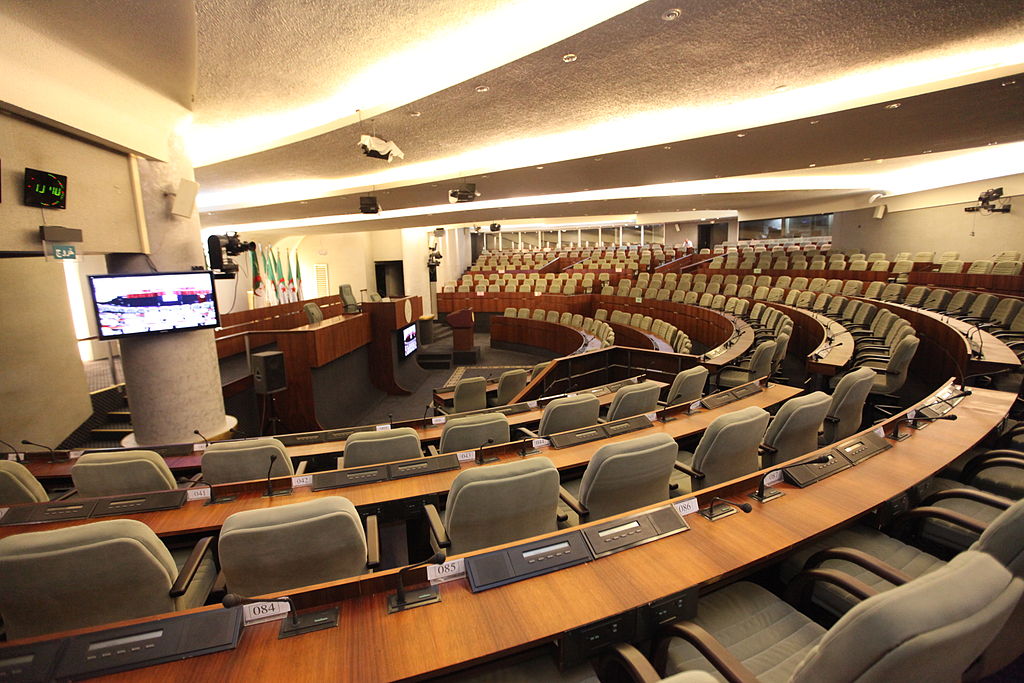
In 2012, Algeria's Organic Law 12-03 introduced a sliding-scale candidate quota — requiring 20% to 50% women on party electoral lists depending on constituency size — with a hard enforcement mechanism: lists that failed to meet the threshold were rejected outright, and parties received extra state funding for each woman elected.
The effect was immediate and large. Women's share of seats in the People's National Assembly rose from about 7.7% in the 2007 election to 31.6% in 2012, one of the largest single-election jumps recorded worldwide, verified by UN Women and the Inter-Parliamentary Union (IPU).
Representation held at a reduced but still substantial 25.76% in the 2017 election. In 2021, however, Algeria replaced the closed reserved-seat list system with an open-list system paired with a nominal 'parity' requirement on candidate lists rather than a binding rule on elected seats. Loopholes allowed non-compliant lists to stand, and with voters — not fixed list order — determining winners, women's share of candidates (36.8%) did not translate into seats.
Women's representation collapsed to just 8.11% in the 2021 election, nearly erasing a decade of gains and returning Algeria close to its pre-2012 baseline. The case is one of the starkest documented illustrations that a candidate quota's design and enforcement mechanism — not just its stated target — determines whether it converts into actual seats.
Read the full analysis: https://www.washingtoninstitute.org/policy-analysis/women-and-politics-algeria-one-step-forward-two-steps-back
Implementation detail (cost, timeline, staffing, conditions for success) is not yet available for this practice.
Where this practice's information was retrieved from, and when.
Guyana
Since a 2000 constitutional and electoral-law reform, Guyana has required at least one-third women on every party's candidate list. A …
Benin
Benin's November 2019 reform expanded parliament from 83 to 109 seats and reserved 24 seats exclusively for women, one per …
Serbia
Serbia's 2020 electoral reform raised the mandatory gender quota on party lists from one-in-three to 40%, with non-compliant lists barred …
Mauritius
Mauritius's 2011 Local Government Act required parties to field at least one-third candidates of each sex for municipal and village …
Open full copilot Grounded in cited practices — always check the sources.