Alberta Wetland Replacement Program — Statutory In-Lieu Fee Offsetting (Canada)
Canada
Under Alberta's 2013 Wetland Policy, developers who cannot avoid draining a wetland can pay an in-lieu fee funding replacement elsewhere; …
Madagascar · Moramanga · See the Madagascar profile
A rare independent, peer-reviewed evaluation found Ambatovy's nickel mine near Moramanga is on track to offset the 2,064 ha of rainforest it cleared by averting deforestation across 28,740 ha of nearby forest — one of very few robust assessments among 12,000+ offsets worldwide.
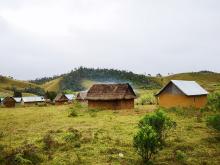
Ambatovy is one of the world's largest lateritic nickel-cobalt mines, developed from 2007 by a joint venture of Sherritt International, Sumitomo Corporation and Korea Resources Corporation near Moramanga, in the eastern rainforest corridor of Madagascar — a region holding roughly 10% of the country's plant diversity and 14 lemur species. Mine construction cleared 2,064 hectares of primary forest within the concession.
To meet a corporate 'no net loss' commitment, Ambatovy funded offset conservation activities across four sites totalling 28,740 hectares, including the Ankerana and Torotorofotsy wetland areas and part of the Ankeniheny-Zahamena forest corridor, paying local communities and partner NGOs to reduce deforestation driven by small-scale agriculture.
In 2022, researchers from Bangor University, Rothamsted Research and the University of Montpellier published one of the first fully independent evaluations of any biodiversity offset worldwide, in Nature Sustainability. Using counterfactual modelling, 116 alternative model specifications for robustness, and deforestation tracking within a 10 km radius of the offset sites to check for spillover, they found that by the end of 2021 Ambatovy's offsets had averted nearly as much forest loss as the mine had caused — putting the project on track for no net loss. Fewer than 0.05% of the world's 12,000+ registered biodiversity offsets have received this level of independent scrutiny.
The authors flagged real limitations: forest cover is an imperfect proxy for biodiversity value, the analysis measured avoided deforestation rather than forest gain or species recovery, and a separate 2017 study found nearby residents perceived a net cost from the access restrictions the offset imposes on land they previously used. The result is an encouraging but qualified success — strong on the forest-cover metric, less clear on social equity and species-level outcomes.
Read the full analysis: https://www.bangor.ac.uk/news/2022-03-03-controversial-policy-to-reconcile-mining-and-biodiversity-conservation-demonstrates
Implementation detail (cost, timeline, staffing, conditions for success) is not yet available for this practice.
Where this practice's information was retrieved from, and when.
Canada
Under Alberta's 2013 Wetland Policy, developers who cannot avoid draining a wetland can pay an in-lieu fee funding replacement elsewhere; …
Ghana
Under a Forestry Commission MoU, Newmont's Akyem gold mine is revegetating three times the 101 ha of forest it impacted …
Spain
Since 2011, Catalan NGO Associació Sèlvans has turned donations into 15-25 year logging-rights waivers for forest owners, documenting 42.15 ha …
Liberia
ArcelorMittal Liberia funds co-management of the 11,533 ha East Nimba Nature Reserve, home to chimpanzees, the Nimba toad and otter …
Open full copilot Grounded in cited practices — always check the sources.