Suriname's Gender Vision Policy (2021-2035) and Rising Women's Representation
Suriname
Suriname's Bureau of Gender Affairs issued a 15-year Gender Vision Policy (2021-2035) on political participation, building on a decade of …
Bahrain · Riffa · See the Bahrain profile
Bahrain's royally-chaired Supreme Council for Women, established in 2001, delivered a first female minister (2004) and judges (2006); women now hold ~20% of parliamentary seats, but independent monitors document persistent gaps and 'artificial' reforms.
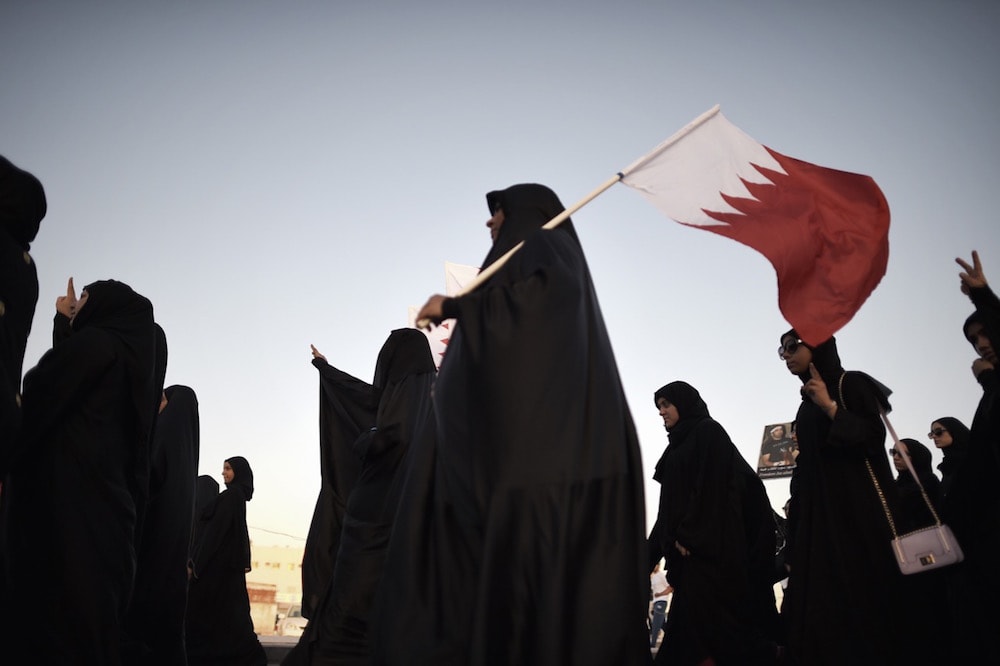
Bahrain's Supreme Council for Women (SCW) was established on 22 August 2001 by Amiri Order No. 44, chaired by the King's wife and reporting directly to the monarch, with a mandate to act as the reference body for women's affairs across government. It has produced a periodically-updated National Plan for the Advancement of Bahraini Women (2013-2022, extended to 2026).
Concrete milestones followed: Dr Nada Haffadh became Bahrain's first female cabinet minister in 2004; the country appointed its first female judges from 2006; and women now hold roughly 20% of seats in Bahrain's Council of Representatives, with 22 female judges (14 in decision-making posts) as of recent SCW reporting. Women were granted the vote and right to stand for office in 2002.
Independent assessment is more critical. Bahraini activists including the Women's Petition Committee called in 2007 for the SCW's dissolution, arguing appointees reach positions through tribal or sectarian ties rather than merit, and describing reforms as 'artificial and marginal.' Human Rights Watch's 2025-2026 reporting and the CEDAW committee document a 'shrinking space for women human rights defenders,' a labour law that still excludes domestic workers (mostly women migrants) from basic protections, and a nationality law that still restricts Bahraini mothers from passing citizenship to their children. The case shows a durable, well-resourced national women's machinery can coexist with unresolved structural gaps flagged by independent human-rights monitors.
Read the full analysis: https://www.adhrb.org/2022/01/report-womens-rights-in-bahrain-postponed-dreams/
Implementation detail (cost, timeline, staffing, conditions for success) is not yet available for this practice.
Where this practice's information was retrieved from, and when.
Suriname
Suriname's Bureau of Gender Affairs issued a 15-year Gender Vision Policy (2021-2035) on political participation, building on a decade of …
Cameroon
Cameroon's Electoral Code (Loi 2012/001) introduced a 30%-minimum gender requirement on party lists. Women's National Assembly seats more than doubled: …
Timor-Leste
Mandatory 1-in-3 zipper quota on electoral lists raised women's share of Timor-Leste's parliament from under 20% (pre-2006) to 40% in …
United Arab Emirates
The UAE Gender Balance Council (est. 2015) implements the National Strategy. Women hold 66% of public sector jobs, 50% of …
Open full copilot Grounded in cited practices — always check the sources.