UAE Ministry of Education — National Compulsory AI Curriculum (K-12)
United Arab Emirates
First nationwide compulsory AI curriculum: UAE MoE mandated AI as a standalone subject in all public schools K-12 from Sept …
China · Beijing · See the China profile · See the Beijing profile
Evidence: Descriptive / self-reported Top 24% 60/100 · Ask Evidence Copilot about this practice
From 2025 Beijing requires at least 8 hours/year of AI education across 1,400+ primary and secondary schools — a sweeping mandate to build AI literacy from grade one, but too new to show learning outcomes.
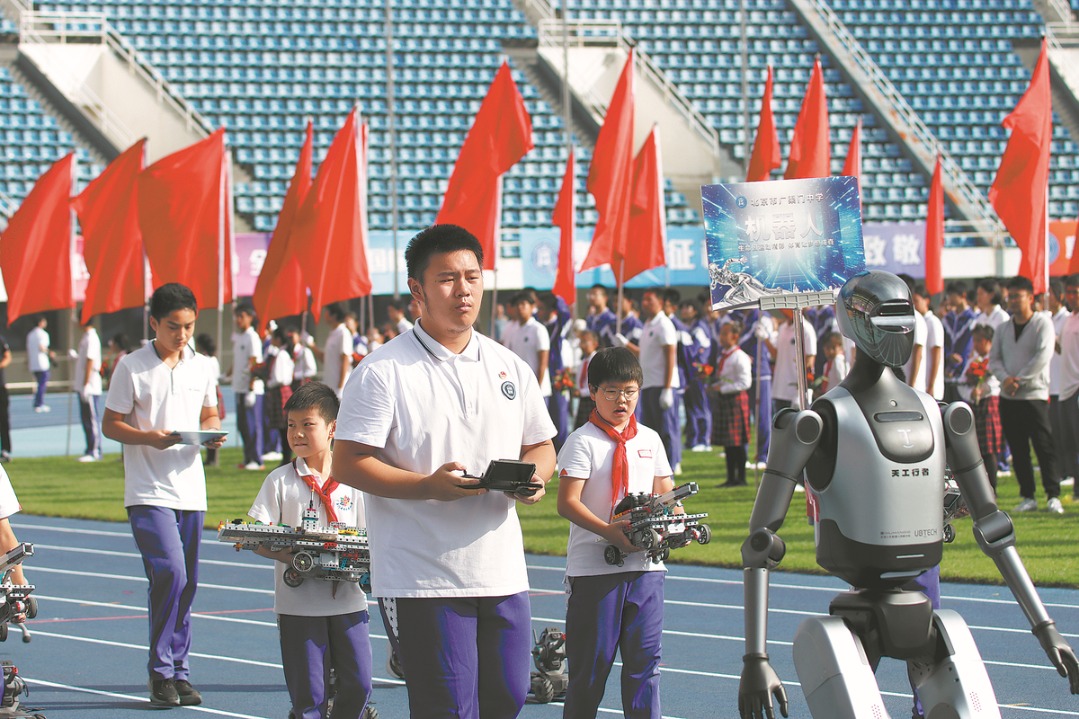
In 2025 Beijing became the first Chinese province-level region to make AI education compulsory, requiring at least eight class hours per year across more than 1,400 primary and secondary schools, at every grade level.
The mandate aims to build AI literacy from grade one, running from hands-on experience in early primary through to programming and generative-AI projects in middle and high school.
Delivery can be standalone or embedded in information-technology classes, and is complemented by study tours to universities and technology institutes.
This is a landmark national-scale AI-literacy mandate, but it is brand new: outcome evidence and data-governance details are not yet available, so its effectiveness cannot yet be assessed.
National / regional programmes
Indicative funding routes for practices of this type — always check each programme's current calls and eligibility rules.
Do you run this practice? Claim it — verified implementers get a public contact pathway and can propose corrections.
Where this practice's information was retrieved from, and when.
United Arab Emirates
First nationwide compulsory AI curriculum: UAE MoE mandated AI as a standalone subject in all public schools K-12 from Sept …
Andorra
Andorra's Ministry of Education launched a 12-action plan integrating AI literacy into the curriculum and replacing student tablets with ~1,300 …
Italy
JA Europe's Erasmus+-funded AI-ENTR4YOUTH gave 100+ students and 10+ teachers at ITST Enrico Fermi (Francavilla Fontana) a 52-hour AI-prototyping curriculum, …
Qatar
A WISE/Qatar Foundation survey of ~3,000 teachers across six countries, including 550 in Qatar, found 60% say AI helps tailor …
Open full copilot Grounded in cited practices — always check the sources.