Terrasos Voluntary Biodiversity Credits — El Globo Habitat Bank (Colombia)
Colombia
Colombia's first Habitat Bank to issue tradeable Voluntary Biodiversity Credits protects 340 ha of Andean cloud forest in Támesis, Antioquia; …
Australia · Melbourne · See the Australia profile
Victoria's BushBroker native-vegetation offset scheme (386 sites, 19,000+ ha, since 2006) was independently audited and peer-reviewed in 2024: both found little evidence it achieves 'no net loss', with weak compliance tracking and no detectable added biodiversity benefit.
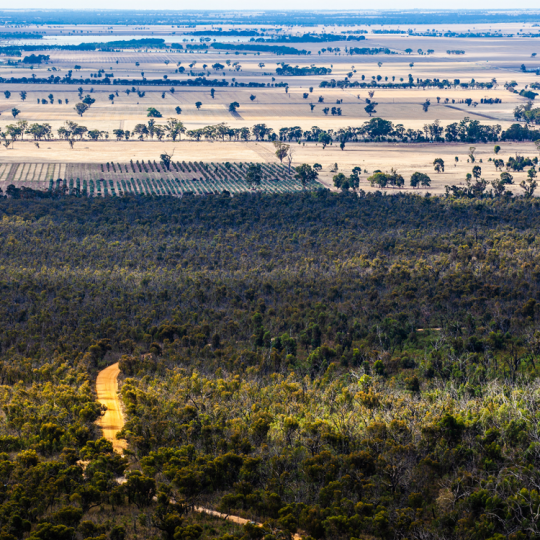
Established in 2006 under Victoria's Native Vegetation Management Framework, BushBroker requires developers who clear native vegetation to purchase equivalent "credits" from landowners who protect or restore vegetation elsewhere, tracked through the state's online Native Vegetation Credit Register. At its audited scale, the scheme covers 386 registered offset sites and more than 19,000 hectares statewide, having originally issued 5,287 tradeable credits; landowner payments have averaged $45,000-$170,000 per hectare (or $500-$2,300 per tree for smaller agreements).
Unusually for a biodiversity offset scheme, BushBroker has been subject to both a rigorous peer-reviewed ecological evaluation and an independent government performance audit, and both are critical. A 2024 study in Global Change Biology compared 196 early offset sites (3,203 hectares, registered 2006-2008) against matched non-participating land using satellite vegetation data through 2018: it found no detectable additional protection from "avoided loss" offsets (142 sites, 2,702 ha), and found that apparent gains from "regeneration" offsets (54 sites, 501 ha) were not robust once a single fire-affected outlier site was excluded, with much of the residual signal plausibly attributable to statewide post-drought vegetation recovery rather than the programme itself.
Separately, the Victorian Auditor-General's Office concluded the state "is not achieving its objective of no net biodiversity loss from native vegetation clearing on private land": only 49.7% of clearing permits issued in 2018-2020 had documented proof of a corresponding offset credit, at least five cases of credits being resold or double-counted without detection were identified, and enforcement was inconsistent — one council took action on only 5 of 69 illegal-clearing complaints it received.
This makes BushBroker a well-evidenced cautionary case rather than a demonstrated success: it is valuable to the catalogue precisely because independent, methodologically rigorous scrutiny (a government audit plus a peer-reviewed matched-control study) found that formal biodiversity-offset infrastructure at scale did not reliably deliver its stated policy objective.
Read the full analysis: https://www.audit.vic.gov.au/report/offsetting-native-vegetation-loss-private-land
Implementation detail (cost, timeline, staffing, conditions for success) is not yet available for this practice.
Where this practice's information was retrieved from, and when.
Colombia
Colombia's first Habitat Bank to issue tradeable Voluntary Biodiversity Credits protects 340 ha of Andean cloud forest in Támesis, Antioquia; …
United States of America
Largest statutory wetland offset market: 1,800+ mitigation banks in RIBITS (2013), restoring aquatic habitats across the US under CWA Section …
United Kingdom
Since February 2024, most development in England must deliver a measurable 10% biodiversity net gain in standardised biodiversity units — …
Finland
Under a September 2023 decree enabling voluntary ecological compensation, Finland recorded one of its first private biodiversity-credit deals in March …
Open full copilot Grounded in cited practices — always check the sources.