Terrasos Voluntary Biodiversity Credits — El Globo Habitat Bank (Colombia)
Colombia
Colombia's first Habitat Bank to issue tradeable Voluntary Biodiversity Credits protects 340 ha of Andean cloud forest in Támesis, Antioquia; …
France · Saint-Martin-de-Crau · See the France profile
Evidence: Observational / pre–post Top 40% 47/100 · Ask Evidence Copilot about this practice
Europe's first supply-side biodiversity compensation site: CDC Biodiversité restored 357 ha of orchards to rare Crau steppic grassland (€12.5M; 2008–10). Great bustard and ocellated lizard returned; all credits sold. Scaled nationally under France's Green Industry Act (2023).
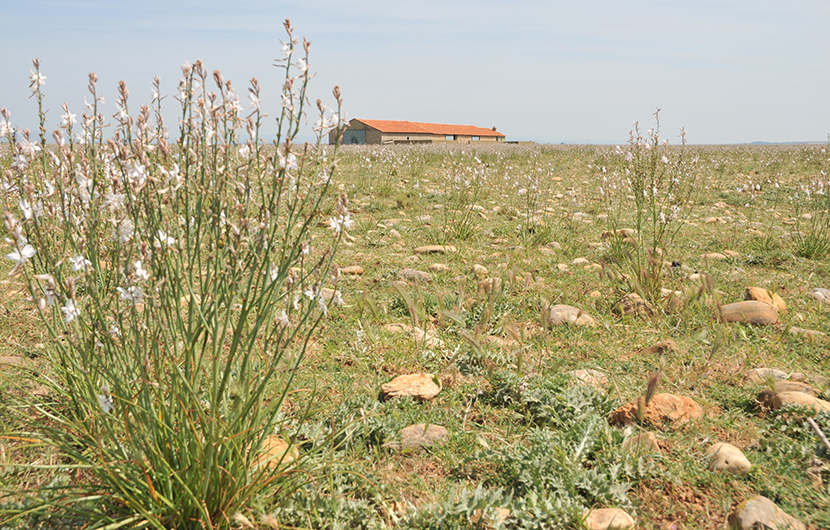
FRL0In 2008, CDC Biodiversité — a subsidiary of France's state-owned Caisse des Dépôts et Consignations — acquired 357 hectares of former orchard land at Cossure in Saint-Martin-de-Crau (Bouches-du-Rhône, southern France) and began restoring it to Crau steppic grassland, one of Europe's rarest semi-arid ecosystems.
The two-year restoration removed approximately 200,000 fruit trees, 100,000 poplars, and over 1,000 km of irrigation and electrical infrastructure, at a total investment of €12.5 million. Cossure became Europe's first supply-side nature compensation site, enabling developers who require ecological offset under French environmental law to purchase compensation units (UCs), each representing one hectare of restored and permanently managed steppic habitat with 30–35 years of monitoring.
Scientific monitoring confirmed that the restored vegetation is favourable to steppe-specialist species, with documented return of the ocellated lizard (Timon lepidus), great bustard (Otis tarda), stone-curlew, and multiple lark species. The little bustard (Otis tetrax) had declined 95% in France between 1970 and 2000; its presence at Cossure post-restoration is significant. Plant diversity remains lower than the natural cossoul ecosystem, indicating gradual long-term recovery. All available compensation units have been sold or reserved.
Under France's Green Industry Act (Loi Industrie Verte, 2023), the model was formalised nationally through Sites Naturels de Compensation, de Restauration et de Renaturation (SNCRR), operational from November 2024. In April 2025, the European Investment Bank and CDC Biodiversité signed a partnership to study voluntary biodiversity credit placement beyond legal compliance requirements.
National / regional programmes Own resources / municipal budget
Indicative funding routes for practices of this type — always check each programme's current calls and eligibility rules.
Do you run this practice? Claim it — verified implementers get a public contact pathway and can propose corrections.
Where this practice's information was retrieved from, and when.
Colombia
Colombia's first Habitat Bank to issue tradeable Voluntary Biodiversity Credits protects 340 ha of Andean cloud forest in Támesis, Antioquia; …
United Kingdom
Since February 2024, most development in England must deliver a measurable 10% biodiversity net gain in standardised biodiversity units — …
Australia
Largest biodiversity credit market in Australia: 381 stewardship agreements covering 109,911 ha under NSW Biodiversity Conservation Act 2016. A$467M Stewardship …
Spain
Formentera's Living Formentera plan pairs a projected €20m investment in vegetation — targeting 475,000 native trees and 1,000ha of green …
Open full copilot Grounded in cited practices — always check the sources.