Singapore's OneMillionTrees Movement — A Tracked, On-Schedule Urban-Forest Target for 2030
Singapore
Singapore's national tree-planting programme, run by NParks under the Green Plan 2030, had planted over 832,000 of a targeted 1 …
Pakistan · Karachi · See the Pakistan profile · See the Karachi profile
Top 89% 27/100 · Ask Evidence Copilot about this practice
After Karachi's 2015 heatwave killed over 1,200 people, entrepreneur Shahzad Qureshi planted a dense, native-species Miyawaki forest in Clifton that grew from a 400 sqm pilot to about 3 acres and 38,000 saplings, measured 4-7 degC cooler than surrounding streets.
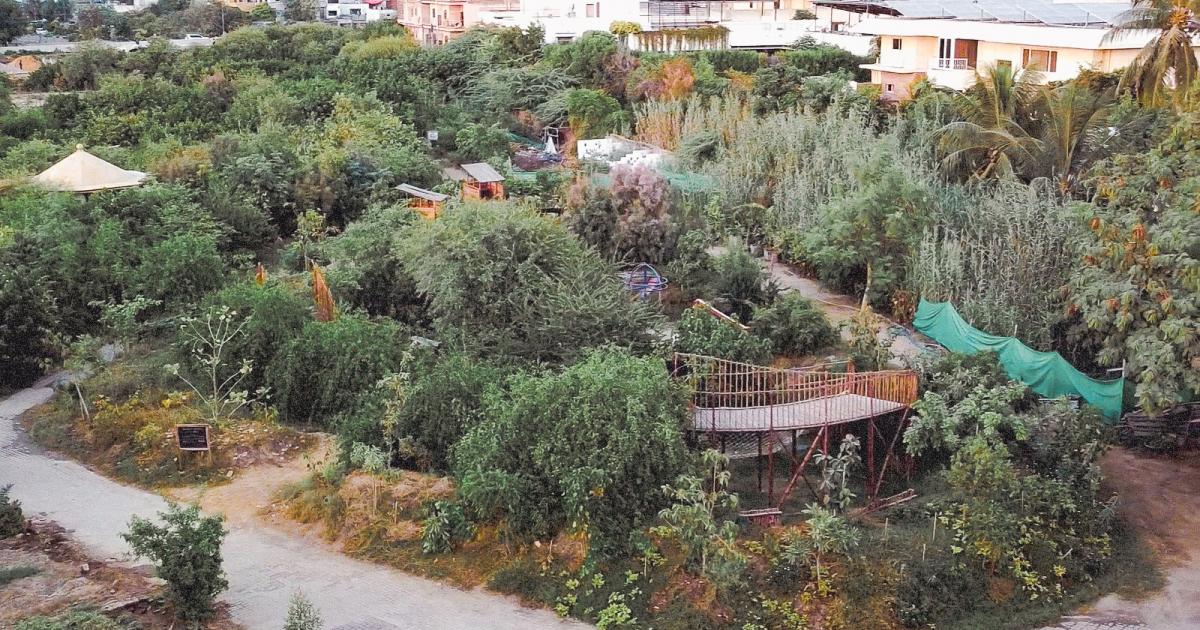
Karachi's June 2015 heatwave killed more than 1,200 people, exposing the 'urban heat island' effect of a city with minimal tree cover — the KMC parks director later put citywide green coverage at only about 1%, against a recommended minimum of 25%. After watching a TED talk on Akira Miyawaki's dense, fast-growing native afforestation method, entrepreneur Shahzad Qureshi obtained Parks Department permission (with no government funding) to plant a pilot plot in the Clifton residential area, working with Bangalore-based Miyawaki consultant Shubhendu Sharma (Afforestt).
Dawn reported the original pilot, planted in 2015-16, at 400 square metres with about 1,200 saplings; by 2018 the tallest trees exceeded 7.6 metres and the site measured 4-5 degC cooler than the unshaded surrounding colony. As the project matured, Heinrich-Boll-Stiftung's 2023 review put the Clifton Urban Forest at about 3 acres with roughly 38,000 saplings planted (many now mature), citing a 6-7 degC difference from surrounding streets, plus a small on-site vegetable garden, fish pond and sewage-water filtration for irrigation.
Qureshi's method was subsequently replicated at an estimated 26 urban-forest sites across Pakistan, 20 of them in Karachi, some deliberately sited near mosques to reuse ablution wastewater for irrigation. In October 2023 Karachi's mayor announced a 300-site Miyawaki-forest expansion plan for the city.
The evidence has real limits: cooling and area figures come from press coverage and the initiative's own reporting rather than independent peer-reviewed measurement, no rigorous carbon-sequestration estimate was found, and Dialogue Earth/thethirdpole.net commentary on Pakistan's urban-forest wave has questioned whether isolated pocket forests can meaningfully offset a citywide 1% green-cover deficit without sustained public investment and maintenance.
Read the full analysis: https://afpak.boell.org/en/2023/10/18/karachis-urban-forest-initiatives
Implementation detail (cost, timeline, staffing, conditions for success) is not yet available for this practice.
Do you run this practice? Claim it — verified implementers get a public contact pathway and can propose corrections.
Where this practice's information was retrieved from, and when.
Singapore
Singapore's national tree-planting programme, run by NParks under the Green Plan 2030, had planted over 832,000 of a targeted 1 …
Pakistan
Since January 2021, philanthropist-led Clifton Urban Forest has planted 700,000+ native saplings using the dense Miyawaki method on a reclaimed …
Pakistan
A one-acre, 52-species Miyawaki micro-forest planted on a disused Lahore traffic island in Dec. 2019 reached over 95% sapling survival …
Qatar
Qatar's Ministry of Municipality grew urban green space from 3.5 km² (2015) to 16.7 km² (2023) and planted 94,043 trees …
Open full copilot Grounded in cited practices — always check the sources.