TRIEC Mentoring Partnership
Canada
Since 2004, Toronto's TRIEC Mentoring Partnership has logged 27,000+ mentoring matches for skilled immigrants; an independent, federally funded evaluation found …
Afghanistan · Herat · See the Afghanistan profile · See the Herat profile
Top 99% 29/100 · Ask Evidence Copilot about this practice
Founded in 2015 by an Afghan computer-science professor in exile, Code to Inspire was Afghanistan's first all-female coding school. By 2020 it reported training 200+ women in Herat, 60% finding local work, before the Taliban's 2021–2022 return closed its physical classes.
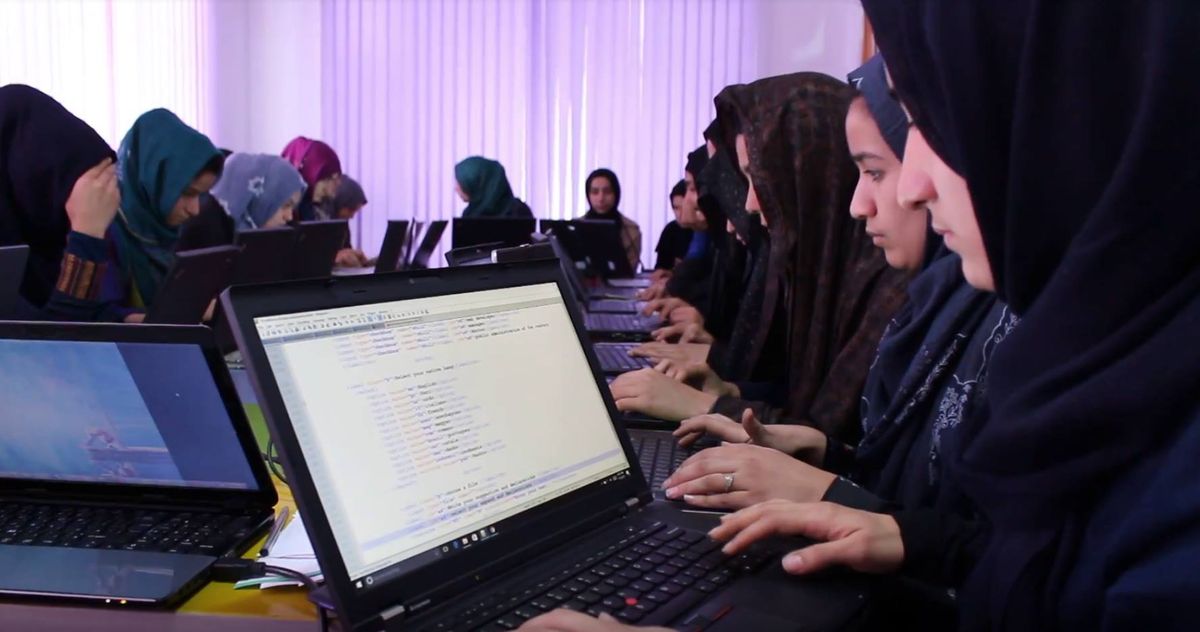
Code to Inspire (CTI) was founded in November 2015 by Fereshteh Forough, an Afghan computer-science professor who had taught at Herat University before leaving the country, to give young Afghan women aged 15–25 free training in web and app development, graphic design and related digital skills. The school operated a physical campus in Herat, providing laptops and internet access alongside its curriculum, while being run and fundraised remotely from the United States.
In a July 2020 profile submitted to MIT Solve, a vetted social-innovation initiative run by MIT, CTI reported that "200+ students have received education from CTI," of whom "60% have found work in their communities and 20% have founded their own tech ventures," with annual capacity of around 100 students in Herat and an operating budget near $120,000. These figures are self-reported by the organisation as part of a grant application rather than independently audited, and predate the events of 2021.
Afghanistan's political collapse in August 2021 and the Taliban's December 2022 ban on women's education have since disrupted or halted CTI's physical Herat operations; secondary press accounts (The Story Exchange, Boston University's Center for the Study of Asia) confirm the school's founding story and its subsequent struggle to continue but do not provide updated, independently verified enrolment or employment figures for the post-2021 period.
CTI is therefore best catalogued as an interrupted rather than an ongoing practice: its pre-2021 outcomes, if accurate, would represent a meaningful talent-retention result in one of the most restrictive environments in the world for women's economic participation, but its current operational status and any continuing impact cannot be verified from public sources.
Read the full analysis: https://www.codetoinspire.org/
Implementation detail (cost, timeline, staffing, conditions for success) is not yet available for this practice.
Do you run this practice? Claim it — verified implementers get a public contact pathway and can propose corrections.
Where this practice's information was retrieved from, and when.
Canada
Since 2004, Toronto's TRIEC Mentoring Partnership has logged 27,000+ mentoring matches for skilled immigrants; an independent, federally funded evaluation found …
Iceland
Reykjavík City and Iceland's government cut over 2,500 public workers to a 35–36 hour week at full pay; productivity held …
Ireland
Ireland's Connected Hubs network grew from a 2019 pilot to over 400 co-working hubs in every county by 2025; the …
Spain
Since 1956, Mondragón Corporation has grown from one Basque cooperative into a group of ~70,000 employees and €11.2bn in 2024 …
Open full copilot Grounded in cited practices — always check the sources.