Bhutan for Life — Project Finance for Permanence (Bhutan)
Bhutan
Asia's first 'Project Finance for Permanence' secures 1.1 M ha of protected Himalayan forest in Bhutan via a USD 118 …
Zambia · Chipata · See the Zambia profile
COMACO pays Zambian smallholders above-market prices for conservation-farmed produce in exchange for surrendering snares and firearms; a 2011 PNAS study found significant wildlife recovery and soil-carbon gains vs non-COMACO areas, though income gains proved harder to demonstrate
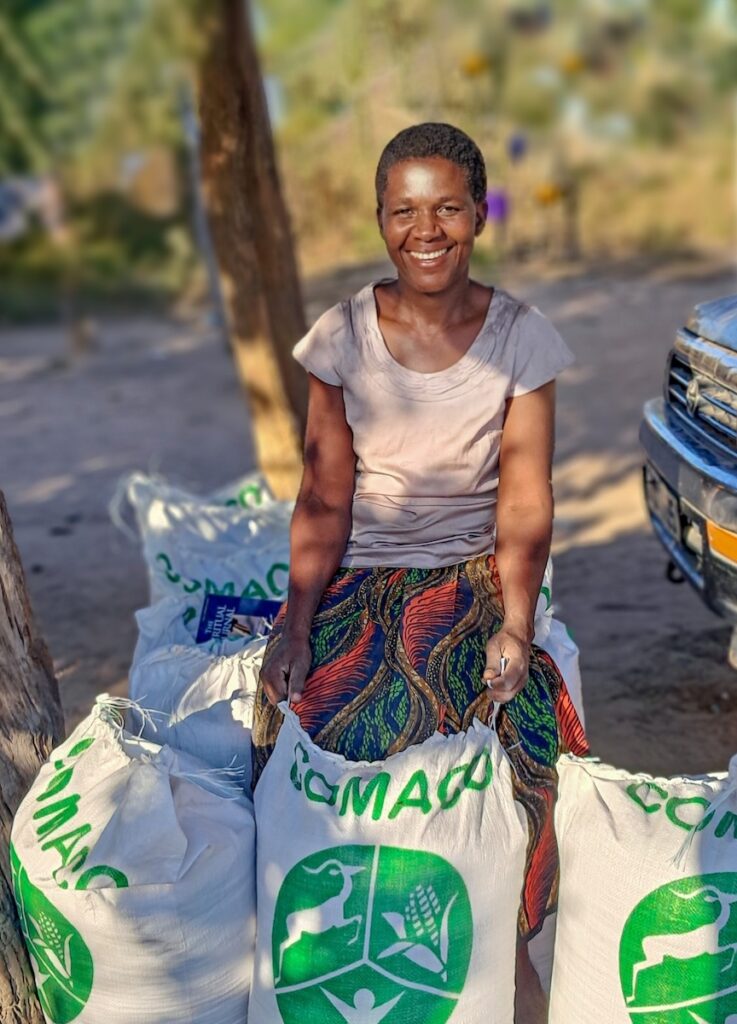
Community Markets for Conservation (COMACO) was established in 2003 by the Wildlife Conservation Society in Zambia's Luangwa Valley (Eastern Province) to break the cycle of poaching, charcoal production and unsustainable farming that was degrading wildlife habitat around South Luangwa National Park.
Train smallholder farmers in conservation farming and, in exchange for surrendering wire snares and firearms and complying with land-use rules, buy their produce at guaranteed above-market prices, funded through sales of branded 'It's Wild!' food products.
COMACO trains smallholder farmers in conservation farming (reduced tillage, agroforestry, legumes) and buys their maize, groundnuts, rice and honey at guaranteed prices above the local market rate, processing them into branded 'It's Wild!' food products. COMACO today reports reaching over 335,000 farming families organised into 112 cooperatives across 84 chiefdoms, with more than 2,200 poachers having surrendered firearms cumulatively and 19 'It's Wild!' branded products on the market.
A peer-reviewed 2011 study in the Proceedings of the National Academy of Sciences (PNAS), comparing COMACO and non-COMACO areas of the valley, found that by then more than 40,000 farmers had been trained and over 61,000 wire snares and 1,467 firearms had been surrendered; hartebeest populations showed a statistically significant increase and most large-mammal populations were stable or increasing in COMACO areas between 1999-2002 and 2006-2008, while comparable non-COMACO areas continued to decline, and conservation-farming plots showed statistically significant increases in soil carbon at 0-15cm depth. The programme received the UNDP Equator Prize for linking conservation to livelihoods.
The same 2011 PNAS study is explicit about limits: it found no statistically significant difference in household income between COMACO participants and non-participants in its 2008 survey, and more than 90% of all households in the valley -- members and non-members alike -- remained food insecure, showing that the market-incentive model has not by itself resolved the underlying rural poverty driving pressure on wildlife.
Where this practice's information was retrieved from, and when.
Bhutan
Asia's first 'Project Finance for Permanence' secures 1.1 M ha of protected Himalayan forest in Bhutan via a USD 118 …
Tanzania
Africa's first FSC community forest (2009): MCDI supports 40+ communities managing 410,000+ ha of Tanzanian miombo woodland, with 150,000 ha …
Portugal
Since 2011, companies reward cork-oak landowners in Coruche/Chamusca/Ponte de Sor for FSC-certified good management that protects the Tejo-Sado aquifer and …
Australia
Aboriginal-owned carbon project in western Arnhem Land: Traditional Owners apply strategic early dry-season burning over 28,000 km2 to reduce late-season …
Open full copilot Grounded in cited practices — always check the sources.