Predator Free Pacific — Nukufetau & Funafuti Invasive Rat Eradication (Tuvalu)
Tuvalu
Government-led, donor-funded eradication of invasive rats from six islets in Tuvalu's Nukufetau and Funafuti atolls, delivered by trained local staff …
India · Mandla · See the India profile
Evidence: Quasi-experimental Top 76% 33/100 · Ask Evidence Copilot about this practice
Since ~2015, FES has worked with 12,000+ women from Mandla villages near Kanha Tiger Reserve to manually clear Lantana camara — up to 75 hectares restored per village — though a 2017-2022 study found only a non-significant 30% drop in crop depredation.
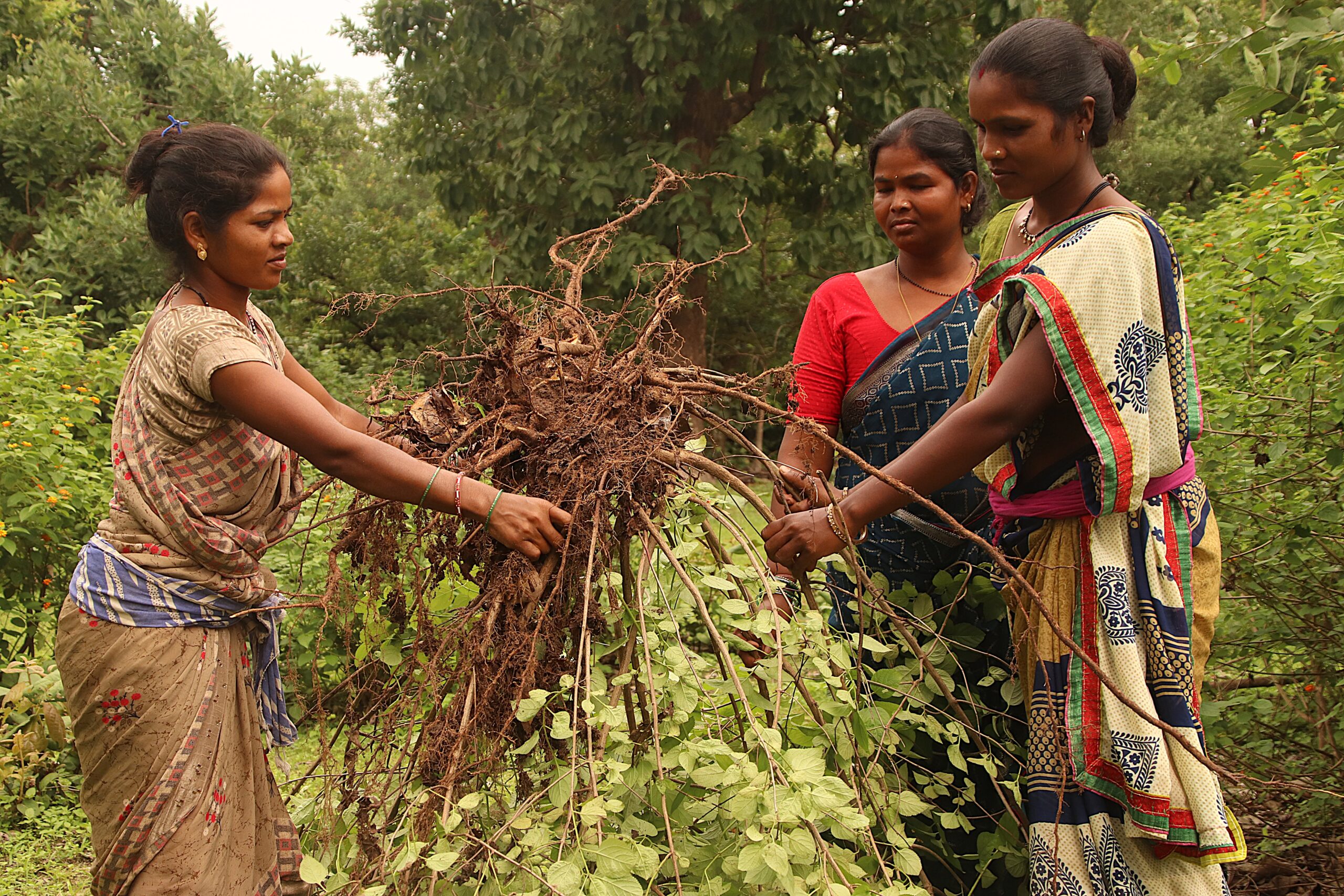
Lantana camara, introduced to India as an ornamental shrub in the 19th century, has overrun large areas of central Indian forests, including the buffer zone around Kanha Tiger Reserve in Mandla district, Madhya Pradesh. Dense Lantana thickets crowd out native grasses and browse that herbivores depend on, degrade forest-dependent communities' access to grazing land and non-timber forest produce, and are associated with increased human-wildlife conflict as displaced wildlife moves toward farmland edges.
Since around 2012, and intensifying from 2015, the Foundation for Ecological Security (FES) has worked with village panchayats and the Madhya Pradesh Forest Department to organise manual, labour-based Lantana removal in villages such as Indravan, Chichari, Orai, Muala Saini and Barkheda, paying daily wages that have risen from roughly ₹174 to ₹243. More than 12,000 women have participated since 2018; each site requires three consecutive years of follow-up clearing to prevent regrowth.
Documented village-level results include roughly 75 hectares restored to Palash forest at Barkheda and 14.6 hectares reclaimed at Chichari. A dedicated 2017-2022 study on wildlife activity and human-wildlife interactions found reduced wildlife activity near farmland edges and a 30% reduction in crop depredation — but this difference was not statistically significant, and 76% of surveyed farmers still cited reduced crop damage among the programme's top perceived benefits.
The evidence is presented honestly as directionally positive and community-validated, but not yet a rigorously proven ecological or conflict-reduction outcome at reserve-wide scale.
Philanthropic / foundation funding
Indicative funding routes for practices of this type — always check each programme's current calls and eligibility rules.
Do you run this practice? Claim it — verified implementers get a public contact pathway and can propose corrections.
Where this practice's information was retrieved from, and when.
Tuvalu
Government-led, donor-funded eradication of invasive rats from six islets in Tuvalu's Nukufetau and Funafuti atolls, delivered by trained local staff …
Kenya
KEFRI and CIFOR-ICRAF trained Baringo County communities to convert invasive Prosopis juliflora into charcoal and fodder using improved kilns (~30% …
India
A tribal-owned Tamil Nadu company, seeded with a Rs 25 lakh state SC/ST Startup Fund grant, clears invasive Lantana camara …
Chile
Since Chile's CONAF eradicated rabbits from Santa Clara islet in 2002-03, shearwater pairs there rose ~40% in three years — …
Open full copilot Grounded in cited practices — always check the sources.