GECI Island Restoration Programme — Invasive Mammal Eradication (Mexico)
Mexico
Since the late 1990s, Mexican NGO GECI has removed 60 populations of 13 invasive mammal species from 39 Pacific islands, …
Tuvalu · Funafuti · See the Tuvalu profile · See the Funafuti profile
Evidence: Observational / pre–post Top 77% 33/100 · Ask Evidence Copilot about this practice
Government-led, donor-funded eradication of invasive rats from six islets in Tuvalu's Nukufetau and Funafuti atolls, delivered by trained local staff between July and September 2024, aims to restore seabird colonies, sea-turtle nesting sites and coconut agroforests.
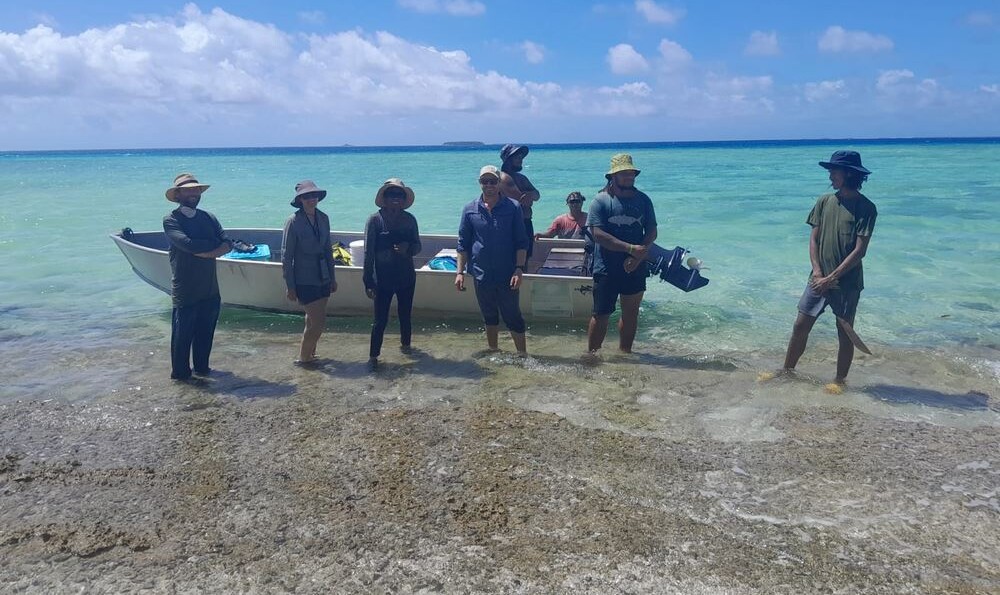
Between July and September 2024, Tuvalu's Department of Environment led a ground-based eradication of invasive rats from six islets — Motumua, Sakalua, Teafuaone and Teafatule in Nukufetau Atoll, and Tepuka and Falefatu in Funafuti — under the regional Predator Free Pacific programme. The work built on 2023 groundwork funded through the GEF-6 Regional Invasives Project.
The project was coordinated by the Secretariat of the Pacific Regional Environment Programme's invasive-species support service (SPREP–PRISMSS) with technical delivery by the NGO Island Conservation and support from BirdLife International, and funded by New Zealand's Ministry of Foreign Affairs and Trade alongside the Global Environment Facility. Local staff received specialised training in ground-based rodent-eradication techniques before fieldwork began — a model that builds in-country capacity rather than relying solely on outside contractors.
Reported outcomes include recovering nesting habitat for native seabirds and endangered green sea turtles, a rebound in coconut crab numbers, and — on Tepuka specifically — the complete elimination of the islet's mosquito population and a near-disappearance of invasive yellow crazy ants, which had previously been rampant. A follow-up monitoring mission was scheduled for August 2025 to confirm eradication success, though the sources reviewed do not publish pre/post population counts.
The islets' coconut agroforests are a direct livelihood resource for Nukufetau residents (coconuts, crabs and other food), tying the ecological restoration to measurable community food-security and economic-resilience benefits, per SPREP's reporting.
Indicative funding routes for practices of this type — always check each programme's current calls and eligibility rules.
Do you run this practice? Claim it — verified implementers get a public contact pathway and can propose corrections.
Where this practice's information was retrieved from, and when.
Mexico
Since the late 1990s, Mexican NGO GECI has removed 60 populations of 13 invasive mammal species from 39 Pacific islands, …
Mauritius
From 1976, Durrell, Mauritius's National Parks Service and the Mauritian Wildlife Foundation eradicated invasive goats (1979) and rabbits (1986) from …
Chile
Since Chile's CONAF eradicated rabbits from Santa Clara islet in 2002-03, shearwater pairs there rose ~40% in three years — …
United States of America
Ten island watershed partnerships co-manage 2.6M acres of Hawaiian native forest through fencing and invasive/ungulate removal. ~US$2.5M annual state funding; …
Open full copilot Grounded in cited practices — always check the sources.