Mpingo Conservation & Development Initiative (Tanzania)
Tanzania
Africa's first FSC community forest (2009): MCDI supports 40+ communities managing 410,000+ ha of Tanzanian miombo woodland, with 150,000 ha …
Nigeria · Calabar · See the Nigeria profile
Nigeria's pilot REDD+ state paired a 2008 logging moratorium with UN-REDD readiness work (FREL submitted 2017). After ~14 years and ~US$4M in funding, no carbon payment was ever confirmed; deforestation continued and the moratorium was lifted in 2023 - a cautionary case.
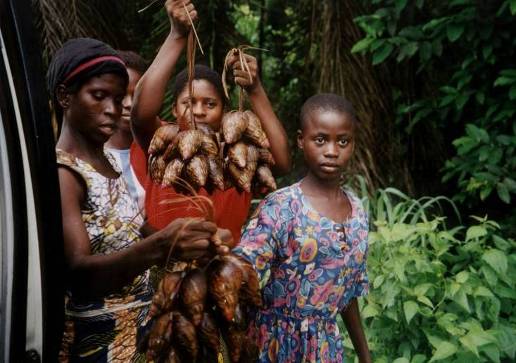
Cross River State (CRS), home to roughly half of Nigeria's remaining tropical high forest, was chosen as Nigeria's demonstration state for REDD+. Governor Liyel Imoke imposed a one-year statewide logging moratorium in 2008, later extended indefinitely, and the state created a Forestry Commission in 2010 to anchor readiness work. From around 2011-2012 CRS became the pilot site under Nigeria's national UN-REDD Programme, with a US$4 million readiness allocation for 2012-2015 (financed largely through Norway-backed UN-REDD/Multi-Partner Trust Fund channels) and later a Green Climate Fund readiness grant. The state's REDD+ office produced a Forest Reference Emission Level and REDD+ Strategy submitted to the UNFCCC in 2017, and the Civil Society/community REDD+ (CBR+) mechanism funded 12 community-based projects run by 12 civil-society organisations.
The evidence on results is sobering. Cross River Watch's investigation documents that state forest cover fell from 7,920 km2 to 6,102 km2 between 1991 and 2008 — a decline that predates and coincides with the moratorium's introduction — and that a Dangote Group subsidiary secured sanction for over 75,000 hectares of agricultural land at the same time communities faced a logging ban, a widely cited contradiction. African Arguments (2023) reports Cross River State lost roughly 9% of its tree cover since 2000, with illegal logging and alleged official complicity continuing despite the ban; the chair of the state's Anti-Deforestation Task Force resigned after impounded timber was released against his objections, and the Task Force was later dissolved. A 2019 UNDP/Green Climate Fund concept note still described Cross River as 'seeking' future access to results-based carbon payments — no source found confirms any such payment was ever actually disbursed. The state formally lifted the logging moratorium in 2023, and civil-society groups (NCF Nigeria) described deforestation as still 'escalating' in 2025, holding a stakeholder conference on the crisis in Calabar that July. A peer-reviewed livelihoods study (Sustainability, MDPI) examined the programme's community impacts directly.
We include this practice deliberately as a cautionary case: it shows what fourteen years of internationally-funded REDD+ 'readiness' can look like when enforcement, political continuity and results-based finance never materialise — technical planning documents (FREL, strategy) were produced, but the underlying forest-protection measure was abandoned and deforestation continued largely unabated throughout.
Read the full analysis: https://www.un-redd.org/post/safeguarding-nigerias-paradise-cross-river-states-experiences-and-lessons-redd
Implementation detail (cost, timeline, staffing, conditions for success) is not yet available for this practice.
Where this practice's information was retrieved from, and when.
Tanzania
Africa's first FSC community forest (2009): MCDI supports 40+ communities managing 410,000+ ha of Tanzanian miombo woodland, with 150,000 ha …
Ethiopia
FMNR of 2,728 ha of degraded Ethiopian hillsides; 7 cooperatives established 2005; Africa's first CDM forestry project (2012); 880,000 tCO2e …
Brazil
World's first jurisdictional REDD+ system (Acre State Law 2.308/2010), covering 15.4 M ha of Amazon forest; Standard Chartered-CDSA partnership to …
Estonia
Estonia's EAFRD-funded Rural Development Plan pays private landowners €60–134/ha for Natura 2000 management restrictions. By 2019: €4.3 M/year for 64,000 …
Open full copilot Grounded in cited practices — always check the sources.