OSKA — Estonia's AI-Assisted National Skills-Forecasting System for Curriculum Planning
Estonia
Estonia's Qualifications Authority runs OSKA, forecasting national skills since 2015 to guide VET/HE curriculum planning. AI partner Headai used NLP …
Cyprus · Nicosia · See the Cyprus profile · See the Nicosia profile
Evidence: Descriptive / self-reported Top 89% 27/100 · Ask Evidence Copilot about this practice
Cyprus's Research and Innovation Foundation is funding a 3-year national AI system, CySKILLS-AI, that fuses fragmented graduate, employer and curriculum data into real-time dashboards for ministries, universities, students and employers, starting with the ICT sector, where over 4
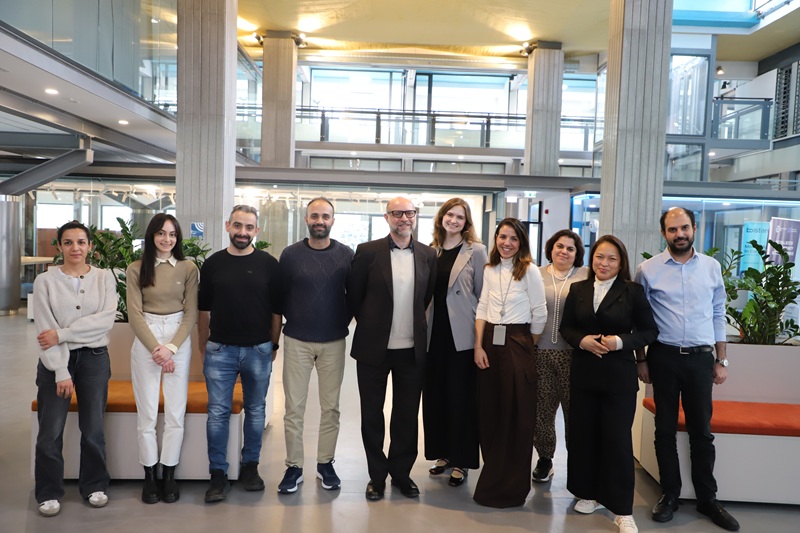
CY00Cyprus's Research and Innovation Foundation is funding CySKILLS-AI, a three-year national AI system launched on 20 March 2026 at the CYENS Centre of Excellence in Nicosia, built to close a documented mismatch in which over 40% of Cypriot graduates cannot find work matching their qualifications even as employers report skills shortages.
The project aims to close what its designers call a 24-36 month 'intelligence latency' between labour-market shifts and curriculum change, starting with the ICT sector, where required skills evolve every 12-18 months.
CySKILLS-AI replaces manual analysis of fragmented survey data (CYGraduates, CYEmployers, EUROGRADUATE) with a three-layer AI architecture — a unified data hub, specialised AI agents for skills-mismatch analysis and forecasting, and role-specific dashboards for the Ministry of Education, higher-education institutions, employers and students. Phase A (March-November 2026) pilots the approach in the ICT sector before wider rollout, funded under the Research and Innovation Foundation's 'AI in Government' programme (grant AI IN GOV'T/0725) and led by host organisation Artemis Intelligence with CYENS Centre of Excellence, the Ministry of Education, Sport and Youth, and the Deputy Ministry of Research, Innovation and Digital Policy.
As a brand-new project, no outcome or impact data exists yet — only the launch announcement and the pre-existing graduate-employer mismatch statistics it aims to address.
National / regional programmes
Indicative funding routes for practices of this type — always check each programme's current calls and eligibility rules.
Do you run this practice? Claim it — verified implementers get a public contact pathway and can propose corrections.
Where this practice's information was retrieved from, and when.
Estonia
Estonia's Qualifications Authority runs OSKA, forecasting national skills since 2015 to guide VET/HE curriculum planning. AI partner Headai used NLP …
Chile
Chile's SAE, built with Universidad de Chile researchers using a Nobel Prize-winning Deferred Acceptance algorithm, matched 274,000+ pre-K–12 students to …
Tunisia
The EU's European Training Foundation scrapes Tunisian online job ads and classifies them with machine learning into ISCO, ESCO, NACE …
Indonesia
A 12-week trial with 180 Indonesian vocational students (90 intervention, 90 control) found an AI system combining skills-mapping, chatbot mentoring …
Open full copilot Grounded in cited practices — always check the sources.