Guyana's MRVS: Satellite-Verified Forest Payments, Then a Contested Carbon-Credit Sequel
Guyana
Guyana's Forestry Commission built a national satellite MRV system that verified a 0.068% deforestation rate, earning $190M from Norway (2009-2015). …
Congo (the Democratic Republic of the) · Inongo · See the Congo (the Democratic Republic of the) profile
Top 89% 27/100 · Ask Evidence Copilot about this practice
DRC's Mai-Ndombe forests earned a first-ever $19.48M FCPF Carbon Fund payment in June 2025 for 3.89M tonnes of satellite-verified reductions (2019-2020). Independent field research on the same programme found little evidence it cut deforestation, and low community consent.
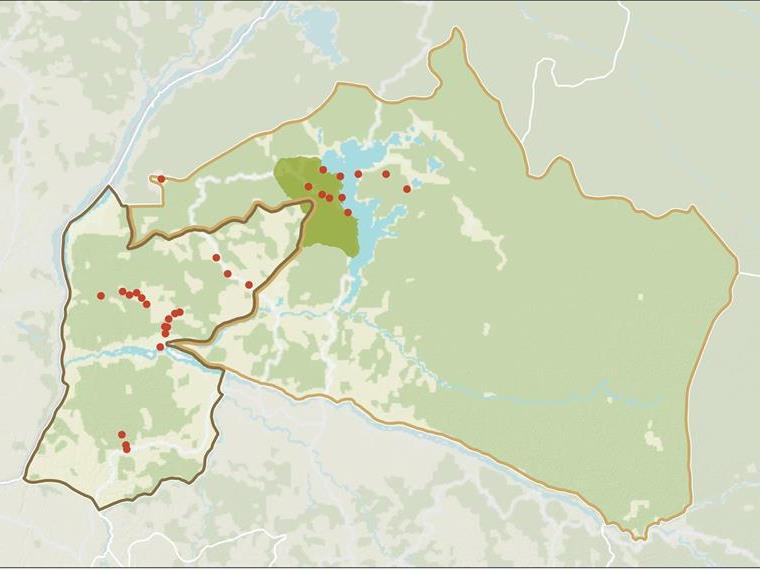
The Mai-Ndombe Emission Reductions Programme, covering a Congo Basin province the size of England, became the first project worldwide selected into the World Bank's FCPF Carbon Fund portfolio, in December 2016, aiming to pay DRC for satellite-verified cuts in deforestation and degradation.
Monitoring runs through the Observatoire Satellital des Forêts d'Afrique Centrale (OSFAC), the region's satellite forest-monitoring observatory, feeding DRC's national MRV system alongside ground forest inventories.
The Emission Reductions Payment Agreement was signed in September 2018 but took until July 2022 to enter into force; DRC received its first-ever payment only in June 2025 - $19.48 million for 3.89 million tonnes of verified CO2 reductions in the 2019-2020 period, according to World Bank reporting.
Independent field research on the Mai-Ndombe programme, published by Rainforest Foundation UK and covered by Mongabay, found that many of its constituent REDD+ projects had not obtained free, prior and informed consent from local communities, delivered few of their promised benefits, and in some cases appeared to have had little effect on deforestation - or even coincided with continued forest loss. The programme illustrates a broader tension in results-based forest finance: a technically credible satellite-carbon accounting result can coexist with weak on-the-ground legitimacy.
Read the full analysis: https://www.rainforestfoundationuk.org/research-into-mai-ndombe-redd-programme-shows-how-forest-carbon-offsets-fail-to-reduce-deforestation-and-come-at-a-human-cost/
Implementation detail (cost, timeline, staffing, conditions for success) is not yet available for this practice.
Do you run this practice? Claim it — verified implementers get a public contact pathway and can propose corrections.
Where this practice's information was retrieved from, and when.
Guyana
Guyana's Forestry Commission built a national satellite MRV system that verified a 0.068% deforestation rate, earning $190M from Norway (2009-2015). …
Gabon
Under a 10-year, $150M CAFI deal, Gabon became the first African country paid for forest-carbon results - $17M in 2021 …
Nepal
Nepal received its first-ever REDD+ results-based payment - US$9.4 million from the World Bank's FCPF - in November 2025, after …
Indonesia
Indonesia's Landsat-based national forest-carbon MRV system verified emission cuts that triggered two results-based payments: $56m from Norway (11.23 Mt CO2e, …
Open full copilot Grounded in cited practices — always check the sources.