Plan Ceibal — Uruguay's national adaptive mathematics platform for primary education
Uruguay
National adaptive mathematics platform (PAM) for all Uruguayan primary (grades 3-6) and lower secondary students since 2013. An independent CINVE …
Laos · Vientiane · See the Laos profile · See the Vientiane profile
Evidence: Quasi-experimental Top 56% 47/100 · Ask Evidence Copilot about this practice
A 12-week pilot of Finland's Eduten adaptive maths platform across 10 Lao PDR schools found Grade 3 participants gained 35.7% in math proficiency and 51.4% in arithmetic fluency versus a control group, per UNICEF's implementation report — though the assessed sample was smaller th

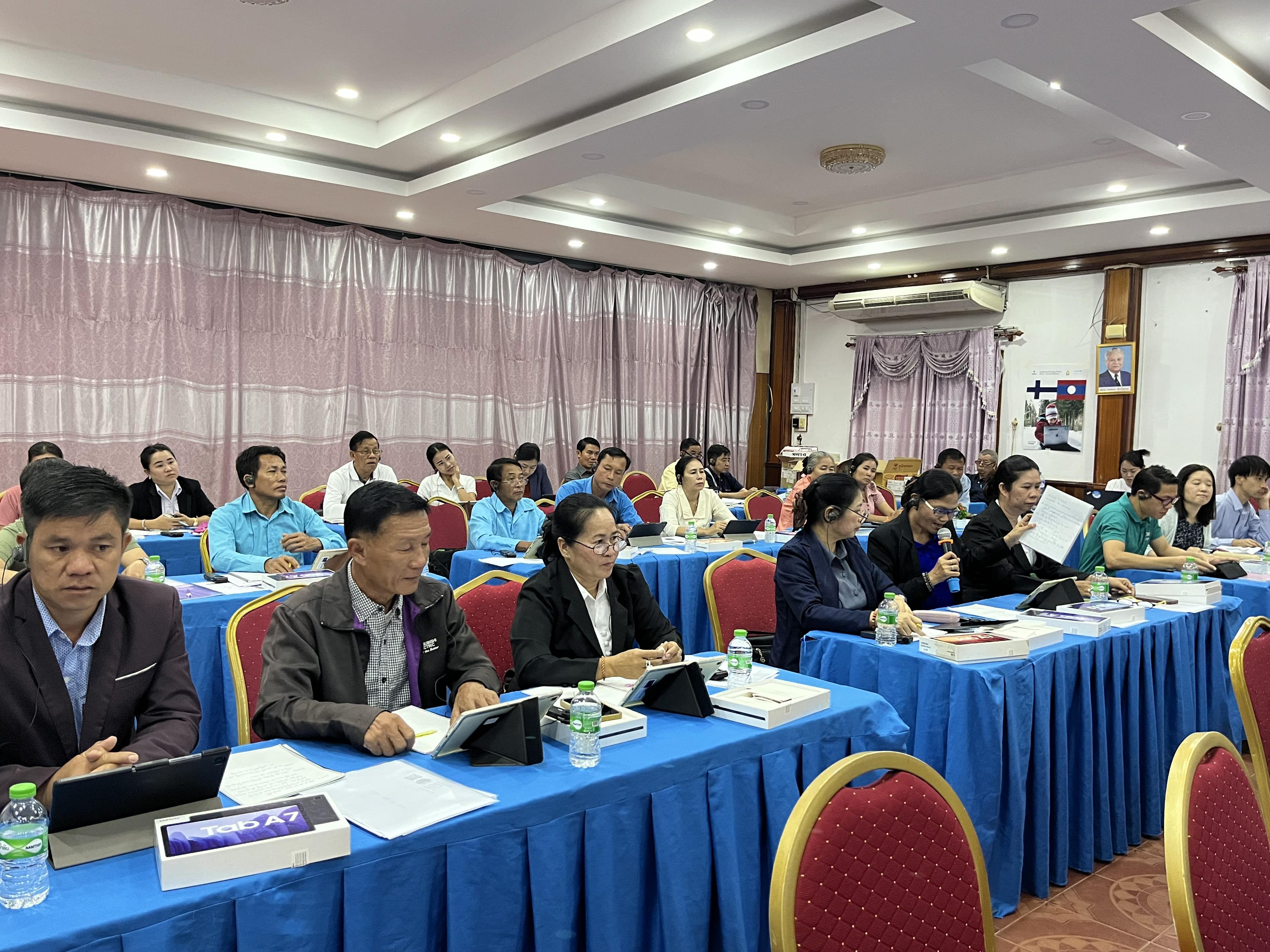
Eduten Ltd, a Finnish edtech company, partnered with Lao PDR's Ministry of Education and Sports (Research Institute for Education Sciences) and UNICEF to pilot an AI-adaptive mathematics platform in Grade 3 classrooms. The 12-week pilot ran in 10 schools starting December 2023, with one teacher per school receiving a 3-day training session in Thalat, Vientiane Province. The platform draws on a bank of over 200,000 curriculum-aligned tasks and adjusts difficulty and learning paths to each student's performance.
The pilot aimed to test whether AI-adaptive personalised learning paths could improve numeracy and arithmetic fluency among Grade 3 students compared with continuing standard instruction.
Up to 500 students used the Eduten adaptive maths app for 12 weeks while 300 students continued with traditional instruction as a comparison group. One teacher per school was trained by Eduten over 3 days before rollout.
Among the 384 Grade 3 students who completed both pre- and post-assessments, the treatment group showed a 35.7% gain in math proficiency and a 51.4% gain in arithmetic fluency relative to the control group, according to UNICEF Innovation's June 2025 report.
Results are reported by UNICEF/Eduten rather than an independent evaluator, and the assessed sample (384) is smaller than the announced treatment group (500) without public explanation. No disaggregated equity data (gender, rural/urban, disability) or confirmed nationwide rollout has been published; Eduten cites larger gains from pilots in Mongolia/Lithuania and a national scale-up in Bhutan as comparison points.
Philanthropic / foundation funding
Indicative funding routes for practices of this type — always check each programme's current calls and eligibility rules.
Do you run this practice? Claim it — verified implementers get a public contact pathway and can propose corrections.
Where this practice's information was retrieved from, and when.
Uruguay
National adaptive mathematics platform (PAM) for all Uruguayan primary (grades 3-6) and lower secondary students since 2013. An independent CINVE …
Malawi
Malawi national programme deploying onecourse (onebillion) AI-adaptive tablets for Standards 1–4 literacy and numeracy across all 6,000 public primary schools …
Uruguay
Plan Ceibal's adaptive maths platform (PAM) reached about half of Uruguay's grade 3–6 pupils by 2016. A CINVE evaluation estimates …
Netherlands
AI-adaptive tablet platform for Dutch primary schools (3,000+, ~30% of total). LAK '16 quasi-experiment: grade-4 pupils gained 2.63 skill points …
Open full copilot Grounded in cited practices — always check the sources.