New Zealand's Ministry of Education Publishes National Generative-AI Guidance for Schools
New Zealand
New Zealand's Ministry of Education published national guidance on generative AI for schools in November 2024, setting principles on teacher …
United States of America · Utica · See the United States of America profile
Evidence: Observational / pre–post Top 98% 13/100 · Ask Evidence Copilot about this practice
Utica, NY's $3.7M Evolv AI weapons scanner missed a knife used in an October 2022 stabbing; the FTC later ruled Evolv deceived schools about its AI's weapon-detection accuracy nationwide.
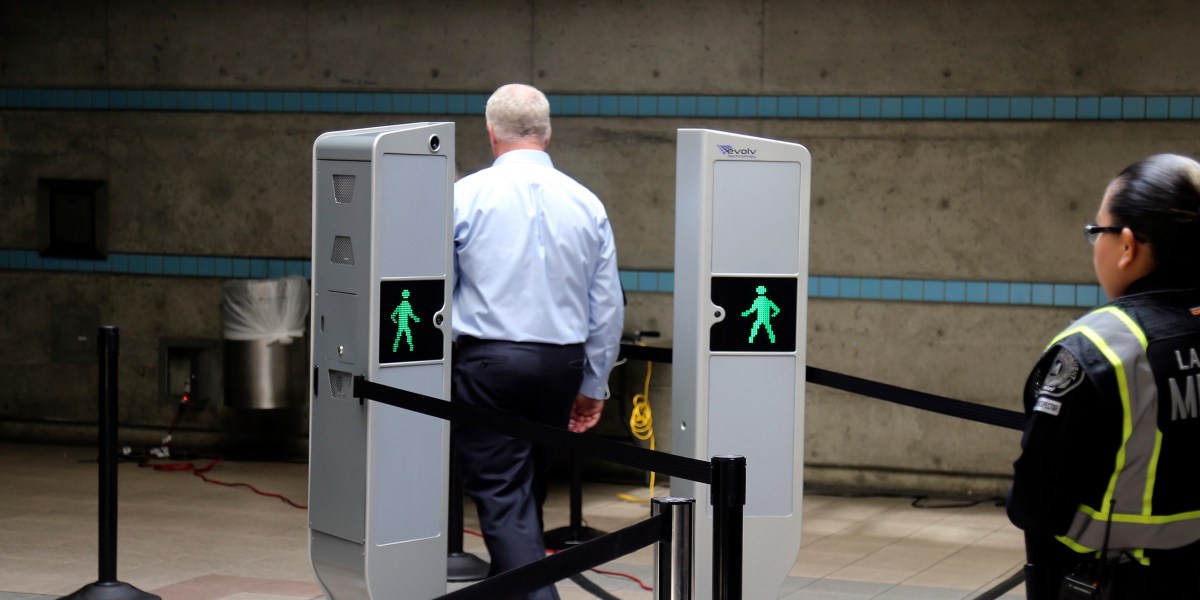
Thomas R. Proctor High School in Utica City School District, New York, installed Evolv Technologies' 'Evolv Express' AI-powered weapons-detection scanners for about $3.7 million, replacing traditional metal detectors on the promise that machine-learning models could reliably distinguish weapons from harmless items.
On 31 October 2022, a 17-year-old student carried a hunting-style knife through the scanner undetected and used it to stab another student. Utica administrators decommissioned the Evolv system and reverted to conventional metal detectors, spending an additional roughly $250,000 to remove and replace the equipment.
Reporting documented similar detection failures and high false-alarm rates (independent testing cited rates up to 60% in some schools) at other U.S. school districts using the same technology, out of more than 800 schools across roughly 40 states where Evolv scanners had been deployed.
In November-December 2024 the FTC settled with Evolv, finding the company had deceived schools by claiming its AI could reliably detect 'all' weapons more accurately and cost-effectively than metal detectors, when internal and independent testing did not support those claims. The settlement barred unsupported AI-detection claims going forward and let a subset of K-12 customers (about 8% of Evolv's customer base) cancel remaining contracts, without a fine. The case is a rare instance of a national regulator formally sanctioning an AI vendor for exaggerating an education-safety product's AI capabilities, though the settlement's remedies were narrow and hundreds of schools reportedly continued using Evolv scanners afterward.
National / regional programmes
Indicative funding routes for practices of this type — always check each programme's current calls and eligibility rules.
Do you run this practice? Claim it — verified implementers get a public contact pathway and can propose corrections.
Where this practice's information was retrieved from, and when.
New Zealand
New Zealand's Ministry of Education published national guidance on generative AI for schools in November 2024, setting principles on teacher …
United States of America
Ohio's House Bill 96 made it the first US state to require every public K-12 district to adopt a formal …
Cuba
Cuba's Ministry of Education, the ICCP and OEI launched a national teacher-training project and the 'IA en el Aula' digital …
Nigeria
On 19 Feb 2026 Nigeria's Data Protection Commission gave 649 universities, polytechnics and colleges 21 days to prove compliance with …
Open full copilot Grounded in cited practices — always check the sources.