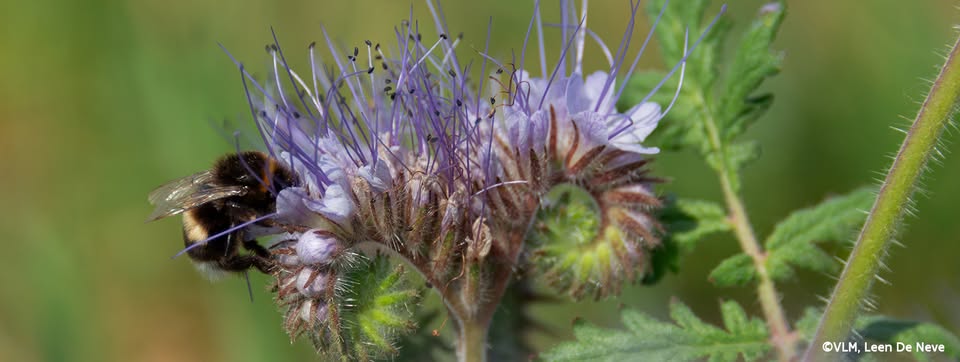
Flemish agri-environment PES: 2,529 farmers received €11.1M in 2025 for managing 5,948 ha of agricultural land for biodiversity — botanical grasslands, flower strips, riparian buffers and hedgerows. Five-year voluntary contracts, co-financed under EU CAP and monitored by INBO.
€11,052,715
Total payments disbursed (2025)
2,529
Farmers receiving payments (2025)
5,948 ha
Agricultural land under management agreements (2025)
~€1,858 per ha/year
Average payment rate (2025)
Details
Maturity
Established
Promoter
Vlaamse Landmaatschappij (VLM)
Period
2002–present
Region (NUTS)
BE23
Keywords
agriculture, biodiversity, rural development
Context
Belgium's Flemish Biodiversity Management Agreements (Dutch: Beheerovereenkomsten, BEA) are a voluntary, results-based agri-environment payment scheme administered by the Vlaamse Landmaatschappij (VLM — Flemish Land Agency) and co-financed under the EU Common Agricultural Policy (CAP) Rural Development Programme. Wallonia runs an equivalent scheme through Natagriwal. Together these programmes constitute Belgium's principal public PES instrument for farmland biodiversity, operating in one of Western Europe's most intensively managed agricultural landscapes.
Objectives
Farmers sign 5-year voluntary contracts committing to specific nature-friendly management practices on eligible agricultural parcels, including botanical grassland management, flower strips and herb-rich field margins, riparian buffer strips alongside watercourses, and maintenance of hedgerows, pollard trees and woodland edges. Payment rates are fixed annually by the Flemish government, reflecting income foregone plus management costs.
Activities
The Flemish Institute for Nature and Forest Research (INBO) provides independent ecological monitoring through the NARA (Flemish Nature Report) framework, tracking farmland bird indices, pollinator abundance, and botanical diversity across managed parcels.
Results
In 2025, VLM disbursed €11,052,715 to 2,529 farmers managing 5,948 hectares of Flemish agricultural land under active agreements — approximately €1,858/ha/year. Annual payment notifications are published publicly by VLM.
Conclusions
Flanders experiences some of Europe's highest agricultural intensity and nitrogen deposition, making voluntary conservation contracts critical for maintaining farmland species in a landscape dominated by arable cropping and intensive livestock. The Beheerovereenkomsten scheme has operated continuously since the early 2000s across multiple EU CAP programming periods.
Implementation
Indicative cost
Medium (€50k–€500k) — €11,052,715 disbursed to 2,529 farmers in 2025, averaging approximately €1,858 per hectare per year across 5,948 hectares under management.
Time to results
Long (> 3 years) — Individual contracts run 5 years; the overall scheme has operated continuously since the early 2000s across multiple EU CAP programming periods.
Staffing & skills
Vlaamse Landmaatschappij (VLM) administrative staff, Flemish Institute for Nature and Forest Research (INBO) ecological monitoring team
Conditions for success
Annually fixed payment rates reflecting income foregone plus management costs, keeping incentives aligned with farmer costs
France's 2021–2024 national PES pilot paid nearly 3,500 farmers across 130 territories for water-quality, soil and biodiversity outcomes, contracting up …