Melbourne's Urban Forest Strategy — A 20-Year Plan to Double Canopy Cover from 20% to 40%
Australia
Melbourne's 2012 Urban Forest Strategy set a 20-year target to double tree canopy from 20% to 40% by planting over …
Sierra Leone · Freetown · See the Sierra Leone profile · See the Freetown profile
Evidence: Descriptive / self-reported Top 58% 40/100 · Ask Evidence Copilot about this practice
Freetown City Council pays community growers, mostly women and young people, per digitally verified surviving tree via a GPS/photo-audited app; about 500,000 trees were verified toward the 2024 one-million target, with survival above 80%.
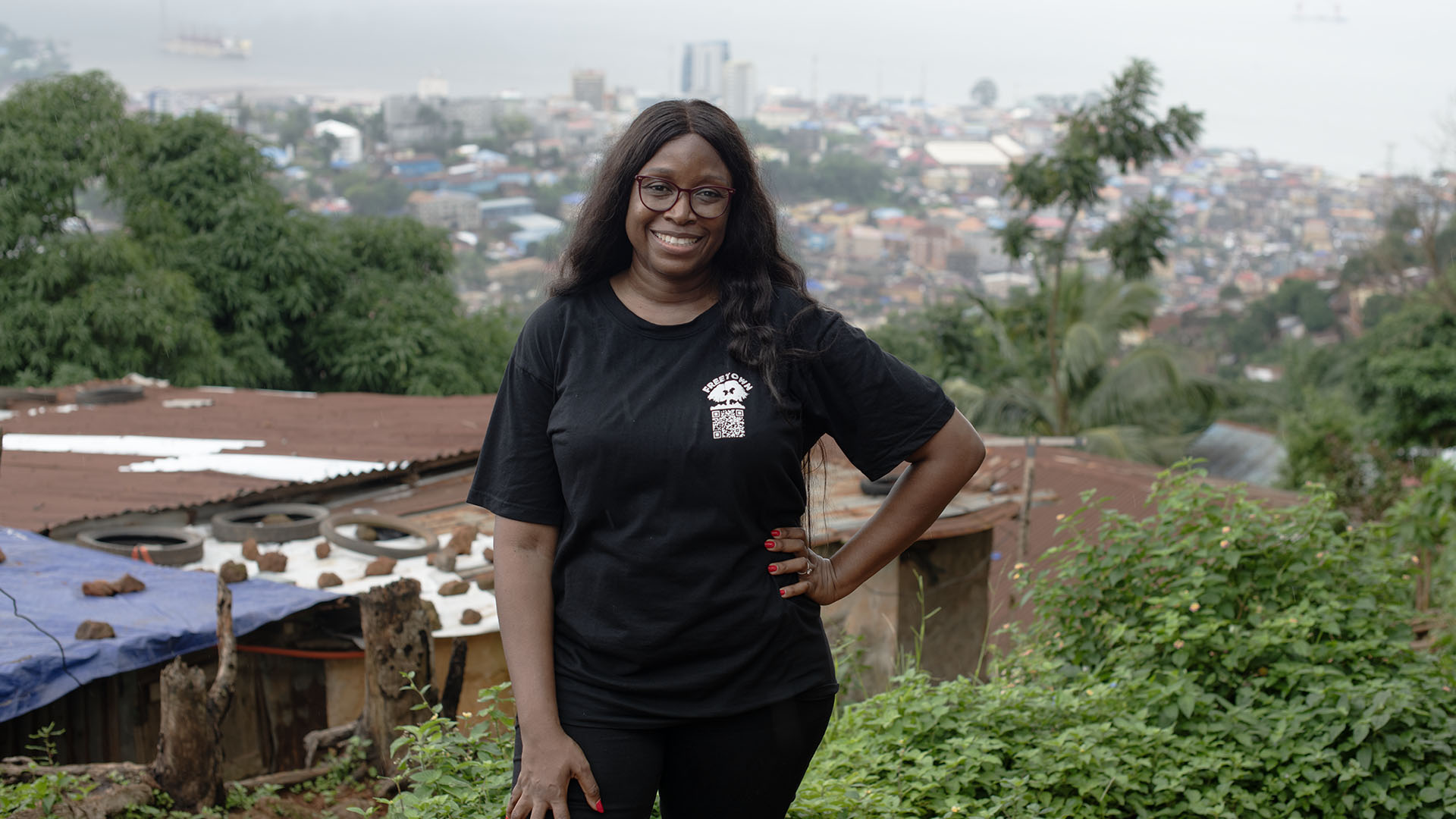
Freetown lost roughly 70% of its tree cover to unplanned urban growth, contributing to the 2017 landslide and floods that killed an estimated 1,000 people.
In 2020 Mayor Yvonne Aki-Sawyerr launched 'Freetown the Treetown' as part of the Transform Freetown agenda and the Freetown Green Infrastructure investment plan, targeting one million trees by 2024 and five million by 2030.
Community growers, predominantly women and young people, plant and tend saplings, tagging each tree's GPS location and photographing it periodically on the TreeTracker digital platform. City data technicians digitally verify each tree and conduct monthly physical audits; growers are then paid quarterly in tokens redeemable for cash, funded through the Freetown Green Infrastructure Investment Platform and carbon-market sales -- a 'pay-to-grow' model tying payment to verified survival rather than planting alone.
By the mid-2020s roughly 500,000 trees were verified on the public platform, with a reported survival rate above 80%. The programme won 2021 Bloomberg Philanthropies Global Mayors Challenge funding, was a 2023 Earthshot Prize finalist, and in 2025 UNDP highlighted it as a reforestation-finance model being scaled toward 5 million trees by 2028-2030.
Independent, standards-based carbon certification is not documented for the token/carbon-market funding stream, and headline figures come mainly from the city's own platform rather than third-party audits, so carbon and biodiversity gains should be read as city-reported rather than externally certified.
Philanthropic / foundation funding
Indicative funding routes for practices of this type — always check each programme's current calls and eligibility rules.
Do you run this practice? Claim it — verified implementers get a public contact pathway and can propose corrections.
Where this practice's information was retrieved from, and when.
Australia
Melbourne's 2012 Urban Forest Strategy set a 20-year target to double tree canopy from 20% to 40% by planting over …
Brazil
A municipal PES scheme in São Paulo state pays smallholders to restore riparian forest and protect springs in the Ribeirão …
Netherlands
Utrecht retrofitted all 316 municipal bus shelters with sedum roofs for pollinators and rainwater capture, while a citywide subsidy covers …
Albania
Tirana's Boeri-designed 2030 masterplan promised a 2-million-tree orbital forest and river greenbelt; an independent fact-check found municipal planting running at …
Open full copilot Grounded in cited practices — always check the sources.