Mpingo Conservation & Development Initiative (Tanzania)
Tanzania
Africa's first FSC community forest (2009): MCDI supports 40+ communities managing 410,000+ ha of Tanzanian miombo woodland, with 150,000 ha …
Gabon · Libreville · See the Gabon profile · See the Libreville profile
Top 96% 20/100 · Ask Evidence Copilot about this practice
On 15 July 2025 Gabon's environment ministry and Conseil National Climat launched a CAFI-funded PES pilot (259M FCFA, ~$465k) rewarding communities for forest, soil and water stewardship; by November's COP30, CAFI had folded Gabon into a wider $125m regional push.
Gabon holds 23.6 million hectares of rainforest — about 88% of its territory — with one of the world's lowest deforestation rates, well under 0.1% a year. Until 2025 the country had not tested direct payments for environmental services (PES) as a tool to reward the rural communities that keep that forest intact, relying instead on jurisdictional carbon-credit agreements with donors.
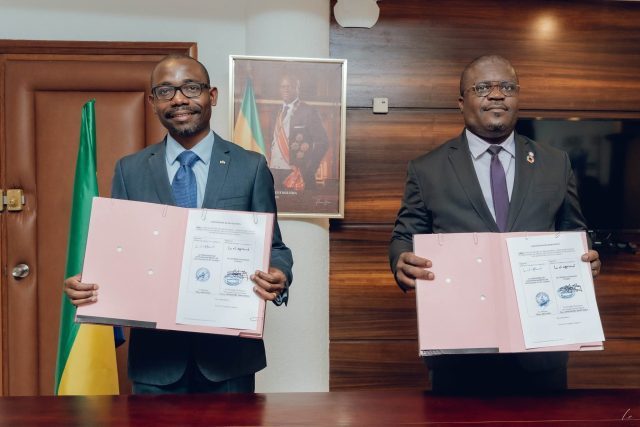
On 15 July 2025, Gabon's Minister of Environment, Ecology and Climate, Mays Mouissi, signed an agreement with the Conseil National Climat (CNC) — represented by permanent secretary Davy Onomori Mboumba — to run a pilot titled 'Démonstration et coordination du projet pilote de paiement pour services environnementaux au Gabon', financed with 259 million CFA francs (about US$465,000) from the Central African Forest Initiative (CAFI). The pilot compensates local communities, groups and organisations for forest protection, soil conservation and sustainable water-resource management, testing which incentive models work in the Gabonese context before any national rollout. Four months later, at COP30 in Belém (18 November 2025), CAFI folded Gabon into a wider regional PES push alongside the Democratic Republic of Congo and the Republic of Congo, backed by a new US$100 million commitment that brought the Congo Basin PES budget to US$125 million, plus a new mobile-money digital payment platform; by then, WWF and government partners had identified 15 villages in Gabon for community conservation contracts covering an estimated 50,000 hectares.
CNC and Gabon's environment ministry describe the July pilot explicitly as a test phase, designed to 'measure how financial incentives can change practices' before any decision to scale nationally.
Because both the Gabon-specific pilot and the regional COP30 expansion are only months old, there is no published ecological outcome data yet: carbon, biodiversity and water/soil benefits remain projected rather than measured. The pilot's own design — a short trial with an explicit decision point on scaling — signals that even its funders are still testing which incentive model will work at scale in Gabon, and independent verification of enrolled communities and hectares protected has not yet been published.
Read the full analysis: https://www.gabonreview.com/gabon-259-millions-de-francs-cfa-pour-encourager-la-protection-de-lenvironnement-par-les-communautes-locales/
Implementation detail (cost, timeline, staffing, conditions for success) is not yet available for this practice.
Do you run this practice? Claim it — verified implementers get a public contact pathway and can propose corrections.
Where this practice's information was retrieved from, and when.
Tanzania
Africa's first FSC community forest (2009): MCDI supports 40+ communities managing 410,000+ ha of Tanzanian miombo woodland, with 150,000 ha …
Nepal
Nepal received its first-ever REDD+ results-based payment - US$9.4 million from the World Bank's FCPF - in November 2025, after …
Brazil
Brazil's 2021 federal PES law underpins Floresta+ Amazônia, a $96m Green Climate Fund scheme paying family farmers R$1,500-28,000 each to …
Comoros
Comorian NGO Dahari pays Anjouan highland farmers to fallow degrading plots; a CEPF-funded pilot restored 429 ha of water catchment …
Open full copilot Grounded in cited practices — always check the sources.