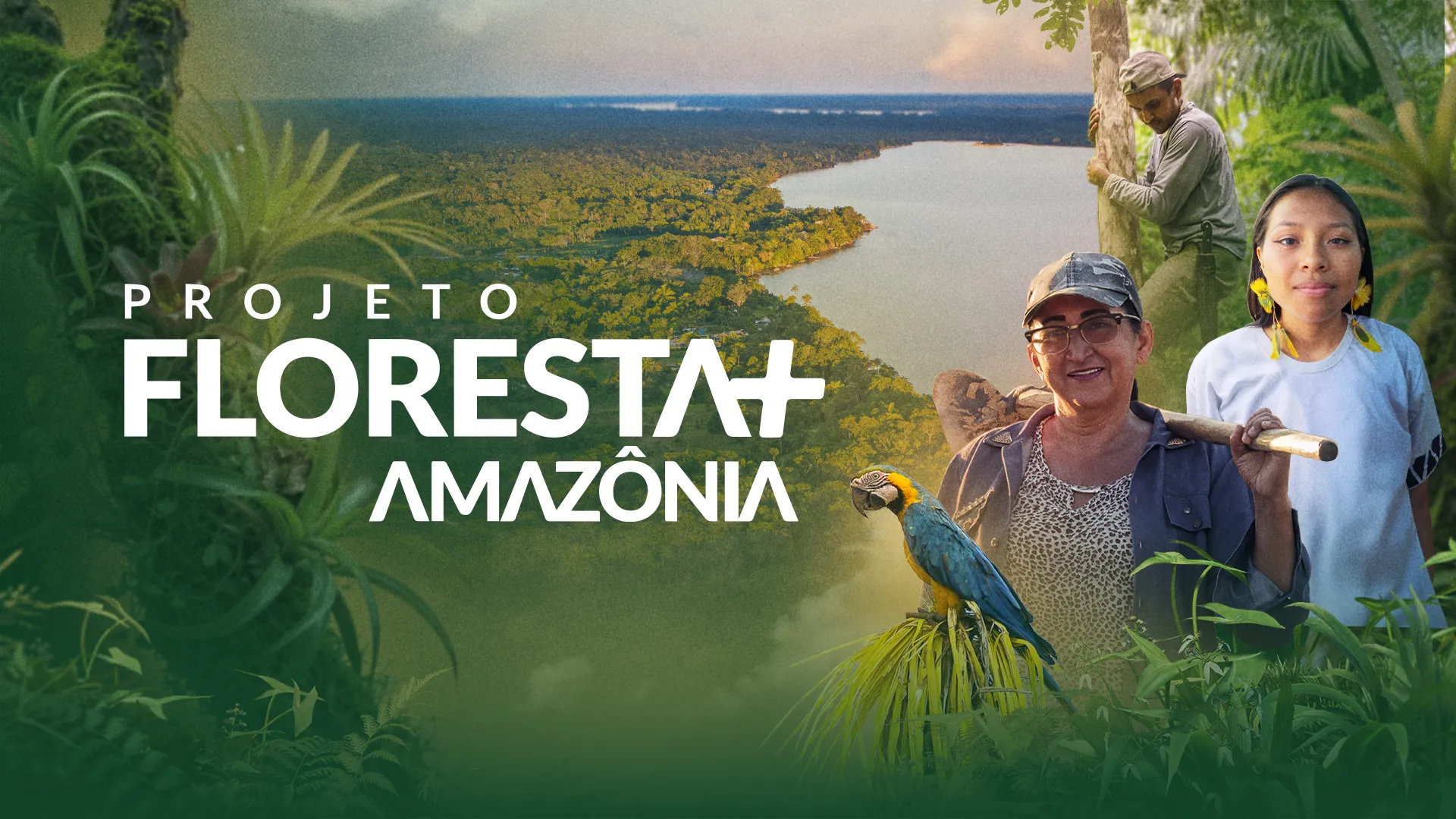
Brazil's 2021 federal PES law underpins Floresta+ Amazônia, a $96m Green Climate Fund scheme paying family farmers R$1,500-28,000 each to conserve forest; its first round reached 217 farmers and ~12,000 ha of native vegetation.
Ministério do Meio Ambiente e Mudança do Clima (MMA) / UNDP Brazil / Green Climate Fund
Period
2021-present
Keywords
federal payment for ecosystem services, forest conservation, family farming, Green Climate Fund, Legal Amazon
Context
In January 2021 Brazil enacted Lei no. 14.119/2021, creating the National Policy for Payment for Environmental Services (PNPSA), a Federal Programme for Payment for Environmental Services (PFPSA), and a National Registry of Payment for Environmental Services (CNPSA) - the country's first legal framework for a nationwide, federally run payment-for-ecosystem-services scheme. Its flagship initiative, Floresta+ Amazonia, is run by the Ministry of Environment and Climate Change (MMA) with UNDP Brazil as implementing partner and US$96 million in financing from the Green Climate Fund, paying smallholder and family farmers directly for conserving standing native vegetation across nine states of the Legal Amazon.
Results
More than 1,200 family farmers are registered across roughly 80 municipalities, including over 730 families from agrarian-reform settlements; government figures put cumulative reach at around 15,000 people region-wide. In its first disbursement round (May 2025) the programme paid R$2.2 million (about US$400,000) to 217 farmers - 39% of them women, and more than 80% of family-farmer applicants identifying as Black or Brown - for conserving nearly 12,000 hectares of native vegetation, with individual payments ranging from R$1,500 to R$28,000 depending on property size and the area of preserved vegetation.
Conclusions
Because payments only began in 2025 and are disbursed in successive rounds against a much larger pool of registered farmers, independent third-party verification of avoided deforestation or long-term additionality has not yet been published - the programme's own and UNDP's reporting are the primary sources for reach and payment figures to date.
Implementation
Indicative cost
High (€500k–€5M) — US$96 million Green Climate Fund financing; the first disbursement round paid R$2.2 million (about US$400,000) to 217 farmers, with individual payments of R$1,500-28,000.
Time to results
Long (> 3 years) — Legal framework enacted in 2021; first payments disbursed in May 2025; further rounds are planned against the pool of over 1,200 registered farmers.
Staffing & skills
Ministerio do Meio Ambiente e Mudanca do Clima (MMA) - lead agency, UNDP Brazil - implementing partner, Green Climate Fund - financier
Conditions for success
A dedicated national legal framework (Lei 14.119/2021) creating the policy, programme and registry
US$96 million in Green Climate Fund financing providing multi-year funding certainty
Disaggregated reporting by gender and race supporting equity targeting
Payments scaled to property size and area of preserved vegetation rather than a flat rate
Common failure modes
The first disbursement round (R$2.2 million) reached only 217 of over 1,200 registered farmers, showing a large gap between registration and actual payment so far
No independent verification of avoided deforestation exists yet; additionality claims rest solely on the programme's own and UNDP's reporting
Where it fits
Governance type
federal government programme with an international financier and a UN implementing partner
Scale
national (nine states of the Legal Amazon)
Income level
upper-middle income (Brazil)
Commonly funded by
National / regional programmes
Indicative funding routes for practices of this type — always check each programme's current calls and eligibility rules.
Do you run this practice?
Claim it —
verified implementers get a public contact pathway and can propose corrections.
Data sources
Where this practice's information was retrieved from, and when.