Plan Yaque Northern Yaque Water Fund (Dominican Republic)
Dominican Republic
Civil-society-led water fund (27 partners) paying landowners in the Yaque del Norte basin to conserve and restore watershed forests; backed …
Sri Lanka · Aranayake · See the Sri Lanka profile
Evidence: Descriptive / self-reported Top 96% 20/100 · Ask Evidence Copilot about this practice
Sri Lanka's first PES pilot (2019-22): hydropower firm Vidullanka (60%) and IUCN Sri Lanka (40%) spent ~LKR 6.1M restoring riparian buffers and forest in the 507-ha Ganthuna catchment to offset sedimentation costs to turbines. Tiny scale; unreplicated as of 2025.
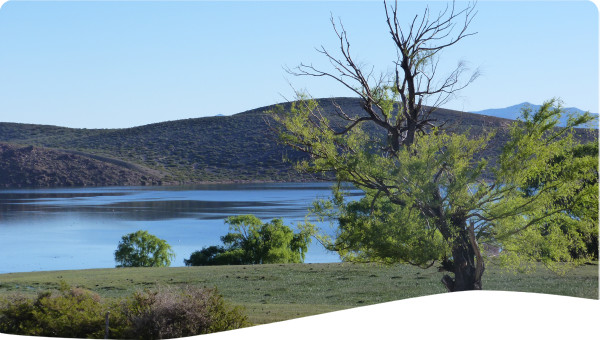
Erosion and slope farming in the upper catchment of the 507-hectare Ganthuna Small Hydropower Plant (on the Gurugoda Oya stream, near Aranayake in Kegalle District) were causing sedimentation that damaged turbines and reduced reservoir storage.
Between 2019 and 2022, IUCN Sri Lanka, the private hydropower producer Vidullanka PLC, and UNDP's Biodiversity Finance Initiative (BIOFIN) piloted Sri Lanka's first Payment for Ecosystem Services scheme, testing whether a downstream water user — here a hydropower operator rather than a drinking-water utility — would pay upstream land users to avoid future infrastructure costs. Vidullanka funded 60% and IUCN 40% of a total project cost of about LKR 6.1 million (roughly US$20,000-30,000). Interventions covered only about 4.2 hectares directly: 10,400 m² of riparian buffer restoration, 22,000 m² of forest enrichment planting, and roughly 10,000 m² of community/school forest and orchard blocks, with more than 3,200 trees planted.
Coordination involved Sri Lanka's Ministry of Environment, Forest Department, Department of Agriculture, Central Environmental Authority, Sustainable Energy Authority, and the Aranayake Divisional Secretariat.
The pilot remains very small relative to its 507-hectare catchment and was disrupted by COVID-19. No independent hydrological outcome data (sediment reduction, turbine performance) has been published; the figures above are drawn from project design and reporting documents rather than post-hoc verification. As of a 2025 BIOFIN update, it was still described as Sri Lanka's only implemented PES scheme, with no national PES policy adopted and a second, tea-plantation pilot only "being considered."
Own resources / municipal budget Philanthropic / foundation funding
Indicative funding routes for practices of this type — always check each programme's current calls and eligibility rules.
Do you run this practice? Claim it — verified implementers get a public contact pathway and can propose corrections.
Where this practice's information was retrieved from, and when.
Dominican Republic
Civil-society-led water fund (27 partners) paying landowners in the Yaque del Norte basin to conserve and restore watershed forests; backed …
Malawi
A randomised-trial payment scheme paid 1,450-2,800 Shire River Basin smallholders per season to adopt conservation agriculture, testing whether hydropower-linked avoided-sediment …
Philippines
Since the 1990s, hydropower plants on the Bakun River have rewarded upland farmers and villages in Benguet for reducing forest …
India
From the late 1970s, the Haryana village of Sukhomajri built check dams and a community water-rights institution (HRMS) that cut …
Open full copilot Grounded in cited practices — always check the sources.