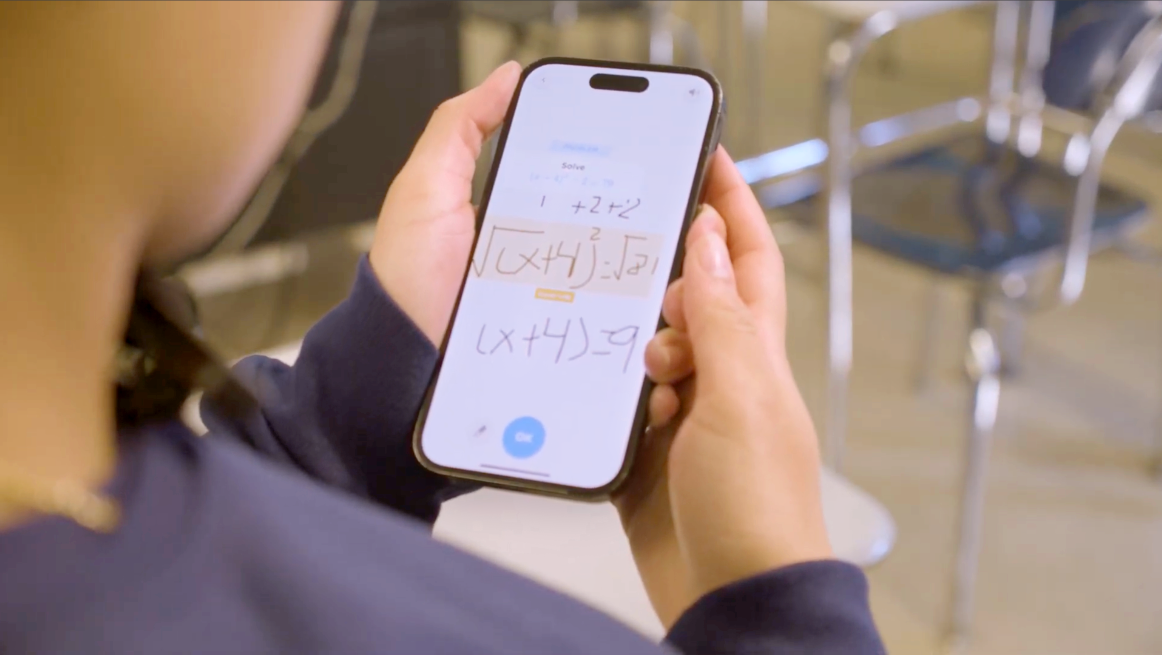
In 2025-26, Deer Valley Unified School District (Phoenix area, Arizona) used Goblins as a supplementary maths tool for grades 6–8. Goblins is an AI tutor that gives step-by-step help by text chat, a virtual whiteboard and spoken conversation. It works in Spanish and six other languages. Teachers assigned problems and could upload their own.
Accelerate, an independent non-profit, funded researchers at the University of Maryland's Center for Educational Data Science and Innovation (led by Jing Liu) to evaluate it. The study covered 6,065 of the district's 7,083 sixth- to eighth-graders. It compared pupils who solved at least two problems a week with similar pupils who used it less or not at all, adjusting for prior achievement, demographics and teachers' past performance. Accelerate reports that the comparison met What Works Clearinghouse baseline-equivalence standards.
Regular users scored about 0.11 standard deviations higher on the year-end MAP maths assessment, which Accelerate equates to roughly three months of extra learning. Pupils solving 20 or more problems a week gained about a year, but only 164 pupils (2.7%) reached that level. Average use was 5.3 hours over about 27 weeks. Just over half (3,088) met the two-problems-a-week threshold, and 67% averaged under 10 minutes a week. Preliminary subgroup results suggest possibly larger benefits for pupils with IEPs, Hispanic pupils and English learners.
Caution: pupils were not randomly assigned, so motivation or home support may explain part of the gain. The groups differed at baseline, and there is no intent-to-treat estimate of simply offering the tool. Accelerate plans a randomised controlled trial in 2026-27. The study is a useful early signal, not proof of impact.
Read the full analysis: https://accelerate.us/can-an-ai-tutor-help-middle-schoolers-learn-math/
Where this practice's information was retrieved from, and when.