Algeria's Barrage Vert (Green Dam) — State Afforestation Belt Across the High Plateaus
Algeria
Algeria's Barrage Vert (1971-) afforestation belt reports conflicting outcomes: FAO cites ~75% survival, an independent study found ~42%, and a …
China · Hohhot · See the China profile
Since 2011, China's Grassland Ecological Compensation Policy has paid herders 37.5-112.5 yuan/ha to reduce grazing, investing over 150 billion yuan across 13 provinces and lifting grassland NDVI cover, though peer-reviewed studies find payments are unevenly distributed.
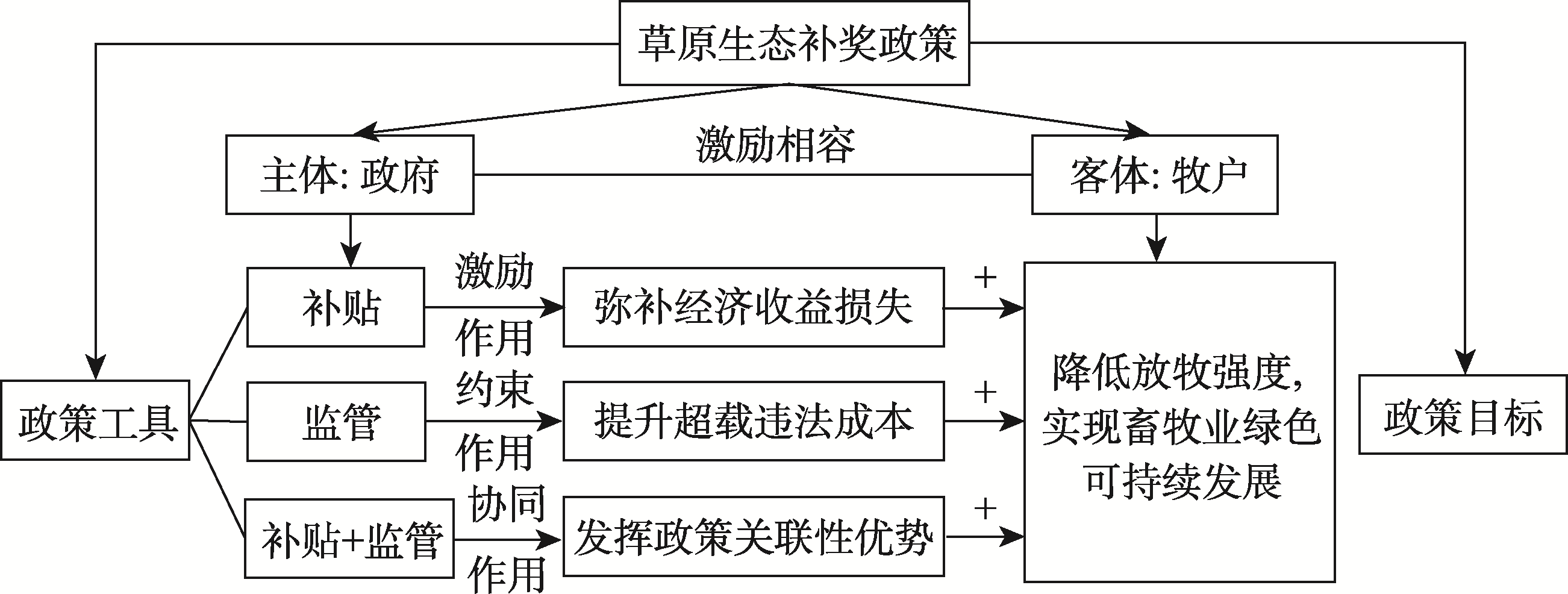
China's Grassland Ecological Compensation Policy (GECP), launched in 2011, is described in the peer-reviewed literature as the world's largest grassland payment-for-ecosystem-services programme by area, participants and funds transferred. It pays herder households a fixed rate per hectare — 112.5 yuan/ha/year in designated no-grazing areas and 37.5 yuan/ha/year in forage-livestock balance areas nationally (with higher locally adjusted rates in some banners, e.g. 205.25 and 68.7 yuan/ha in Xin Barag Left Banner, Inner Mongolia) — in exchange for reducing or halting livestock grazing to curb grassland degradation and desertification. GECP-I (2011-2015) covered eight provinces (Inner Mongolia, Xinjiang, Tibet, Qinghai, Gansu, Ningxia, Sichuan and Yunnan) with central government investment of 77.4 billion yuan; GECP-II (2016-2020) expanded to 13 provinces with a further 93.8 billion yuan budgeted, and cumulative national investment is reported at over 150 billion yuan (roughly USD 21 billion) benefiting close to 18 million herders in pastoral and semi-pastoral areas.
A study published in Nature Communications, combining remote sensing with household survey data across 630 programme counties, found county-level NDVI (a satellite vegetation-cover index) rose 3.2% and overall NDVI rose 1.2% comparing the 2011-2015 programme period to the 2006-2010 baseline, alongside measurable increases in herder income attributable to the payments — in a Qinghai/Gansu sample, GECP payments accounted for nearly 90% of the roughly 3,660 yuan increase in per-capita income recorded by 2017.
Independent follow-up research is more cautionary about distribution and compliance. A study in Land (MDPI) analysing income effects found the fund allocation highly uneven — a Gini index of 0.46, with the top 20% of households receiving 49% of total compensation versus 3% for the bottom 20%, and the wealthiest households receiving 3.6-4 times more in payments than the poorest. A household survey of 203 herders in Xin Barag Left Banner found only 35% reduced livestock numbers as intended by the policy, with many instead participating in informal grassland-leasing arrangements. These findings temper the programme's otherwise well-documented vegetation and income outcomes.
A separate study in the Journal of Natural Resources, surveying 885 grassland transfer-in herders across six regions of Inner Mongolia (Hulun Buir, Chifeng, Xilingol, Ulanqab, Ordos and Alxa), found the subsidy on its own reduced grassland-use pressure by 2.53 sheep units/ha — a 77% cut in overgrazing severity versus unsubsidised, weakly supervised herders — outperforming supervision alone (60% reduction) or the two combined (66% reduction), with smaller-scale herders responding most strongly to the payments.
Read the full analysis: https://www.jnr.ac.cn/EN/abstract/article/1000-3037/74415
Implementation detail (cost, timeline, staffing, conditions for success) is not yet available for this practice.
Where this practice's information was retrieved from, and when.
Algeria
Algeria's Barrage Vert (1971-) afforestation belt reports conflicting outcomes: FAO cites ~75% survival, an independent study found ~42%, and a …
Brazil
World's first jurisdictional REDD+ system (Acre State Law 2.308/2010), covering 15.4 M ha of Amazon forest; Standard Chartered-CDSA partnership to …
Estonia
Estonia's EAFRD-funded Rural Development Plan pays private landowners €60–134/ha for Natura 2000 management restrictions. By 2019: €4.3 M/year for 64,000 …
Brazil
Brazil's first ecological fiscal transfer (1991) redistributes ~R$500 million/year of state VAT revenue to municipalities hosting protected areas or water …
Open full copilot Grounded in cited practices — always check the sources.