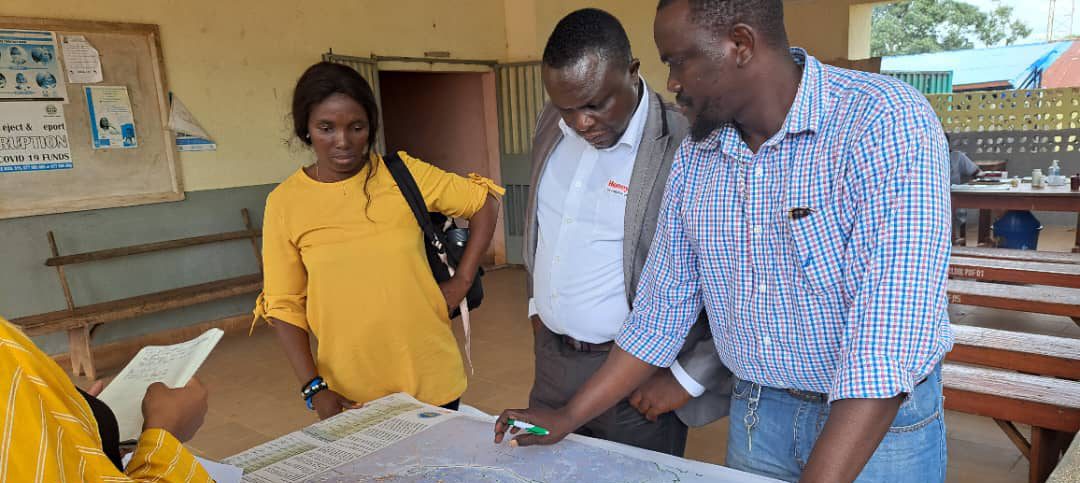
Statistics Sierra Leone and the GRID3 partnership use machine-learning building-footprint detection on satellite imagery to map population at 1-hectare resolution, powering 223 microplanning maps that helped a 2022 HPV campaign vaccinate 177,141 girls against a 153,991 target.
177,141
HPV vaccine doses administered (3-11 October 2022)
153,991
Target population (ten-year-old girls) (October 2022 campaign)
115 %
Doses administered as share of modelled target
223
Microplanning maps produced for the campaign
Details
Maturity
Scaling
Promoter
Statistics Sierra Leone / GRID3 partnership
Period
2021–present (HPV microplanning campaign: October 2022)
Keywords
geospatial data, machine learning, population mapping, public health, vaccination campaigns
Context
Sierra Leone's last full national census was in 2015, leaving planners with an outdated picture of where people live. Under the GRID3 partnership, Statistics Sierra Leone works with Esri, Maxar, Fraym and the Global Partnership for Sustainable Development Data to combine satellite imagery, machine-learning building-footprint extraction and household survey data into population, age and sex estimates for every 1-hectare cell in the country. Starting in 2021 with COVID-19 outreach, the Ministry of Health and Sanitation's Expanded Programme on Immunization paired this data with school-enrolment records to build microplanning maps, producing 223 such maps for the October 2022 HPV vaccination campaign run with the Clinton Health Access Initiative, Gavi and WHO.
Results
Against a projected target of 153,991 ten-year-old girls, the campaign administered 177,141 HPV vaccine doses in a single week (3-11 October 2022) — about 115% of the modelled target population. Sierra Leone has since run a larger, multi-age-cohort national HPV campaign that pushed national coverage above 70%, though that later campaign's reporting does not specify whether GRID3 maps were reused.
Conclusions
The underlying population counts are machine-learning estimates calibrated against a decade-old census and periodic surveys rather than a fresh headcount, so accuracy still depends on regular ground-truthing; a single campaign's success also reflects overall programme design — cold-chain logistics, community mobilisation, school partnerships — as much as the mapping technology itself.
Implementation
Implementation detail (cost, timeline, staffing, conditions for success) is not yet available for this practice.
Commonly funded by
National / regional programmesPhilanthropic / foundation funding
Indicative funding routes for practices of this type — always check each programme's current calls and eligibility rules.
Do you run this practice?
Claim it —
verified implementers get a public contact pathway and can propose corrections.
Data sources
Where this practice's information was retrieved from, and when.
India's ICMR-run network of tertiary hospitals turned six years of resistance data into machine-learning early-warning signals, flagging cefotaxime resistance as …