Acre SISA - State System of Incentives for Environmental Services (Brazil)
Brazil
World's first jurisdictional REDD+ system (Acre State Law 2.308/2010), covering 15.4 M ha of Amazon forest; Standard Chartered-CDSA partnership to …
Pakistan · Peshawar · See the Pakistan profile
Khyber Pakhtunkhwa's provincial government paid community watchers and nursery growers to regenerate 350,000 ha of forest, exceeding its Bonn Challenge pledge — later scaled nationally, though corruption probes and pastoralist exclusion were documented.
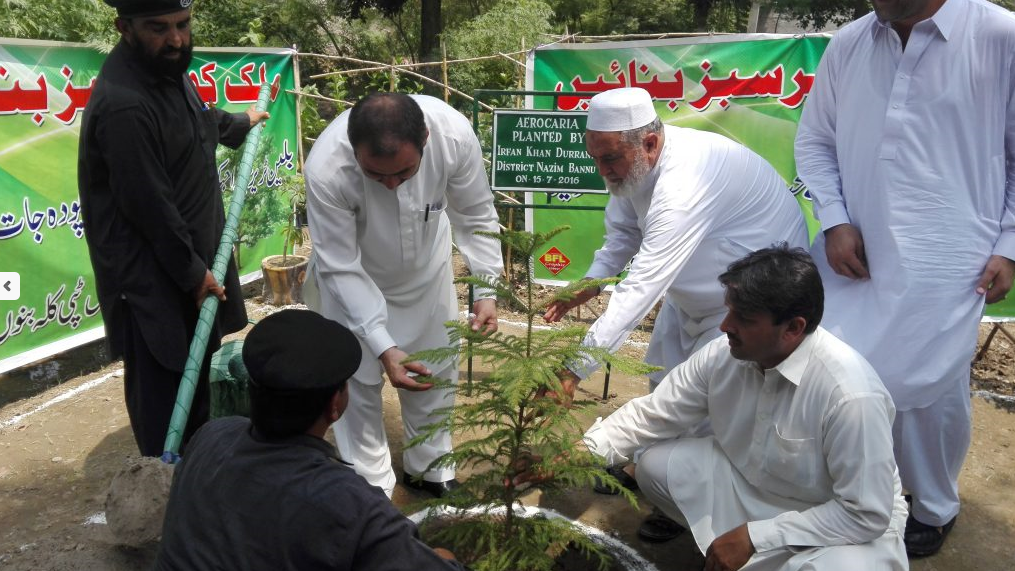
Between 2014 and 2018, the provincial government of Khyber Pakhtunkhwa (KP), Pakistan, ran the Billion Tree Tsunami Afforestation Programme through its Forest, Environment & Wildlife Department. Rather than paying for tree-planting alone, the scheme paid community-appointed “nighaban” (watchers) a daily wage to guard enclosed, degraded forest patches from grazing, fire and illegal logging so they could regenerate naturally, while separately paying growers to run thousands of village-level tree nurseries supplying seedlings for active planting.
An independent 2017 IUCN assessment confirmed the province had restored 350,000 hectares of forest and degraded land, surpassing its 348,400-hectare Bonn Challenge pledge, with roughly 60% of the area recovering through protected natural regeneration and 40% through active planting; the KP government invested US$123 million and established over 13,000 private nurseries. Globally reported figures put total seedlings planted at 872.3 million with an 89% average survival rate. The model was subsequently scaled up nationally as the Ten Billion Tree Tsunami Programme (2019-2023), with a PKR 125.18 billion (~US$800 million) budget that employed roughly 164,500 daily-wage workers as forest guards, nursery hands and planters.
The programme's evidence record includes real governance shortcomings. Pakistan's National Accountability Bureau opened corruption inquiries in 2018 (expanded in 2020) into alleged “ghost labour” and embezzlement worth an estimated PKR 462 million. Independent field research published by Jamhoor in 2018 also found that payments and future timber rights accrued mainly to landowners sitting on the Village Development Councils that controlled enclosures and appointments, while landless Gujjar pastoralist tenants lost grazing access with no compensation or representation — a documented equity failure in who captured the scheme's payments.
Read the full analysis: https://iucn.org/news/forests/201708/pakistan%E2%80%99s-billion-tree-tsunami-restores-350000-hectares-forests-and-degraded-land-surpass-bonn-challenge-commitment
Implementation detail (cost, timeline, staffing, conditions for success) is not yet available for this practice.
Where this practice's information was retrieved from, and when.
Brazil
World's first jurisdictional REDD+ system (Acre State Law 2.308/2010), covering 15.4 M ha of Amazon forest; Standard Chartered-CDSA partnership to …
Estonia
Estonia's EAFRD-funded Rural Development Plan pays private landowners €60–134/ha for Natura 2000 management restrictions. By 2019: €4.3 M/year for 64,000 …
Brazil
Brazil's first ecological fiscal transfer (1991) redistributes ~R$500 million/year of state VAT revenue to municipalities hosting protected areas or water …
Romania
Romania's PNDR Measure 10 pays 125–500 EUR/ha to smallholder farmers maintaining biodiversity-rich HNV meadows. Over 2015–2019, 212,413 beneficiaries received EUR …
Open full copilot Grounded in cited practices — always check the sources.