FUNCAGUA — Guatemala City's Legally Established Water Fund
Guatemala
Guatemala's first legally established water fund (2017) pools Coca-Cola, PepsiCo and public funding to restore forest in the Xayá-Pixcaya watershed …
United States of America · Honolulu · See the United States of America profile · See the Honolulu profile
Evidence: Descriptive / self-reported Top 58% 40/100 · Ask Evidence Copilot about this practice
A $200,000 Coca-Cola Foundation grant funded a 6.6-mile fence protecting 1,400 acres of native Koʻolau forest on Oʻahu from invasive species, safeguarding aquifer recharge for a system supplying over 364 million gallons of drinking water daily.
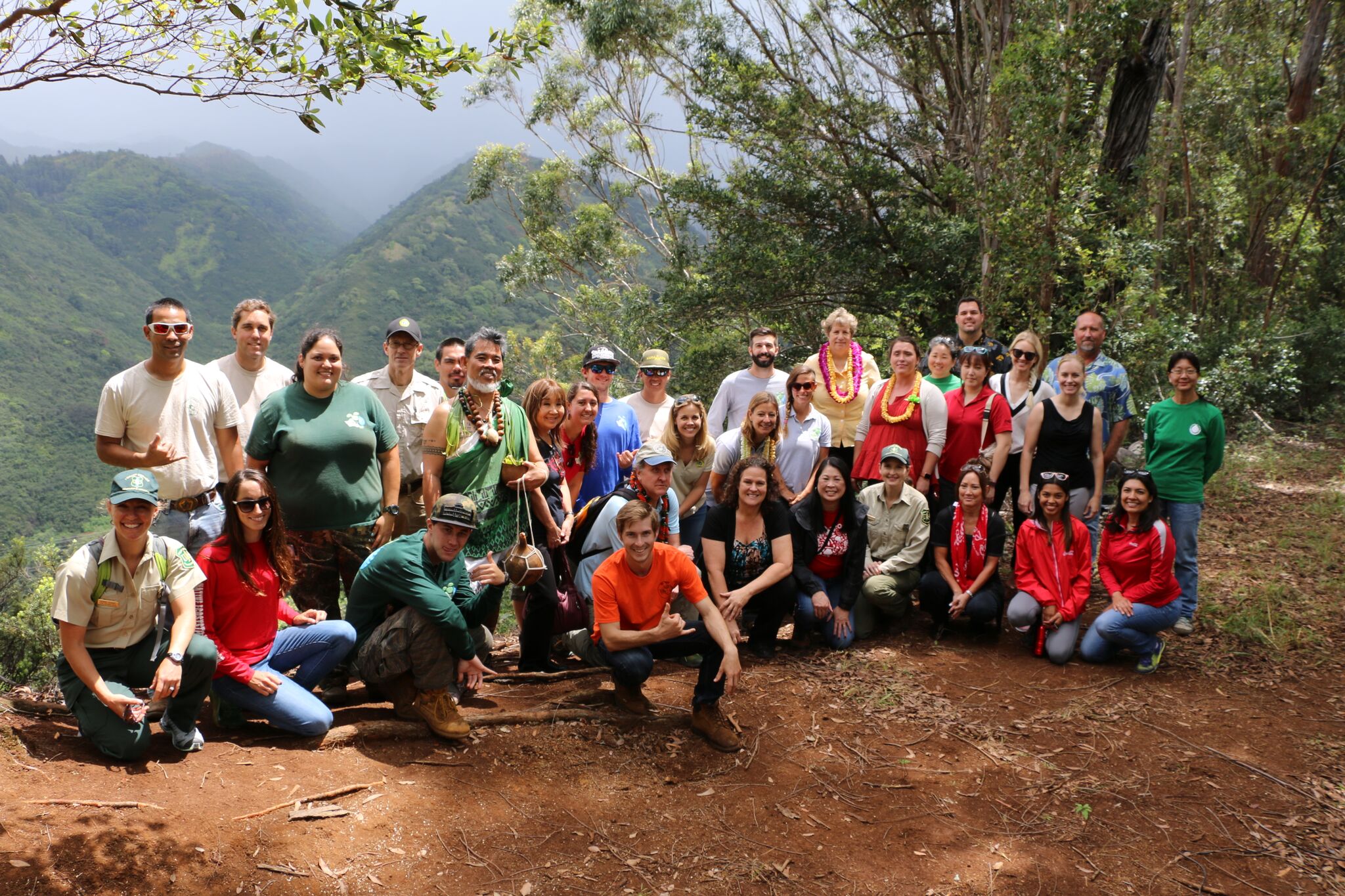
The Koʻolau Mountains Watershed Partnership (KMWP), founded in 1999, unites 17 landowning partners and 10 associate partners — including the State of Hawaiʻi, Kamehameha Schools, the U.S. Army and the Honolulu Board of Water Supply — to manage more than 100,000 acres of public and private land across Oʻahu's Koʻolau range, a system that supplies roughly 90% of the island's potable water through aquifer recharge.
Protect priority native forest from invasive species to safeguard aquifer recharge for the Waiawa/Pearl Harbor aquifer system, which delivers more than 364 million gallons of water a day, in support of Hawaiʻi's state goal of protecting 30% of its priority watersheds by 2030.
In April 2017, a $200,000 Coca-Cola Foundation grant — matched by $100,000 from the Honolulu Board of Water Supply and $100,000 in state watershed capital-improvement funds — financed a 6.6-mile fence enclosing 1,400 acres of priority forest (1,000 acres of Kamehameha Schools land and 400 acres of the state's ʻEwa Forest Reserve) to exclude feral pigs, goats and invasive plants.
No independently published before/after data on invasive-species density or aquifer recharge specific to this fence exists. KMWP staff describe a "significant positive impact" over ten years in qualitative terms rather than with monitored metrics. The corporate-utility-state co-funding model has since been replicated by other watershed partnerships coordinated under the Hawaiʻi Association of Watershed Partnerships.
The fence protects a critical component of Oʻahu's aquifer-recharge infrastructure, but it is one element of a much larger, longer-running partnership rather than a standalone, separately evaluated intervention, and its specific impact has not been independently measured.
Philanthropic / foundation funding
Indicative funding routes for practices of this type — always check each programme's current calls and eligibility rules.
Do you run this practice? Claim it — verified implementers get a public contact pathway and can propose corrections.
Where this practice's information was retrieved from, and when.
Guatemala
Guatemala's first legally established water fund (2017) pools Coca-Cola, PepsiCo and public funding to restore forest in the Xayá-Pixcaya watershed …
Italy
Independently audited by SGS, Sanpellegrino's Ruspino bottling plant achieved AWS Core Certification in 2020 for its stewardship of the San …
Kenya
Announced June 2026, Haleon's 3-year Basin Champion tie-up with the Upper Tana-Nairobi Water Fund will help 7,660 farmers restore 131 …
Kenya
WWF and CARE brokered payments from Lake Naivasha's flower-export farms to c.785 upstream smallholders (of 5,000) who terrace and reforest …
Open full copilot Grounded in cited practices — always check the sources.