Working for Water (South Africa)
South Africa
Since 1995 South Africa has paid the unemployed to clear water-hungry invasive alien plants — 2.5M+ hectares cleared and 300,000+ …
South Africa · Hoedspruit · See the South Africa profile
Evidence: Observational / pre–post Top 58% 40/100 · Ask Evidence Copilot about this practice
South Africa's Kruger to Canyons Biosphere launched a R125m ($7m) catchment investment programme in 2023, clearing 1,500+ ha of invasive alien plants in the Blyde River and Upper Letaba catchments and recovering 200+ million litres of water a year.
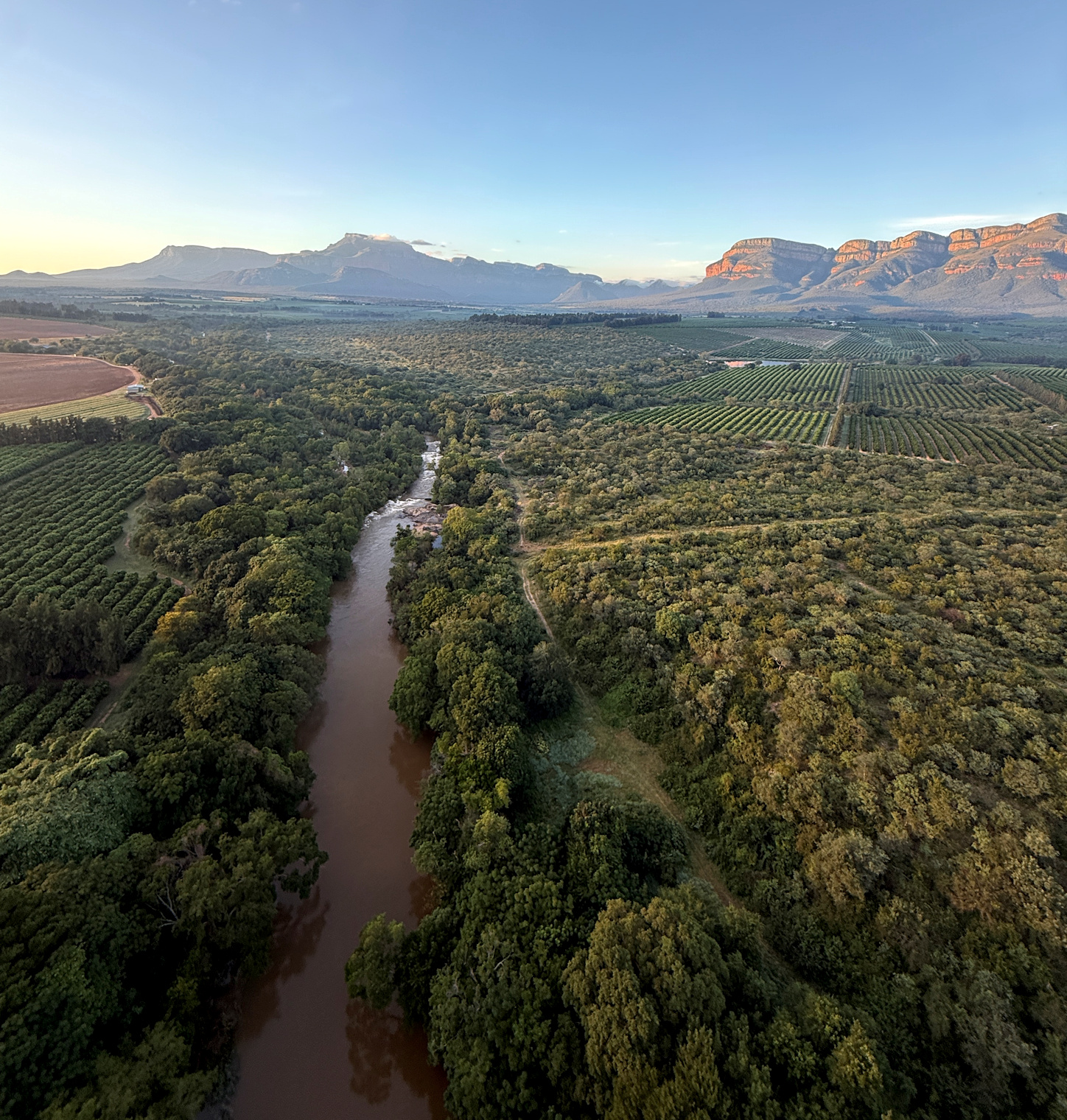
The Kruger to Canyons (K2C) Biosphere Region in Limpopo and Mpumalanga, South Africa, depends on the Blyde River catchment for water security, but invasive alien plants (IAPs), illegal mining and land-use degradation have been eroding that supply.
Launch a phased 'water fund': a R125 million ($7 million) five-year High-Impact Phase feeding into a projected R254-260 million ($14.5-14.9 million) 30-year programme modelled to unlock roughly R657 million ($37.7 million) in benefits.
Since September 2022, AFR100-linked clearing has removed IAPs, with a new phase begun January 2025. The Coca-Cola-funded Upper Letaba Catchment Restoration Project, launched March 2024 with The Nature Conservancy, Mountain Environmental Watch, the University of Limpopo and contractor Hlole Development Projects, cleared IAPs through 2024. Funding channels include the 'Go-Fund' partnership between the Nature for Water Facility and The Nature Conservancy plus corporate funders such as Coca-Cola.
More than 670 hectares of IAPs cleared since September 2022, with the January 2025 phase targeting roughly 400 further hectares in the Blyde River Canyon Nature Reserve. The Upper Letaba project cleared nearly 900 hectares of IAPs during 2024 alone and reports recovering more than 200 million litres of water annually; pollinator-activity surveys to gauge ecosystem-health recovery were due to start in 2025.
Only the first five years of the 30-year plan are currently funded. Longer-term sustainability depends on carbon-credit, biodiversity-payment and catchment-levy revenue streams that the Business Case describes as aspirational rather than secured.
Philanthropic / foundation funding Own resources / municipal budget
Indicative funding routes for practices of this type — always check each programme's current calls and eligibility rules.
Do you run this practice? Claim it — verified implementers get a public contact pathway and can propose corrections.
Where this practice's information was retrieved from, and when.
South Africa
Since 1995 South Africa has paid the unemployed to clear water-hungry invasive alien plants — 2.5M+ hectares cleared and 300,000+ …
New Zealand
National programme paying contractors to eliminate invasive wilding conifers from ~180,000 ha/year; wilding conifers remove up to 40% of catchment …
Jordan
Jordan's largest wastewater plant treats ~70% of the country's sewage and discharges 133 million m³/year of high-quality effluent into the …
Australia
Australia's Indigenous Rangers Program funds 40+ ranger groups across northern Australia to control feral pigs, cats and invasive weeds like …
Open full copilot Grounded in cited practices — always check the sources.