Ringgold Isles Rat Eradication — Customary Landowner-Led Seabird Recovery (Fiji)
Fiji
In 2008, BirdLife International's Fiji Programme and two customary landowning clans eradicated invasive Pacific rats from all seven main Ringgold …
Australia · Darwin · See the Australia profile
Evidence: Descriptive / self-reported Top 14% 60/100 · Ask Evidence Copilot about this practice
Australia's Indigenous Rangers Program funds 40+ ranger groups across northern Australia to control feral pigs, cats and invasive weeds like gamba grass; independent SROI studies found up to AUD 3.40 of social value per AUD 1 invested.
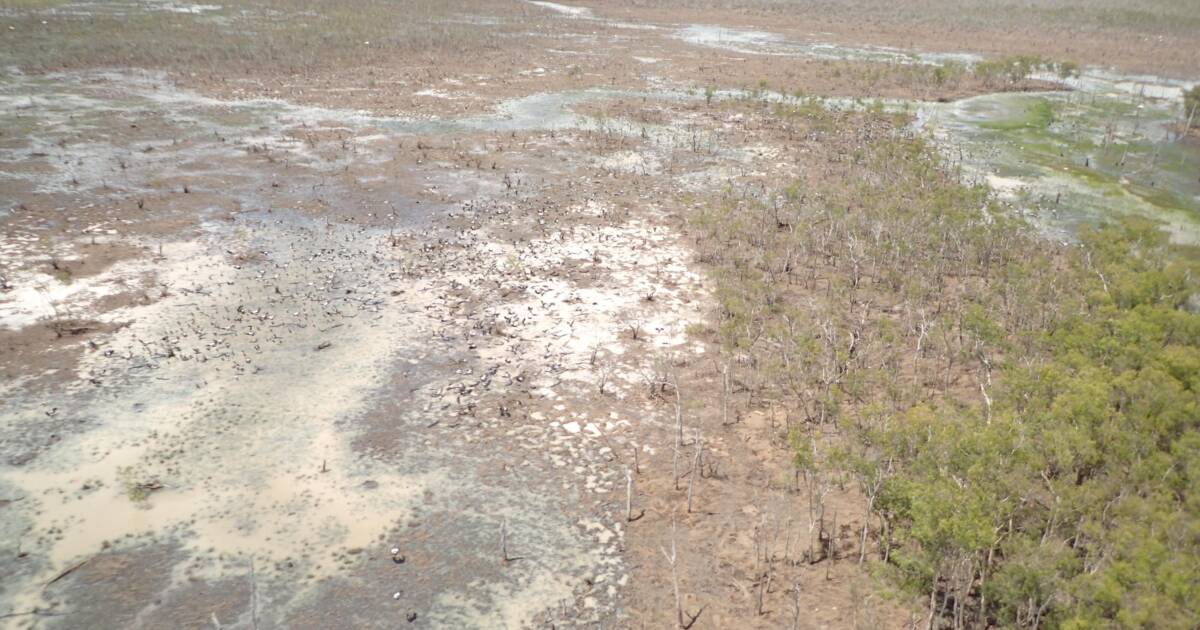
Since 2007, the Australian Government's Indigenous Rangers Program (originally "Working on Country") has funded Aboriginal and Torres Strait Islander ranger groups to manage Indigenous Protected Areas and other Country, with invasive species control as a core task. Government investment now exceeds AUD 1.3 billion for 2021-2028, supporting roughly 770 full-time-equivalent ranger positions across 108+ ranger groups nationally.
Within this framework, the "Protecting Country Against Invasive Species" (PCAIS) initiative, coordinated by NAILSMA and boosted by a further AUD 2 million Australian Government grant (2025), channels direct funding to more than 40 Indigenous ranger groups across Western Australia, the Northern Territory and Queensland. Rangers combine traditional ecological knowledge with aerial surveys, GPS-collared feral pigs (27 collared under the programme), trapping, shooting and baiting to control feral pigs and cats and invasive weeds such as Siam weed and gamba grass.
A 2016 Social Return on Investment (SROI) analysis commissioned by the Department of the Prime Minister and Cabinet found Indigenous Protected Areas employing rangers generated up to AUD 3.40 of social, economic, cultural and environmental value per AUD 1 invested; a site-level SROI study of the Girringun and Tjaltjraak ranger programmes independently found ratios of roughly 3:1.
Feral pig and gamba grass populations continue to expand faster than control capacity in many regions, and most published evaluation to date is programme-level (jobs, capacity, SROI) rather than population-level (measured hectares or animal-density reduction) - ecological outcomes are more strongly evidenced for employment and governance than for quantified biodiversity or fire impact.
National / regional programmes
Indicative funding routes for practices of this type — always check each programme's current calls and eligibility rules.
Do you run this practice? Claim it — verified implementers get a public contact pathway and can propose corrections.
Where this practice's information was retrieved from, and when.
Fiji
In 2008, BirdLife International's Fiji Programme and two customary landowning clans eradicated invasive Pacific rats from all seven main Ringgold …
New Zealand
National programme paying contractors to eliminate invasive wilding conifers from ~180,000 ha/year; wilding conifers remove up to 40% of catchment …
Romania
The EU-funded GreenDanube LIFE project (2006-2010) cleared 12.2 hectares of invasive Amorpha fruticosa and added 953.5 hectares of Danube floodplain …
Netherlands
Since 1941, Dutch regional water boards have run a nationwide muskrat/coypu control programme to stop dike-burrowing damage; in 2025 they …
Open full copilot Grounded in cited practices — always check the sources.