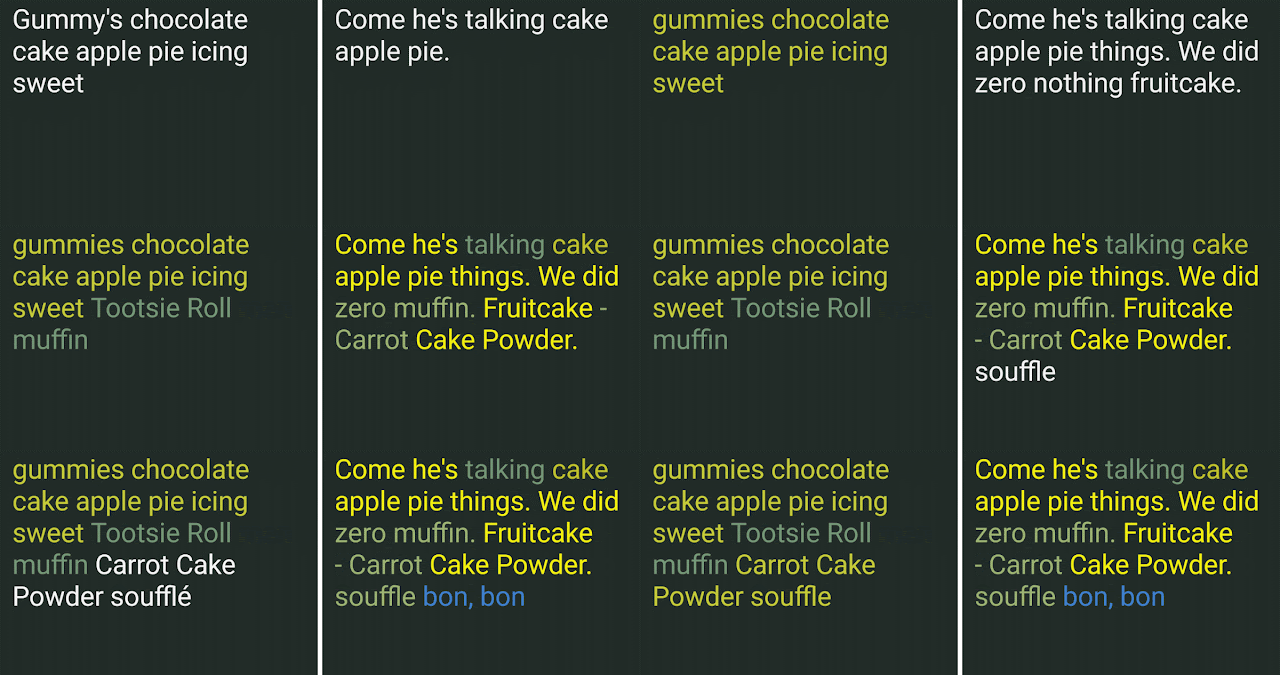
Launched Feb 2019: free Android captioning for deaf and hard-of-hearing users, shaped by Gallaudet user research (loudness indicator, minimal confidence cues). 70+ languages; an independent bench test found best-in-class noise results but 19–66% dialogue word error rates.
Details
Promoter
Google, with Gallaudet University
Period
2019-present
Keywords
assistive technology, speech recognition, deaf and hard of hearing, co-design
Description
Live Transcribe was announced by Google on 4 February 2019 as a free Android service that captions speech in real time. Google worked with Gallaudet University's Technology Access Program (researchers including Christian Vogler, Norman Williams and Paula Tucker) on user-experience research. Findings shaped the design: captions are paired with a visual loudness indicator showing speech versus background noise, because transcription alone can lead to miscommunication, and confidence indicators were kept minimal after research showed they distracted users. Speech detection runs on-device to limit data use, and the service supports over 70 languages. Google's blog cites the WHO estimate of 466 million people with disabling hearing loss. Reach: about 500 million downloads by early 2023 per public reporting, and Gallaudet has published a headline about it passing one billion downloads (the page could not be retrieved for verification). Independent evidence is partial. A pilot bench study in a sound-treated room (four apps, two phones, no human participants) found Live Transcribe and AVA best on the digits-in-noise test (+8 dB signal-to-noise ratio), but word error rates in dialogue transcription ranged from 19–34% in English and 25–66% in Dutch across apps. The study did no usability or accent testing. Real-world benefit is reported anecdotally by cochlear-implant users rather than measured.
Read the full analysis: https://research.google/blog/real-time-continuous-transcription-with-live-transcribe/
Implementation
Implementation detail (cost, timeline, staffing, conditions for success) is not yet available for this practice.
Do you run this practice?
Claim it —
verified implementers get a public contact pathway and can propose corrections.
Data sources
Where this practice's information was retrieved from, and when.
Lagos-founded startup pairs AI accessibility diagnostics (AdaptiveWiz) with a marketplace of over 5,000 disabled consultants (AdaptiveTest/AdaptiveAlly) who validate WCAG compliance, …
Brazil's federal government embeds a free, open-source 3D avatar that machine-translates Portuguese text into Libras (Brazilian Sign Language) across public …